
Lepidurus
Leach, 1819
tadpole shrimp
Species Guides
1- Lepidurus packardi(Vernal Pool Tadpole Shrimp)
Lepidurus is one of two extant of tadpole shrimp (order Notostraca), distinguished from Triops by morphological and ecological traits. inhabit temporary freshwater pools, vernal pools, and permanent lakes across diverse climates from Arctic tundra to desert regions. The genus exhibits notable flexibility, with resting capable of surviving desiccation and freezing for decades. Some species are of conservation concern due to specificity, while others serve as agricultural pests or bioindicators of environmental change.
Pronunciation
How to pronounce Lepidurus: //lɛˈpɪdjʊrəs//
These audio files are automatically generated. While they are not always 100% accurate, they are a good starting point.
Identification
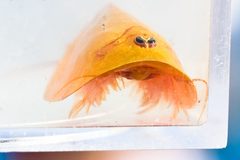
Distinguished from the co-occurring Triops by the presence of a supra-anal plate (a small plate between the anal and ), which Triops lacks. The is shield-like and covers most of the body; the bears numerous leaf-like appendages used for swimming and respiration. Two large and a ocellus (simple ) are present on the . -level identification requires examination of morphological details and often genetic analysis due to high intraspecific variability.
Images
Habitat
Temporary freshwater pools, vernal pools, and permanent lakes; specific requirements vary by . Lepidurus arcticus occurs in deep, large lakes with fish in alpine regions and shallow fishless ponds in the High Arctic. Lepidurus packardi is restricted to limited vernal pool habitats. Species generally require specific water chemistry parameters, with L. arcticus sensitive to low calcium concentrations (<1.0 mg L⁻¹) and pH <6.0.
Distribution
Circumpolar distribution for L. arcticus, extending from Svalbard at 80°N south to 59°N in the Fennoscandian Mountains; also recorded in North America. L. apus recorded from Jordan, indicating broad Palearctic distribution. Other occur in Australia, South America (Patagonia), and Mongolia. Distribution patterns are often highly skewed within regions due to localized environmental constraints.
Seasonality
Activity tied to hydroperiod and temperature. In temporary pools, occurs after flooding of desiccated banks. In alpine lakes, L. arcticus has a with emergence at ice break-up and completion of development during the short summer season. Upper thermal threshold near 14°C water temperature limits southern distribution of cold-adapted .
Diet
; consumes , bacteria, small particles of organic matter, and . Filter feeding and deposit feeding modes have been observed. Some may engage in .
Life Cycle
Development from resting typically completed within one year in temperate regions; embryonic phase may persist for decades in Arctic . Eggs withstand desiccation and freezing, forming persistent egg banks of overlapping . is flexible: both sexual and reproduction occur, with asexual reproduction enhancing ability as single eggs or individuals can establish new populations.
Behavior
Produces underwater sounds (first documented in L. lubbocki): high-frequency, wideband pulses with sound pressure level of 146 dB, peak frequencies at 65 and 86 kHz, and pulse duration of 88 µs. Sound emission follows a circadian pattern with higher activity at night. Burrowing and feeding activity stirs sediment, increasing water turbidity.
Ecological Role
that influences water clarity and nutrient cycling; prey for fish (notably brown trout), birds, and other aquatic . Serves as a food source that can significantly impact predator . Proposed as a bioindicator for climate change and degradation due to sensitivity to water temperature, pH, and chemical composition.
Human Relevance
L. packardi is endangered and subject to conservation concern due to vernal pool loss. L. longicaudatus (Triops) is an agricultural pest of rice in California, though this is not a Lepidurus . Sold as educational pets in dried form (primarily Triops, though the practice extends to tadpole shrimp generally). Potential use in mosquito control and aquaculture has been proposed.
Similar Taxa
- TriopsCo-occurring of tadpole shrimp; distinguished by absence of supra-anal plate, different sac , and generally broader ecological . The two genera share similar and but do not coincide geographically in most regions.
Sources and further reading
- BugGuide
- Wikipedia
- iNaturalist taxon
- NCBI Taxonomy
- Catalogue of Life
- Ten Facts You May Not Know About Tadpole Shrimp | Bug Squad
- The Distribution of Triops and Lepidurus (Branchiopoda) in Australia
- Environmental conditions limit the distribution of Lepidurus arcticus (Branchiopoda, Notostraca) in lakes on the Hardangervidda mountain plateau, Southern Norway
- Lepidurus lemmoni Holmes: A Redescription with Notes on Variation and Distribution
- Nosema lepiduri n. sp., a New Microsporidian Parasite in Lepidurus apus L.
- Climatic effects on a cold stenotherm species Lepidurus arcticus (Branchiopoda, Notostraca) on the southern outreach of its distribution range
- First evidence of underwater sounds emitted by the living fossils Lepidurus lubbocki and Triops cancriformis (Branchiopoda: Notostraca)
- Ecology and distribution of the Arctic Tadpole Shrimp Lepidurus arcticus (Branchiopoda, Notostraca) in the Fennoscandian Mountain Range and on the Svalbard Archipelago
- Reproduction and genetic structure of a freshwater crustacean <i>Lepidurus arcticus</i> from Spitsbergen
- Comparison of the hatching process of the tadpole shrimps Triops cancriformis and Lepidurus apus lubbocki (Notostraca) and its relation to their distribution in rain-pools in Israel
- The use of 18S rRNA for identification of the first record of Tadpole Shrimp Lepidurus apus (Linnaeus, 1758) from Jordan
- Upper thermal threshold of Lepidurus arcticus (Branchiopoda, Notostraca) in lakes on the southern outreach of its distribution range