
Syspira
Simon, 1895
prowling spiders
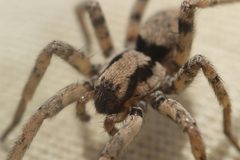
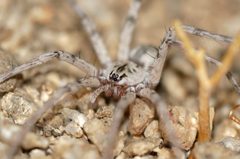
Syspira is a of prowling spiders in the Miturgidae, first described by Simon in 1895. These active, hunters are characterized by their leggy appearance and body lengths of 10–18 mm. The genus occurs in arid and semi-arid regions of the southwestern United States, Mexico, and the Caribbean, with highest diversity in western North America. Taxonomic revision is ongoing, with historically placed in Clubionidae and some specimens of S. pallida potentially belonging to the unrelated genus Zorocrates.
Pronunciation
How to pronounce Syspira: /sɪˈspaɪrə/
These audio files are automatically generated. While they are not always 100% accurate, they are a good starting point.
Identification
Distinguished from true wolf spiders (Lycosidae) by -level characters including arrangement and genitalic . Differs from grass spiders (Agelenidae), ghost spiders (Anyphaenidae), wandering spiders (Ctenidae), and false wolf spiders (Zoropsidae) by geographic range in the southwestern U.S. and by Miturgidae-specific traits. Separation from Zorocrates (Zorocratidae) is problematic and requires expert examination; S. pallida may belong to that . Definitive identification to often requires examination of male palpal morphology and female genitalia.
Images
Appearance
Medium-sized spiders with body lengths of 10–18 mm and leg spans reaching approximately 35 mm. Possess a distinctly 'leggy' appearance with elongated legs relative to body size. Many exhibit dark, parallel stripes on the , superficially resembling wolf spiders (Lycosidae). Overall build is slender and adapted for active hunting.
Habitat
Arid and semi-arid environments including desert areas, dry mixed conifer forest with oaks, and scrubland. Frequently observed around outdoor artificial lights at night, both on the ground and on vertical surfaces such as walls and doorways. Elevational range includes at least 7,000 feet in the southwestern United States.
Distribution
Southwestern United States (southern California to west Texas), Mexico including Baja California Sur, and Caribbean (Hispaniola). Records indicate particularly high abundance in Baja California Sur, where Syspira accounted for nearly half of all ground spiders in one study.
Seasonality
Active year-round in suitable climates; observations peak during summer months (July–August) in the southwestern United States. activity pattern with pronounced attraction to artificial lights after dark.
Diet
Active of insects and other arthropods attracted to lights, including and various flying insects. Specific dietary breadth otherwise undocumented.
Behavior
, hunters that prowl rather than build webs for prey capture. Frequently observed hunting around outdoor lights where they ambush or pursue attracted insects. Capable climbers on vertical surfaces including slick door surfaces. Males actively wander in search of females. One study documented occasional by rodents.
Ecological Role
Abundant ground-dwelling in arid ; in Baja California Sur, constituted nearly half of all ground spider individuals sampled. Contribute to regulation of insect , particularly around artificial light sources.
Human Relevance
Occasionally enter human dwellings, particularly males seeking mates. Non-venomous to humans; no medical significance documented. Beneficial as of household and garden pest insects.
Similar Taxa
- Lycosidae (wolf spiders)Share dark parallel stripes on and ground-dwelling habit; distinguished by arrangement and -level characters
- Zorocrates (Zorocratidae)S. pallida may belong to this ; external can be nearly identical, requiring genitalic examination for separation
- Agelenidae (grass spiders)Similar stripe patterns but build sheet webs rather than prowling; different arrangement
- Anyphaenidae (ghost spiders)Share activity and some markings; different geographic range and characters
Misconceptions
Frequently mistaken for wolf spiders (Lycosidae) due to convergent striped pattern and ground-dwelling . Historical confusion with sac spiders in Cheiracanthium, which are also in Miturgidae but morphologically distinct. placement has been unstable, formerly classified in Clubionidae.
More Details
Taxonomic instability
The Syspira is overdue for revision. The Miturgidae was elevated from status in Clubionidae in 1967. The specific identity of S. pallida remains questionable, with evidence suggesting it may belong to Zorocrates in the unrelated family Zorocratidae.
Species diversity
count varies by source: 6 species recognized in the U.S. and Mexico as of 2017, with additional Caribbean species described subsequently including four new species from Hispaniola in 2021. Global diversity likely underestimated.
Research significance
Used as a model organism in at least one study on size-frequency distribution in desert spider , highlighting their ecological importance in arid .