
Ctenidae
Keyserling, 1877
Wandering Spiders
Genus Guides
3- Anahita
- Ctenus(Tropical Wandering Spiders)
- Leptoctenus
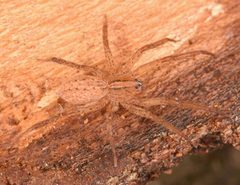
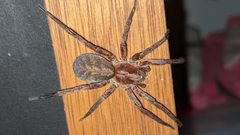
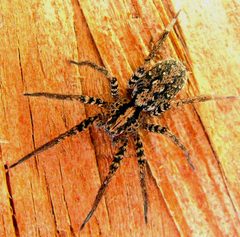
Ctenidae, commonly known as wandering spiders, is a of hunting spiders distributed worldwide with approximately 584 in 49 . The family includes the medically significant genus Phoneutria (Brazilian wandering spiders), whose venom can pose danger to humans, though most ctenids are harmless. Members of this family do not construct webs to capture prey, instead actively hunting on the ground or vegetation. The family exhibits considerable diversity in preference, from tropical lowlands to high-altitude cloud forests.
Pronunciation
How to pronounce Ctenidae: /ˈtɛ.niˌdiː/
These audio files are automatically generated. While they are not always 100% accurate, they are a good starting point.
Identification
Identification to or level typically requires microscopic examination of genitalic structures, particularly the male palpal bulb and female . External characters such as arrangement, color pattern, and leg spination can provide preliminary guidance. The can be confused with Lycosidae (wolf spiders) and Sparassidae (huntsman spiders) in general appearance, but differs in eye arrangement and genitalic . Recent taxonomic revisions have clarified boundaries between Ctenidae and related families such as Miturgidae and Zoropsidae.
Images
Habitat
Diverse including tropical and subtropical forests, cloud forests, leaf litter, and disturbed environments near human habitation. Many are ground-dwelling or associated with vegetation. High-altitude occur in the Andes and Asian mountains. Some Phoneutria species are frequently found in banana plantations. Mossy and humid microhabitats are critical for some such as Caloctenus, which are experiencing declines due to habitat loss.
Distribution
Worldwide distribution with strong representation in the Neotropics (Central and South America), Asia, and to a lesser extent Africa. Notable centers of diversity include the Amazon basin, the northern Andes, Central America, and Southeast Asia. Some have restricted ranges: Caloctenus is limited to the northern Andes at elevations of 1800–2600 m; Kiekie is primarily Central American with one South American .
Behavior
active hunters that do not construct prey-capture webs. Prey is located by wandering and ambush. Some exhibit defensive when disturbed. Males may produce vibrational signals during courtship. A unique behavior has been documented in Ctenus natmataung males, where the breakable RTA tip can penetrate the female's during mating—the first such case reported in the RTA-clade.
Human Relevance
The Phoneutria contains of medical importance due to potent neurotoxic venom that can cause severe envenomation in humans, though fatalities are rare. These spiders are frequently encountered in banana shipments, leading to occasional media attention and public concern. However, most ctenids found in international cargo are harmless species such as Cupiennius. Misidentification of harmless cargo spiders as dangerous Phoneutria can lead to unnecessary economic costs, employee anxiety, and trade disruptions. Venom from Phoneutria nigriventer has been studied extensively for its pharmacological properties, including bioactive with potential medical applications.
Similar Taxa
- LycosidaeWolf spiders share ground-dwelling, active hunting habits and similar body plans, but differ in arrangement (two large eyes in Lycosidae) and lack the characteristic genitalic structures of Ctenidae
- SparassidaeHuntsman spiders are large, active hunters with laterigrade legs, but have distinct arrangements and flattened body profiles adapted for hiding under bark; frequently confused with ctenids in cargo shipments
- MiturgidaeProwling spiders were historically confused with ctenids; some formerly placed in Ctenidae (such as Syspira) have been transferred to Miturgidae based on genitalic and behavioral evidence
Misconceptions
The "wandering spider" is frequently misapplied only to Phoneutria (Brazilian wandering spiders), when it properly refers to the entire Ctenidae. Most ctenids are harmless to humans, yet media attention focuses disproportionately on the medically significant Phoneutria. Spiders found in banana shipments are routinely presumed dangerous, but studies show the vast majority are harmless such as Cupiennius chiapanensis or Heteropoda venatoria. Accurate identification requires specimen examination, not visual estimation from photographs alone.
More Details
Taxonomic complexity
Ctenidae has undergone substantial revision, with many transferred to other (e.g., Syspira to Miturgidae, Zorocrates to Zorocratidae). The structure remains under investigation, with Cteninae and Acanthocteninae currently recognized. Recent molecular and morphological studies have revealed cryptic , such as the separation of Phoneutria boliviensis and P. depilata based on Andean vicariance.
Venom research
Ctenid venoms, particularly from Phoneutria nigriventer, contain diverse inhibitor cystine knot (ICK) toxins with potential pharmaceutical applications. Over 600 unique ICK toxins have been identified across wandering spider lineages, representing a largely untapped resource for biomolecule discovery.
Conservation concerns
Some high-altitude and cloud forest such as Caloctenus appear to be declining rapidly due to loss, with restricted to specific elevations and microhabitats that are vulnerable to climate change and deforestation.
Sources and further reading
- BugGuide
- GBIF taxonomy match
- iNaturalist taxon
- NCBI Taxonomy
- Catalogue of Life
- Bug Eric: Spider Scare in the News
- Bug Eric: March 2009
- Bug Eric: March 2013
- New Study Provides Key to Identifying Spiders in International Cargo
- Two species and a single name: ‘Double identity’ revealed in a venomous banana spider | Blog
- Bug Eric: Spider Sunday: Dotted Wolf Spider
- A new species of Caloctenus (Araneae: Ctenidae) from Colombia
- New species in the family Ctenidae Keyserling, 1877 from high altitude habitats in Myanmar, with the first case of penetration of the female’s cuticle by a male in the RTA-clade (Arachnida: Araneae: Ctenidae)
- Killer Knots: Molecular evolution of Inhibitor Cystine Knot toxins in wandering spiders (Araneae: Ctenidae)
- Revision of the Neotropical spider genus Acanthoctenus (Araneae: Ctenidae: Acanthocteninae)
- Kiekie, a new Neotropical spider genus of Ctenidae (Cteninae, Araneae)
- Redescription of five Amazonian species of Ctenus Walckenaer (Araneae, Ctenidae, Cteninae)
- New species of the Neotropical spider genus <i>Celaetycheus</i> Simon, 1897 (Araneae: Ctenidae)
- Taxonomic notes on eleven species of the subfamily Cteninae (Araneae, Ctenidae) from Asia
- Biochemistry, toxicology and ecology of the venom of the spider Cupiennius salei (Ctenidae)
- Two new species of Kiekie Polotow & Brescovit, 2018 (Araneae: Ctenidae) from the highlands of Panama