
Leptoctenus
L. Koch, 1878
Species Guides
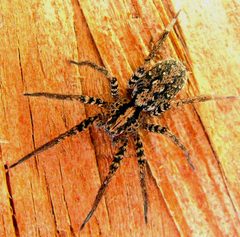
1Leptoctenus is a of wandering spiders ( Ctenidae) established by L. Koch in 1878. The genus contains six described distributed across Australia, North America, Central America, and China. These spiders are ground-dwelling hunters that do not construct webs for prey capture. They belong to the wandering spider family, which includes several medically significant genera, though Leptoctenus itself has not been documented as dangerous to humans.
Pronunciation
How to pronounce Leptoctenus: //lɛpˈtɒktɛnəs//
These audio files are automatically generated. While they are not always 100% accurate, they are a good starting point.
Identification
Leptoctenus can be distinguished from other Ctenidae by subtle morphological features of the arrangement and genital structures, though specific diagnostic characters require expert examination. The genus is characterized by features of the male and female . Separation from the widespread genus Cupiennius, which shares geographic overlap in Central America, relies on detailed palpal and epigynal .
Images
Habitat
occur in diverse terrestrial including forest floors and ground-level vegetation. Leptoctenus byrrhus has been recorded from riparian areas in the southwestern United States. Mexican species have been collected in tropical and subtropical forest environments. Specific microhabitat preferences remain poorly documented for most species.
Distribution
The has a disjunct distribution spanning Australia (L. agalenoides), the southwestern United States and Mexico (L. byrrhus, L. gertschi, L. sonoraensis), southern China (L. daoxianensis), and Panama (L. paradoxus).
Behavior
As wandering spiders, members of this are active hunters that do not build webs to capture prey. They likely employ hunting strategies typical of the Ctenidae, pursuing or ambushing ground-dwelling .
Human Relevance
No medical significance has been documented for this . Unlike some other Ctenidae genera (e.g., Phoneutria, Loxosceles), Leptoctenus have not been associated with envenomation incidents in humans.
Similar Taxa
More Details
Taxonomic history
The type L. agalenoides was described from Australia in 1878, with additional species added from the Americas and Asia over the following century. The has received limited taxonomic revision.