
Anahita
Karsch, 1879
Species Guides
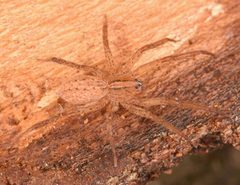
1- Anahita punctulata(Southeastern Wandering Spider)
Anahita is a of wandering spiders in the Ctenidae, established by Karsch in 1879. The genus name derives from an Iranian goddess associated with waters and . These spiders are part of the diverse tropical and subtropical spider fauna, with distributed across parts of Asia and Africa. As ctenids, they possess characteristic arrangements and are active hunters rather than web-builders.
Pronunciation
How to pronounce Anahita: /ˌænəˈhaɪtə/
These audio files are automatically generated. While they are not always 100% accurate, they are a good starting point.
Images
Distribution
of Anahita are recorded from regions including parts of Asia (including India and surrounding areas) and Africa. The shows a tropical to subtropical distribution pattern typical of many Ctenidae.
Similar Taxa
- CtenusBoth belong to Ctenidae and share the characteristic arrangement of wandering spiders; Anahita may be distinguished by genitalic and somatic features requiring expert examination.
- PhoneutriaAnother ctenid with similar body plan and active hunting ; Phoneutria contains medically significant and differs in distribution (primarily Neotropical) and defensive behaviors.
More Details
Etymology
The name Anahita references the Avestan deity Aredvi Sura Anahita, the Indo-Iranian goddess of waters, , and wisdom. This follows a common practice in arachnology of drawing names from mythology, particularly for described during the late 19th century when Orientalist scholarship influenced scientific .
Taxonomic history
Anahita was established by Ferdinand Karsch in 1879. The has undergone various taxonomic revisions, with some transferred to or from related ctenid genera based on morphological studies. Modern phylogenetic work on Ctenidae continues to clarify relationships within this diverse of wandering spiders.