
Hypochilus
Marx, 1888
North American lampshade spiders
Species Guides
10- Hypochilus bernardino
- Hypochilus bonneti(lampshade weaver)
- Hypochilus coylei(lampshade weaver)
- Hypochilus gertschi(Gertsch's lampshade-web spider)
- Hypochilus kastoni
- Hypochilus petrunkevitchi(lampshade spider)
- Hypochilus pococki(Pocock's lampshade-web spider)
- Hypochilus sheari
- Hypochilus thorelli(Thorell's Lampshade-web Spider)
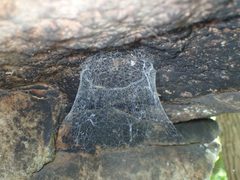
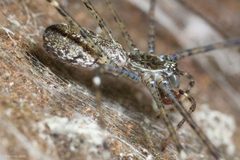
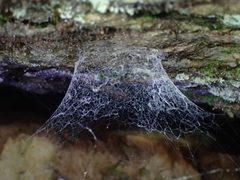
Hypochilus is a of North American lampshade spiders ( Hypochilidae) comprising eleven described , all to the United States. The genus is a relictual lineage with a disjunct distribution across three montane regions: California, the southern Rocky Mountains, and the southern Appalachia. Hypochilus species exhibit extreme genetic divergence coupled with striking morphological conservatism, creating persistent challenges for species delimitation. These spiders are textbook examples of short-range endemics with naturally small geographic ranges and strict microhabitat specialization.
Pronunciation
How to pronounce Hypochilus: /haɪpoʊˈkaɪləs/
These audio files are automatically generated. While they are not always 100% accurate, they are a good starting point.
Identification
Identification to level is complicated by morphological stasis; genetic data often reveal cryptic lineages that are morphologically indistinguishable. The is distinguished from other spider by its placement in Hypochilidae, the only family in the hypochiloid clade. Regional distribution provides a strong first clue: specimens from California, southern Rocky Mountains, or southern Appalachia fall into distinct clades. Within regions, drainage basin associations and subtle morphological details of male genitalia may aid identification where genetic data are unavailable.
Images
Habitat
Shaded, mesic rock outcrop in montane regions. are microhabitat requiring cool, moist conditions typically found under rocks in forested mountain environments. The shows extreme fidelity to specific rock outcrop microhabitats, contributing to naturally restricted distributions.
Distribution
to the United States with a disjunct distribution across three montane regions: California mountains (southern Sierra Nevada), southern Rocky Mountains, and southern Appalachia. Individual are short-range endemics with geographic ranges often smaller than 10,000 km².
Behavior
Extremely low vagility; individuals rarely disperse beyond their natal rock outcrop . The exhibits textbook short-range characteristics with strict microhabitat preferences and limited movement capacity. Predatory has been documented in at least one (H. gertschi), though specific hunting strategies remain poorly described.
Human Relevance
Conservation concern due to microendemic distributions and specialization. Several significant conservation risks from habitat alteration, climate change, and restricted range sizes. The serves as an important model system for studying cryptic speciation, morphological stasis, and phylogeographic patterns in relictual lineages.
Similar Taxa
- Other Hypochilidae generaHypochilus is the only in Hypochilidae found in North America; other hypochilid genera are distributed in South America and Asia, making geographic separation the primary distinguishing feature.
More Details
Phylogenetic relationships
Phylogenomic data support a ((California, Appalachia), southern Rocky Mountains) topology. The California and Appalachian clades are sister to each other, with the southern Rocky Mountains clade as the outgroup. Within Appalachia, five resolve as four lineages, with H. thorelli and H. coylei as clear sister ; interrelationships of the remaining lineages remain unresolved.
Cryptic speciation
Extreme genetic divergence—among the highest reported for spider —contrasts with remarkable morphological stasis. Algorithmic delimitation based on nuclear data suggests many more species than currently recognized, particularly within H. pococki , but male genital shows striking conservation across lineages.
Recent species description
Hypochilus xomote was described in 2021 from the Tule River and Cedar Creek drainages of the southern Sierra Nevada, representing a new short-range from California. This was distinguished based on combined nuclear, mitochondrial, geographical, and morphological evidence.
Sources and further reading
- BugGuide
- Wikipedia
- GBIF taxonomy match
- iNaturalist taxon
- NCBI Taxonomy
- Catalogue of Life
- Observations on the Predatory Behavior of the Spider Hypochilus Gertschi Hoffman (Hypochilidae)
- Phylogenomics of paleoendemic lampshade spiders (Araneae, Hypochilidae, Hypochilus), with the description of a new species from montane California