
Hypochilidae
Marx, 1888
Lampshade Spiders
Genus Guides
1- Hypochilus(North American lampshade spiders)
Hypochilidae is an ancient and relict of true spiders (Araneae) containing two : Hypochilus (11 , North America) and Ectatosticta (22 species, Asia). The family originated in the Late Jurassic and exhibits a classic inter-continental disjunct distribution. These spiders are considered among the most primitive of araneomorphs, retaining plesiomorphic traits including two pairs of book lungs in most species. They are microhabitat with naturally small geographic distributions and low vagility, making them important subjects for conservation and biogeographic research.
Pronunciation
How to pronounce Hypochilidae: /haɪpoʊˈkɪlɪdiː/
These audio files are automatically generated. While they are not always 100% accurate, they are a good starting point.
Identification
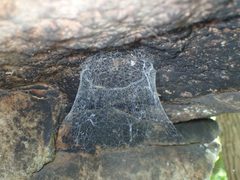
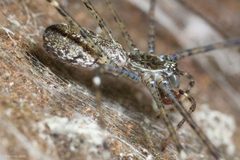
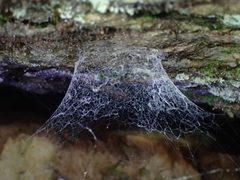
Hypochilidae can be distinguished from other spider by their primitive combination of traits: most retain two pairs of book lungs (a plesiomorphic condition shared with mygalomorphs) while possessing intersecting fangs characteristic of araneomorphs. Some species show cheliceral orientations intermediate between orthognathous and labidognathous conditions. The family is further characterized by long legs and the construction of distinctive lampshade-shaped webs. Species-level identification is challenging due to morphological conservatism coupled with extreme genetic divergence; male palp and female epigyne structures are used for .
Images
Habitat
Montane microhabitat occurring in shaded, mesic, rock outcrop . Hypochilus inhabit ancient mountains at 500–2,400 m elevation (majority below 1,000 m) in the southern Rocky Mountains, California Mountains, and southern Appalachian Mountains. Ectatosticta species occur in alpine areas surrounding the Qinghai-Tibetan Plateau at 1,300–3,700 m elevation (majority above 2,500 m), requiring cold temperatures and high humidity. Webs are constructed under overhangs and in caves.
Distribution
Disjunct inter-continental distribution. Hypochilus is restricted to North America: southern Rocky Mountains, montane California, and southern Appalachian Mountains. Ectatosticta is restricted to Asia: alpine areas surrounding the Qinghai-Tibetan Plateau, with spreading from southern to northeastern regions of the plateau. Individual typically have small geographic ranges; several are microendemic with naturally limited distributions.
Behavior
Hypochilus constructs distinctive lampshade-shaped webs under overhangs and in caves. Ectatosticta constructs sheet webs among rocks or tree trunks. The exhibits extremely low vagility with limited female-biased . Male shows striking evolutionary stasis despite high genetic divergence between . These behavioral and ecological traits contribute to discontinuous distributions and cryptic speciation patterns.
Ecological Role
Short-range (SRE) with significant conservation concerns. The serves as an important model for studying the effects of mountain orogeny on diversification: Hypochilus diversified with ancient orogenic events prior to the Oligocene, while Ectatosticta underwent rapid post-Miocene radiation driven by stepwise uplift of the Qinghai-Tibetan Plateau. Several microendemic, -specialized threats from climate change impacts on their restricted montane habitats.
Human Relevance
Subject of extensive phylogenomic and biogeographic research due to their ancient origins and relictual distribution. Ectatosticta xuanzang was among described by prolific spider taxonomist Shuqiang Li. The 's distinctive web architecture and evolutionary history make them valuable for understanding spider evolution and montane biodiversity conservation.
Similar Taxa
- MygalomorphaeShare the plesiomorphic trait of two pairs of book lungs, but differ in having parallel fangs rather than the intersecting fangs of Hypochilidae.
- Other AraneomorphaeMost araneomorphs have only one pair of book lungs and fully labidognathous , whereas Hypochilidae typically retain two pairs of book lungs and show intermediate cheliceral orientations.
More Details
Phylogenetic significance
Hypochilidae represents a critical lineage for understanding araneomorph evolution, bridging morphological gaps between mygalomorph and araneomorph spiders. Time-calibrated indicate the originated in the Late Jurassic and shows dramatically different diversification dynamics between : Ectatosticta has significantly higher diversification rates than Hypochilus, correlating with the stepwise uplift of the Qinghai-Tibetan Plateau.
Species delimitation challenges
The Hypochilus exhibits extreme genetic structuring and non-adaptive radiation patterns that complicate boundaries. Algorithmic analyses of nuclear data often indicate many more species than morphological evidence supports, with male genitalia showing striking stasis despite high genetic divergence. Recent descriptions include Hypochilus xomote from the Tule River and Cedar Creek drainages in the southern Sierra Nevada of California.
Sources and further reading
- BugGuide
- GBIF taxonomy match
- iNaturalist taxon
- NCBI Taxonomy
- Catalogue of Life
- 100 ZooKeys papers on spiders co-authored by Shuqiang Li
- Zookeys | Blog - Part 10
- animals | Blog
- Observations on the Predatory Behavior of the Spider Hypochilus Gertschi Hoffman (Hypochilidae)
- Phylogenomics of paleoendemic lampshade spiders (Araneae, Hypochilidae, Hypochilus), with the description of a new species from montane California
- Orogeny shapes the diversification of an ancient and relict spider family (Hypochilidae), with the stepwise uplift of the Qinghai-Tibetan plateau driving the radiation of Asian lineages.