
Hypochilus coylei
Platnick, 1987
lampshade weaver
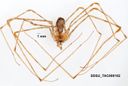
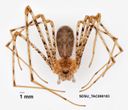
Hypochilus coylei is a lampshade spider described by Platnick in 1987 from the southern Appalachian Mountains of western North Carolina. It belongs to a relictual of microhabitat with disjunct distributions across three North American montane regions. The is sister to H. thorelli and exhibits extreme genetic divergence coupled with morphological stasis, characteristic of short-range with limited ability.
Pronunciation
How to pronounce Hypochilus coylei: /haɪpoʊˈkɪləs ˈkɔɪli/
These audio files are automatically generated. While they are not always 100% accurate, they are a good starting point.
Identification
Sister to H. thorelli within the Appalachian clade; distinguished from other Hypochilus species by geographic location in the southern Appalachians. As with other lampshade spiders, identification requires examination of genitalic and consideration of microendemic distribution patterns.
Images
Habitat
Shaded, mesic rock outcrop in montane regions; restricted to a 35-mile north-south corridor of mountain range in western North Carolina.
Distribution
to western North Carolina, United States; part of the southern Appalachian regional clade of Hypochilus.
Diet
Life Cycle
Two-year .
Behavior
Microhabitat with extraordinarily low vagility; exhibits extreme genetic structuring and limited female-biased ; shows morphological stasis despite deep genetic divergence.
Similar Taxa
- Hypochilus thorelliSister within the Appalachian clade; closely related and geographically proximate in the southern Appalachians.
- Hypochilus pocockiAnother Appalachian ; distinguished by genetic structure and geographic distribution, though morphologically similar due to conserved in the .
Sources and further reading
- BugGuide
- Wikipedia
- GBIF taxonomy match
- iNaturalist taxon
- NCBI Taxonomy
- Catalogue of Life
- Beware, Boxwoods: Another Pest is On the Horizon
- Do You Hear That? It's the Buzz About Sterile Insect Technique for Mosquito Management
- Collaboration Leads to Documentation: Tracking the Spread of Tar Spot on Corn in the U.S.
- People Matter: Why the Human Factor Is Essential for Successful Integrated Pest Management Programs
- Residential Pest Management: What Do Homeowners Know, and What Do They Do?
- Phylogenomics of paleoendemic lampshade spiders (Araneae, Hypochilidae, Hypochilus), with the description of a new species from montane California