
Thyrididae
Window-winged Moths, Picture-winged Leaf Moths
Subfamily Guides
3- Siculodinae
- Striglininae
- Thyridinae(window-winged moths)
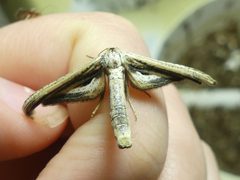
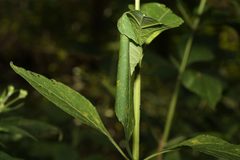
Thyrididae is a of commonly known as window-winged or picture-winged leaf moths, distinguished by square or rectangular translucent spots on their wings. The family comprises the sole member of superfamily Thyridoidea, with over 760 described worldwide and hundreds more awaiting description. Most species inhabit tropical and subtropical regions, with only about 12 species recorded in North America. of many species are and colorful, exhibiting day-flying unusual among moths.
Pronunciation
How to pronounce Thyrididae: /ˌθɪrɪˈdaɪdiː/
These audio files are automatically generated. While they are not always 100% accurate, they are a good starting point.
Identification
Distinguished from similar by the presence of square or rectangular translucent wing spots (fenestrae); differs from Pyralidae (snout moths) in wing venation and body structure despite historical taxonomic association. Day-flying and bright coloration in many can cause confusion with butterflies or moths of other families. Thyris recognized by specific wing pattern; genus Dysodia by larger, heavier body and habits.
Images
Habitat
Primarily tropical and subtropical forests; North American found in mixed conifer forest, prairie glades with sandstone formations, and areas with plants including Clematis and Houstonia. Coastal in Florida and Caribbean for species.
Distribution
Pantropical distribution with highest diversity in Old World and New World tropics; extends into temperate North America with approximately 12 . Documented from North America (Ontario to Florida, west to Idaho and Montana), Central America (Panama), South America, Africa (South Africa), Asia (India, Vietnam, China, Nicobar Islands), and Caribbean.
Seasonality
active year-round in tropical regions; in temperate North America, period March through October with peak activity May through July. Some temperate exhibit two annually.
Diet
Larvae are feeders on diverse plants including beans, grapes, cotton, thoroughworts (Eupatorium), Clematis, and Houstonia; some specialize on particular hosts such as seagrape (Coccoloba uvifera) or Sida species. of some species visit flowers for nectar; others observed at animal scat, water, and mineral sources.
Host Associations
- Coccoloba uvifera - larval seagrape borer Hexeris enhydris
- Coccoloba diversifolia - larval pigeon-plum
- Sida acuta - larval gall-forming Meskea horor
- Sida rhombifolia - larval gall-forming Meskea horor
- Hibiscus sabdariffa - food sourcelaboratory feeding only
- Clematis - larval Thyris maculata
- Houstonia - larval Thyris maculata
- Dipterocarpus tuberculatus - larval Calindoea trifascialis
- Vigna (beans) - larval feeding record
- Vitis (grapes) - larval feeding record
- Gossypium (cotton) - larval feeding record
- Eupatorium (thoroughworts) - larval feeding record
Life Cycle
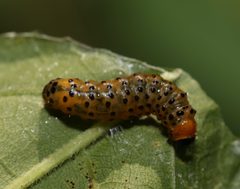
Complete with , larva, pupa, and stages. Eggs laid on leaf undersides or plant surfaces. Larvae exhibit diverse feeding strategies: leaf rolling and tying with silk, skeletonizing leaves within constructed retreats, boring in stems or twigs, or forming stem galls. Some construct tent-like feeding retreats that increase in size through development; final instar may construct specialized retreat. Pupation occurs within larval shelter, gall, or fallen leaf roll. Development time from egg to adult approximately 192 days in gall-forming species; adult lifespan 11-14 days.
Behavior
Many are and day-flying, conspicuously perching on exposed vegetation. of some species visit flowers for nectar; others are attracted to , moisture, or mineral sources. Larvae construct silk-tied leaf rolls or tent-like retreats for feeding and shelter; some species' pupal cases exhibit pre-pupal movement after falling from plant. Gall-forming species retard host plant growth and flowering. Adults emerge early morning and may be inactive during daylight hours in some species.
Ecological Role
Larvae function as herbivores with variable impact: leaf-rollers and skeletonizers cause minor to moderate foliage damage; gall-formers significantly retard plant growth and flowering; stem borers damage twigs of woody plants. Prey for including Calliephialtes grapholithae. Some larvae possess chemical defenses () that deter .
Human Relevance
Minor agricultural significance: some considered pests of cotton, grapes, and ornamental plants; seagrape borer (Hexeris enhydris) damages ornamental seagrape in Florida and Caribbean. Investigated as potential agents for weeds (Sida species) but rejected due to broad range. Rare in museum collections, limiting taxonomic study.
Similar Taxa
- PyralidaeHistorically associated with Thyrididae in Pyraloidea, but distinguished by wing venation, lack of fenestrate wing spots, and different body proportions; not supported as sister group by cladistic analysis.
- ZygaenidaeSome Thyrididae (Charideinae) formerly misplaced in Zygaenidae; distinguished by wing structure and larval despite similar bright coloration and in some .
- CrambidaeSome similar in appearance; distinguished by wing pattern lacking translucent fenestrae and different larval habits.
Misconceptions
has been incorrectly included in Pyraloidea; molecular and cladistic analysis supports separate superfamily Thyridoidea. Some (Arniocera) long misclassified in Zygaenidae due to convergent bright coloration and chemical defense.
More Details
Taxonomic Status
Sole in superfamily Thyridoidea; comprises four (Charideinae, Siculodinae, Striglininae, Thyridinae). Over 400 additional awaiting description at Natural History Museum, London alone.
Defensive Chemistry
Larvae of Calindoea trifascialis possess paired fleshy lateral with that secrete deterring when disturbed.
Collection Rarity
Specimens are notably rare in museum collections relative to , creating challenges for taxonomic research.
Sources and further reading
- BugGuide
- Wikipedia
- GBIF taxonomy match
- iNaturalist taxon
- NCBI Taxonomy
- Catalogue of Life
- Bug Eric: Window-winged Moths
- Monday Moth: Arniocera erythropyga | Beetles In The Bush
- Bug Eric: A Potential New Host Record for Calliephialtes grapholithae (Hymenoptera: Ichneumonidae) from a Paper Wasp nest (Hymenoptera: Vespidae: Polistes metricus)
- New records of Thyrididae (Lepidoptera) from Great Nicobar Island, India
- Seagrape Borer, Hexeris enhydris Grote (Insecta: Lepidoptera: Thyrididae)
- Life cycle and host range of the gall-forming moth,Meskea horor (Lep.: Thyrididae), and its suitability as a biological control agent forSida acuta andS. rhombifolia (Malvaceae) Cycle biologique, gamme d’hôtes et potentialités d’utilisation deMeskea horor (Lep. : Thyrididae) comme agent de lutte biologique contreSida acuta etS. rhombifolia (Malvaceae)
- Morphology and behaviour of the larva of Calindoea trifascialis (Lepidoptera: Thyrididae), a chemically-defended retreat-building caterpillar from Vietnam
- Life History of Dysodia Sica (Lepidoptera: Thyrididae) in Panama
- Extension of the known distribution of the genus Herdonia Walker (Lepidoptera: Thyrididae) to the Yeoor Hills, Maharashtra, India
- Taxonomic revision of Siculodes Guenée and revalidation of Aziba Walker (Lepidoptera, Thyrididae, Siculodinae, Siculodini)
- Two new species of Striglina Guenée, 1877 (Lepidoptera, Thyrididae) from China.