
Dysodia
Clemens, 1860
Window-winged moths
Species Guides
3- Dysodia granulata(Netted Dysodia Moth)
- Dysodia(Window-winged Moths)
- Dysodia oculatana(Eyed Dysodia Moth)
Dysodia is a pantropical of in the Thyrididae, described by James Brackenridge Clemens in 1860. The genus is found on all continents except Australia and contains approximately 30 . are and attracted to lights. Larvae are leaf-rollers that use silk to tie leaves of plants.
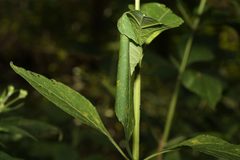
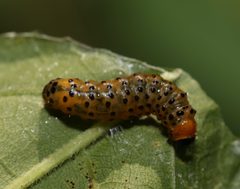
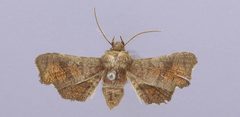
Pronunciation
How to pronounce Dysodia: //dɪˈsoʊ.di.ə//
These audio files are automatically generated. While they are not always 100% accurate, they are a good starting point.
Identification
Distinguished from the related Thyris by being larger and heavier-bodied, and by being rather than . The genus can be recognized by the combination of: forewings excurved at 2, 3 and 4; veins 7, 8 and 9 arising close to the angle of the ; hindwings with vein 5 from the lower angle of the cell; and the irregular, excised outer margin of the hindwing below the apex. The upturned, thickly scaled palpi reaching above the vertex of the also aid identification.
Images
Appearance
are slightly larger and heavier-bodied than related such as Thyris. Forewings are long. Hindwings have an acute apex with a straight outer margin that is irregular and excised below the apex. Wings possess characteristic square or rectangular translucent spots (the "window" pattern typical of Thyrididae), which may appear white or amber. Palpi are thickly scaled, upturned, reaching above the vertex of the , with the third joint acute. are simple in both sexes. Legs have hairy and tibia. and are stout.
Habitat
Occurs in mixed conifer forest, prairie glades, and riparian areas. In the United States, found in southern Arizona and the Lower Rio Grande Valley of southern Texas. The is pantropical, with found in tropical and subtropical regions of the Old and New Worlds.
Distribution
Pantropical distribution, found on all continents except Australia. In the Americas, occurs from the southern United States (Arizona, Texas) south through Central America (Panama) and into South America. Also present in Africa and Asia.
Seasonality
activity period varies by region. In the United States, adults have been observed in May and August, suggesting possible multiple in some areas.
Diet
Larvae are feeders. Known plants include beans, grapes, cotton, and thoroughworts. Dysodia sica has been reared in Panama, though specific host plants for that were not detailed in available sources.
Host Associations
- Beans - larval foodplantGeneral record for
- Grapes - larval foodplantGeneral record for
- Cotton - larval foodplantGeneral record for
- Thoroughworts - larval foodplantGeneral record for
Life Cycle
Complete with , larva, pupa, and stages. Eggs and pupae have been described for Dysodia sica. Larvae typically roll leaves of plants and tie them with silk to form shelters.
Behavior
are and attracted to lights. Larvae roll leaves of plants and secure them with silk, creating both shelter and feeding sites. Some in related bore in stems or twigs, but this is not confirmed for Dysodia.
Ecological Role
Larvae function as herbivores. may contribute to pollination through incidental contact with flowers, though this is not well documented. The serves as prey for various , with the translucent wing spots possibly functioning as anti-predator adaptations.
Human Relevance
Some have been recorded as pests of agricultural crops including cotton and grapes. At least one species in south Texas may be undescribed, indicating ongoing taxonomic research needs.
Similar Taxa
- ThyrisBoth are of window-winged moths (Thyrididae) with translucent wing spots. Thyris are smaller, more slender, , and visit flowers for nectar, whereas Dysodia are larger, heavier-bodied, and .
More Details
Taxonomic Research Needs
At least four occur in the United States, with one in south Texas likely representing an undescribed species. The contains approximately 30 described species, but the total diversity is poorly known.
Anti-predator Adaptations
The function of the translucent wing spots is uncertain. Hypotheses include disruption of the 's overall pattern to reduce detection by , or that the spots may be mistaken for water droplets by predators.