
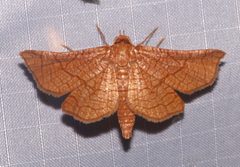
Hexeris enhydris
Grote, 1875
Seagrape borer
A in the Thyrididae whose larvae bore into the twigs of seagrape and pigeon-plum, causing damage to these coastal plants. Native to Florida and the Caribbean, it is primarily known for its larval boring rather than activity. The has been studied for its economic impact on ornamental and native coastal vegetation.
Pronunciation
How to pronounce Hexeris enhydris: /hɛkˈsɛrɪs ɛnˈhaɪdrɪs/
These audio files are automatically generated. While they are not always 100% accurate, they are a good starting point.
Images
Habitat
Coastal areas where plants seagrape and pigeon-plum occur
Distribution
Florida and the Caribbean
Host Associations
- seagrape - larval larvae bore into twigs
- pigeon-plum - larval larvae bore into twigs
Life Cycle
Includes larval boring in plant twigs; specific developmental stages and timing not detailed in available sources
Behavior
Larvae bore into twigs of seagrape and pigeon-plum
Human Relevance
Considered a pest of ornamental and native coastal vegetation due to larval damage to plant twigs; subject to management strategies and efforts
More Details
Management
Management strategies and natural enemies have been studied for control, per EDIS publication