
Thyridinae
window-winged moths
Genus Guides
4- Dysodia(Window-winged moths)
- Hexeris
- Pseudothyris
- Thyris(window-winged moths)
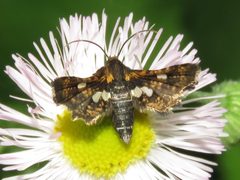
Thyridinae is a of within the Thyrididae, commonly referred to as window-winged moths. Members of this subfamily are characterized by distinctive translucent or clear patches on the wings, created by reduced wing scaling. The subfamily contains numerous distributed across tropical and subtropical regions worldwide.
Pronunciation
How to pronounce Thyridinae: /ˌθɪrɪˈdaɪniː/
These audio files are automatically generated. While they are not always 100% accurate, they are a good starting point.
Identification
The combination of hyaline wing patches with intact wing venation visible through the transparent areas distinguishes Thyridinae from most other Lepidoptera. Some Sesiidae (clearwing moths) also have transparent wings, but Thyridinae lack the -mimicking body form and have different wing venation patterns. Within Thyrididae, Thyridinae is distinguished from other (Siculodinae, Striglininae) primarily by genitalic characters and wing pattern details that require microscopic examination.
Images
Appearance
possess wings with prominent hyaline (clear, glass-like) areas where are reduced or absent, creating a window-like appearance. Wing patterns often include dark borders or reticulate markings surrounding these transparent patches. Body size ranges from small to medium for Lepidoptera. Wing shape varies among , with some having rounded wings and others more angular or tailed hindwings. are typically or slightly serrate.
Habitat
Primarily found in tropical and subtropical forests, including lowland rainforests, montane forests, and forest edges. Some occur in secondary growth and disturbed forest areas. Larval habitats vary by , with some associated with living or decaying plant material.
Distribution
Pantropical distribution with highest diversity in the Oriental and Afrotropical regions. Present in Central and South America, Africa, Madagascar, South and Southeast Asia, and Australia. Absent or poorly represented in temperate regions; limited representation in the Nearctic region.
Seasonality
activity patterns vary by region. In tropical areas, adults may be active year-round with peaks during wet seasons. In subtropical areas with seasonal climates, activity is concentrated in warmer months. Many are attracted to light.
Behavior
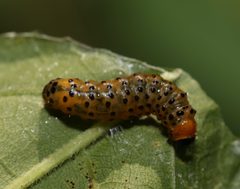
are primarily and frequently attracted to artificial light sources. Daytime resting posture typically involves wings spread flat or slightly folded, displaying the characteristic window patterns. Larval is poorly documented for most but includes internal feeding in plant stems, leaf mining, or feeding on decaying plant material depending on .
Ecological Role
Larvae of some function as decomposers by feeding on decaying plant material, while others may be phytophagous on living plants. serve as prey for including bats and birds. Ecological roles are understudied across most of the .
Human Relevance
Minimal direct economic importance. are occasionally collected for their distinctive wing patterns. Some may be minor pests of ornamental plants or crops, though documented cases are sparse. The group has received limited research attention compared to other Lepidoptera .
Similar Taxa
- Sesiidae (clearwing moths)Also possess hyaline wing areas, but differ in -mimicking body form, different wing venation, and activity patterns in many .
- SiculodinaeAnother of Thyrididae; distinguished by genitalic and wing pattern characteristics requiring detailed examination.
More Details
Taxonomic history
Thyridinae has undergone significant taxonomic revision, with many moved between as phylogenetic relationships have been clarified. The current circumscription is based on molecular and morphological studies, though some generic boundaries remain uncertain.
Research gaps
are unknown for the majority of . Larval associations are documented for only a small fraction of the approximately 300+ described species, limiting ecological understanding.