Meconema meridionale
Costa, 1860
Southern Oak Bush-cricket
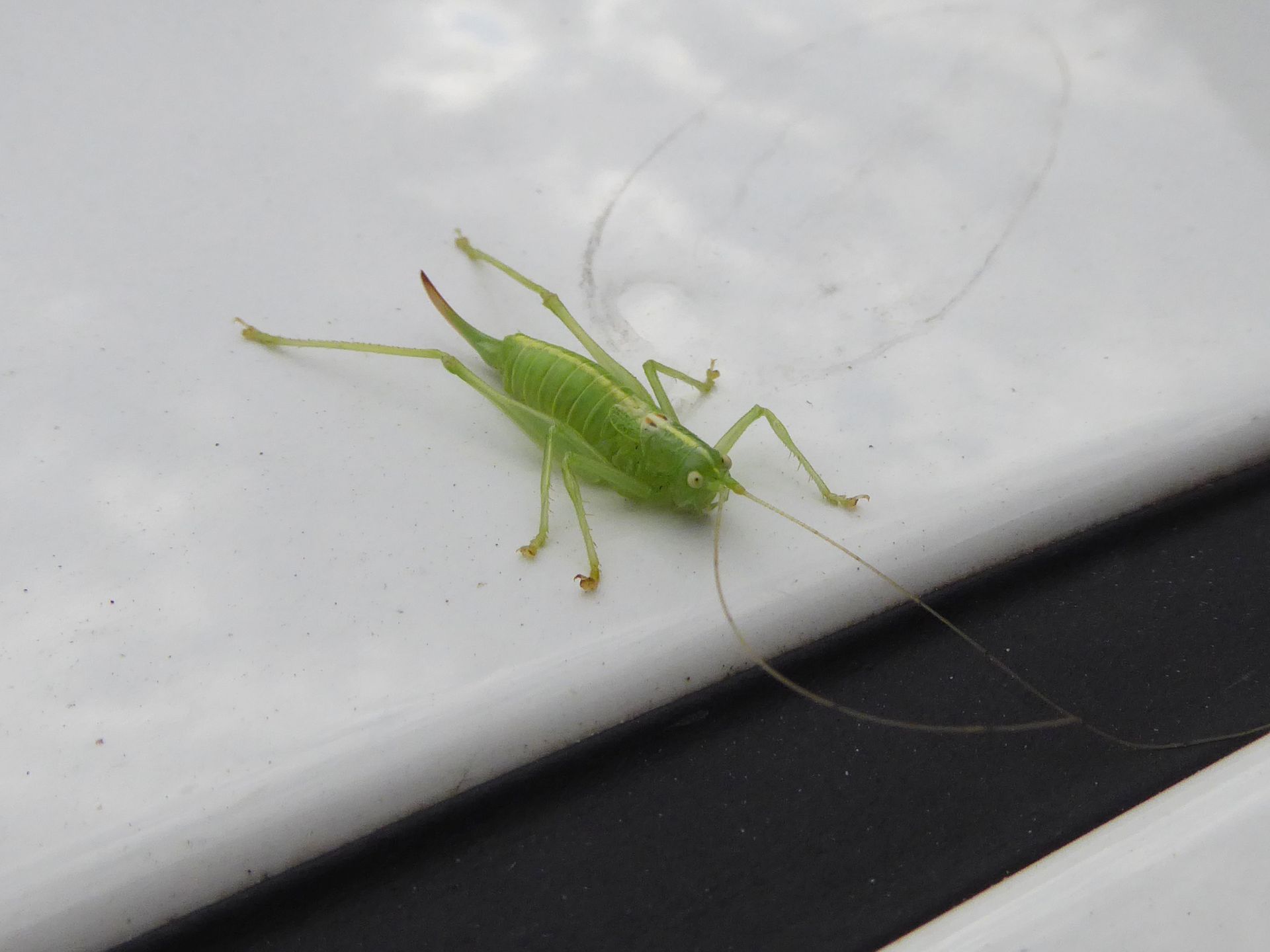
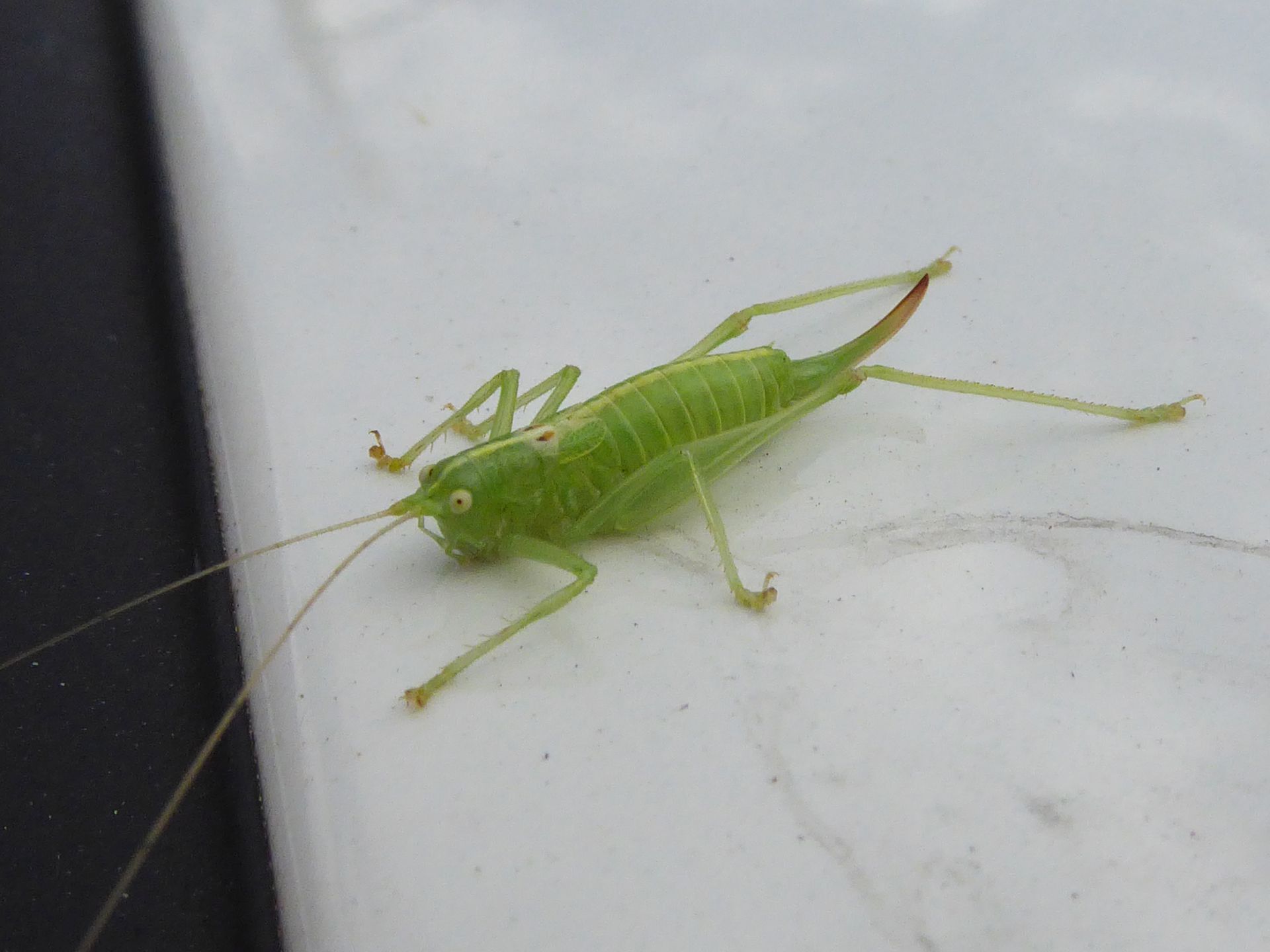
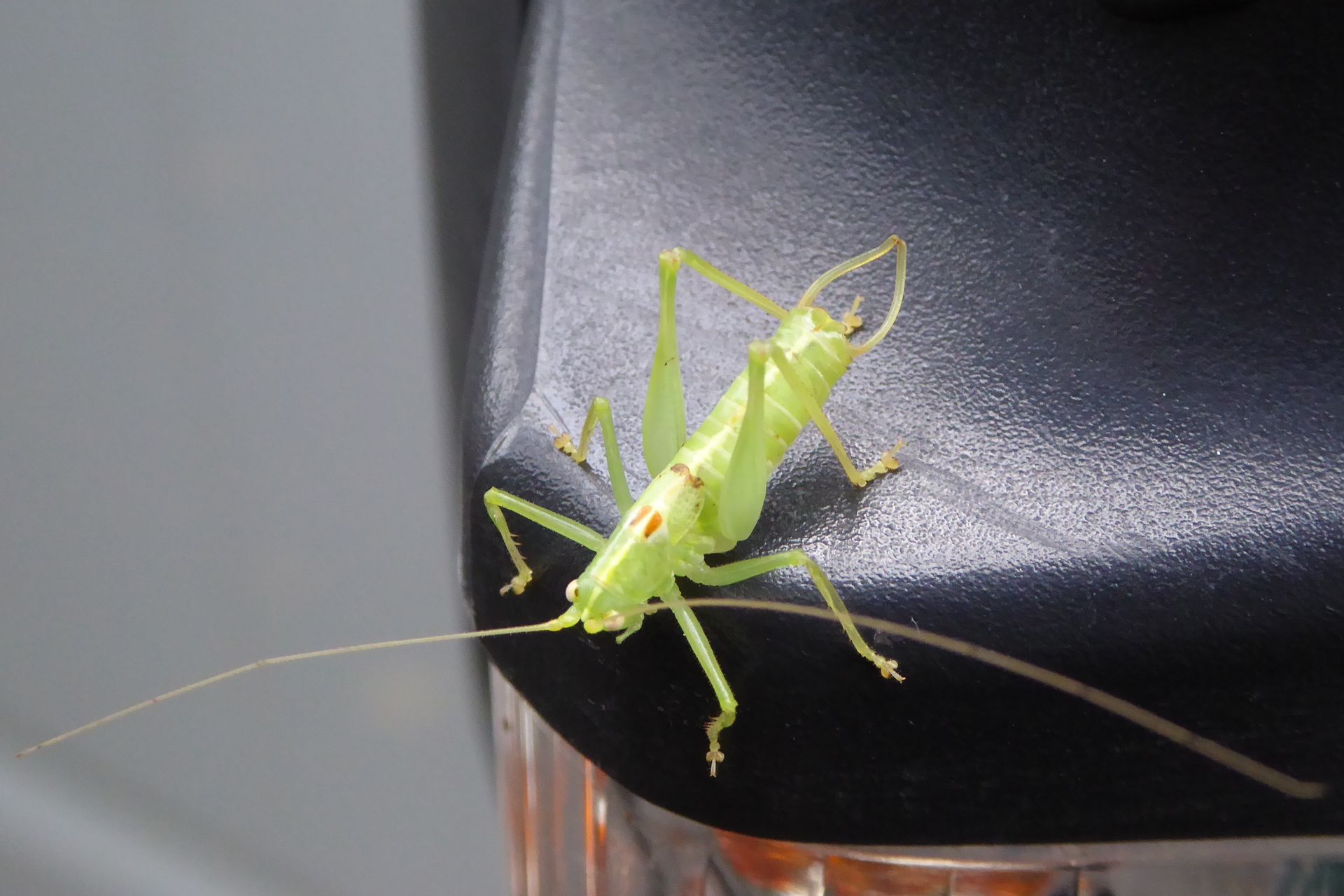
Meconema meridionale is a small bush- in the Tettigoniidae, native to southern Europe and expanding northward. It measures 14–17 mm in body length (excluding ). The is , arboreal, and . It has been documented as a of the horse-chestnut (Cameraria ohridella). Since 2001, it has established in the United Kingdom, representing a northward range expansion linked to climate change.
Pronunciation
How to pronounce Meconema meridionale: //mɛˈkɒnɪmə ˌmɛrɪdɪˈoʊneɪli//
These audio files are automatically generated. While they are not always 100% accurate, they are a good starting point.
Identification
Distinguished from the congeneric Meconema thalassinum (Oak Bush-) by its more southerly native distribution and subtle morphological differences; precise field identification requires examination of detailed structural features. Both are small, green, arboreal bush-crickets with reduced wings. In the UK, M. meridionale is the more recently established of the two Meconema species.
Images
Appearance
Small bush- with body length of 14–17 mm, excluding . Antennae are long and thread-like, typical of the Tettigoniidae. Overall body form is slender and adapted for life in tree .
Habitat
Arboreal; inhabits oak trees and other broadleaved woodland . Associated with mature trees in parks, gardens, and woodland edges.
Distribution
Native to southern France, southwestern Germany, Italy, Switzerland, Austria, the former Yugoslavia, and Bulgaria. Since 2001, established in the United Kingdom, where it continues to expand its range northward.
Seasonality
active during summer months; precise in expanded range still being documented.
Diet
; predatory. Documented as a of Cameraria ohridella, the horse-chestnut .
Host Associations
- Cameraria ohridella - Horse-chestnut ; pest of Aesculus hippocastanum
Life Cycle
Development includes and nymphal stages preceding adulthood. Nymphs resemble miniature without fully developed wings, following the hemimetabolous pattern typical of Orthoptera.
Behavior
in activity pattern. Males produce -specific calling songs to attract females, though the specific song characteristics of this species are less documented than those of some relatives.
Ecological Role
in arboreal , contributing to of leaf-mining insects. Range expansion provides a case study for climate-driven changes in insect distributions.
Human Relevance
Considered a of Least Concern by IUCN. Its northward expansion into the UK is cited as evidence of climate change effects on insect distributions. Potential value as a agent for the horse-chestnut .
Similar Taxa
- Meconema thalassinumCongeneric with similar and ; native to more northerly regions of Europe including the UK. M. meridionale has a more southerly origin and has only recently expanded into areas where M. thalassinum occurs.
More Details
Range expansion
The ' establishment in the UK since 2001 and continued northward spread is documented as part of a broader pattern of climate-driven range expansion among European Orthoptera.
Conservation status
Classified as Least Concern on the IUCN Red List, described as 'widespread and common, and the size is very large' in its native range.