
Paranthaclisis hageni
(Banks, 1899)
Hagen's antlion
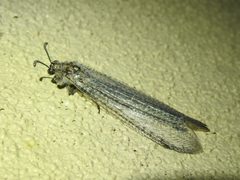
Paranthaclisis hageni is a of antlion (Neuroptera: Myrmeleontidae) originally described by Banks in 1899 as Acanthaclisis hageni. The species is native to North and Middle America, with documented presence in both regions. As a member of the antlion , it shares the characteristic of having predatory larvae that construct pit traps in sandy substrates to capture prey, and aerial that are typically and weak fliers.
Pronunciation
How to pronounce Paranthaclisis hageni: /ˌpærænˈθæklɪsɪs ˈhædʒənaɪ/
These audio files are automatically generated. While they are not always 100% accurate, they are a good starting point.
Images
Distribution
North America and Middle America. The has confirmed presence records from both regions according to GBIF distribution data.
Life Cycle
Like other antlions, Paranthaclisis hageni has a complete consisting of , larva, pupa, and stages. The larvae are ground-dwelling that construct conical pit traps in loose, dry soil or sand. The pupal stage occurs within a silken cocoon.
Behavior
Larvae are sit-and-wait that construct pitfall traps in sandy substrates to capture small arthropods. are typically and are weak, fluttering fliers.
Ecological Role
Larvae function as of small soil-dwelling arthropods, potentially including ants and other small insects that fall into their pit traps. may serve as prey for larger predators including birds, bats, and other insects.
Human Relevance
Similar Taxa
- Other Paranthaclisis speciesCongeneric share similar and traits; identification to species level requires examination of genitalia and wing venation details.
- Other Myrmeleontidae generaAntlions in related share the characteristic pit-trap building of larvae and similar body plans; distinguished by details of wing venation, body size, and genitalic structure.
More Details
Taxonomic History
Originally described as Acanthaclisis hageni by Banks in 1899, this was later transferred to the Paranthaclisis. The basionym Acanthaclisis hageni remains in use as a synonym.
Sources and further reading
- BugGuide
- GBIF taxonomy match
- iNaturalist taxon
- NCBI Taxonomy
- Catalogue of Life
- Don't Miss the Dragonfly Open House Nov. 6 at Bohart Museum of Entomology | Bug Squad
- Dragonfly Enthusiasts, Unite! Open House Set Nov. 6 at Bohart Museum | Bug Squad
- Bohart Museum Open House: Dragonflies Rule! | Bug Squad
- Publications | Entomology Research Museum
- Hagenius brevistylus Archives - Entomology Today
- When pearly-eye meets dragonfly: Northern pearly-eye, Enodia anthedon, and clubtail dragonflies, Gomphidae spp. — Bug of the Week