Platynota semiustana
Walsingham, 1884
singed platynota
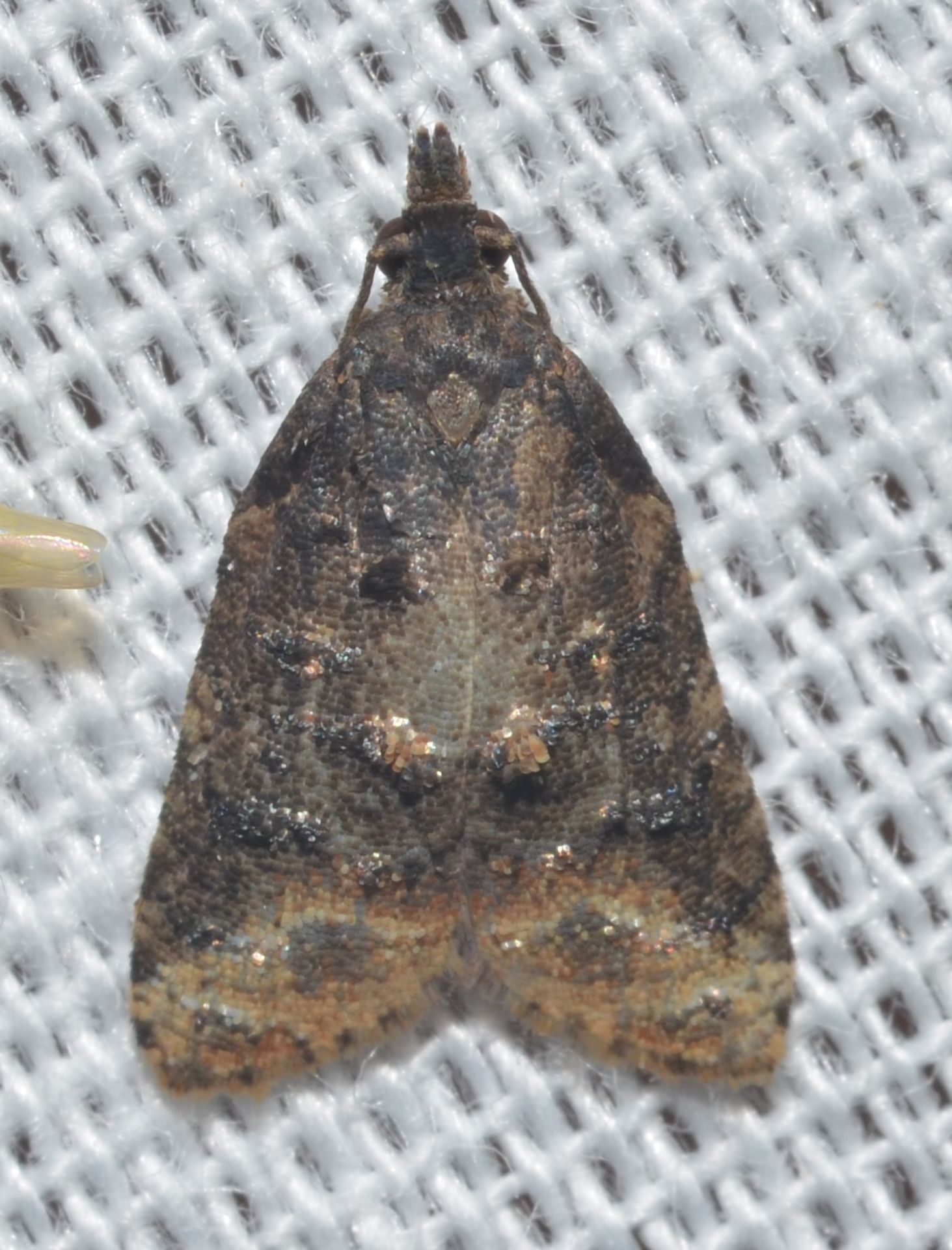
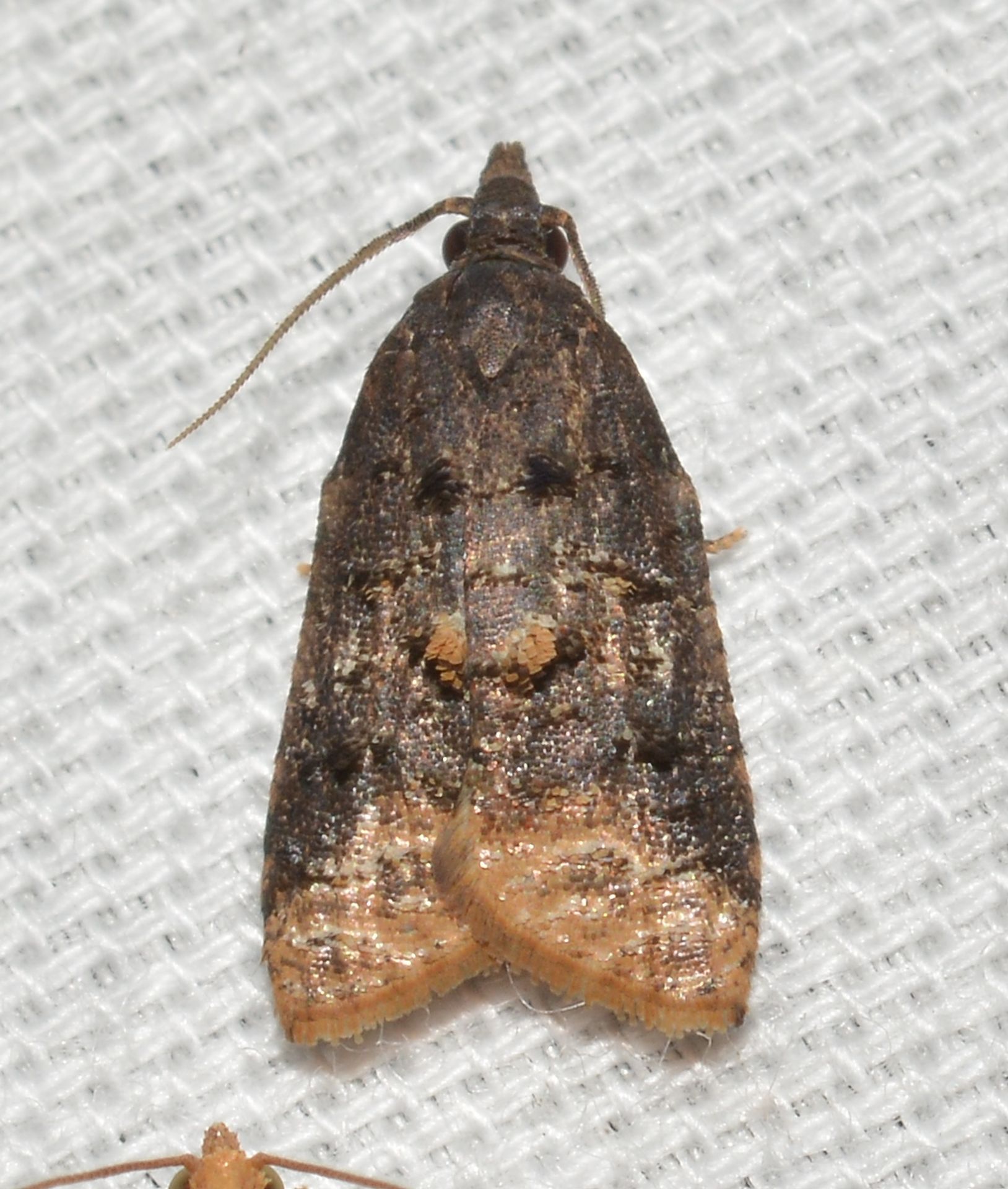
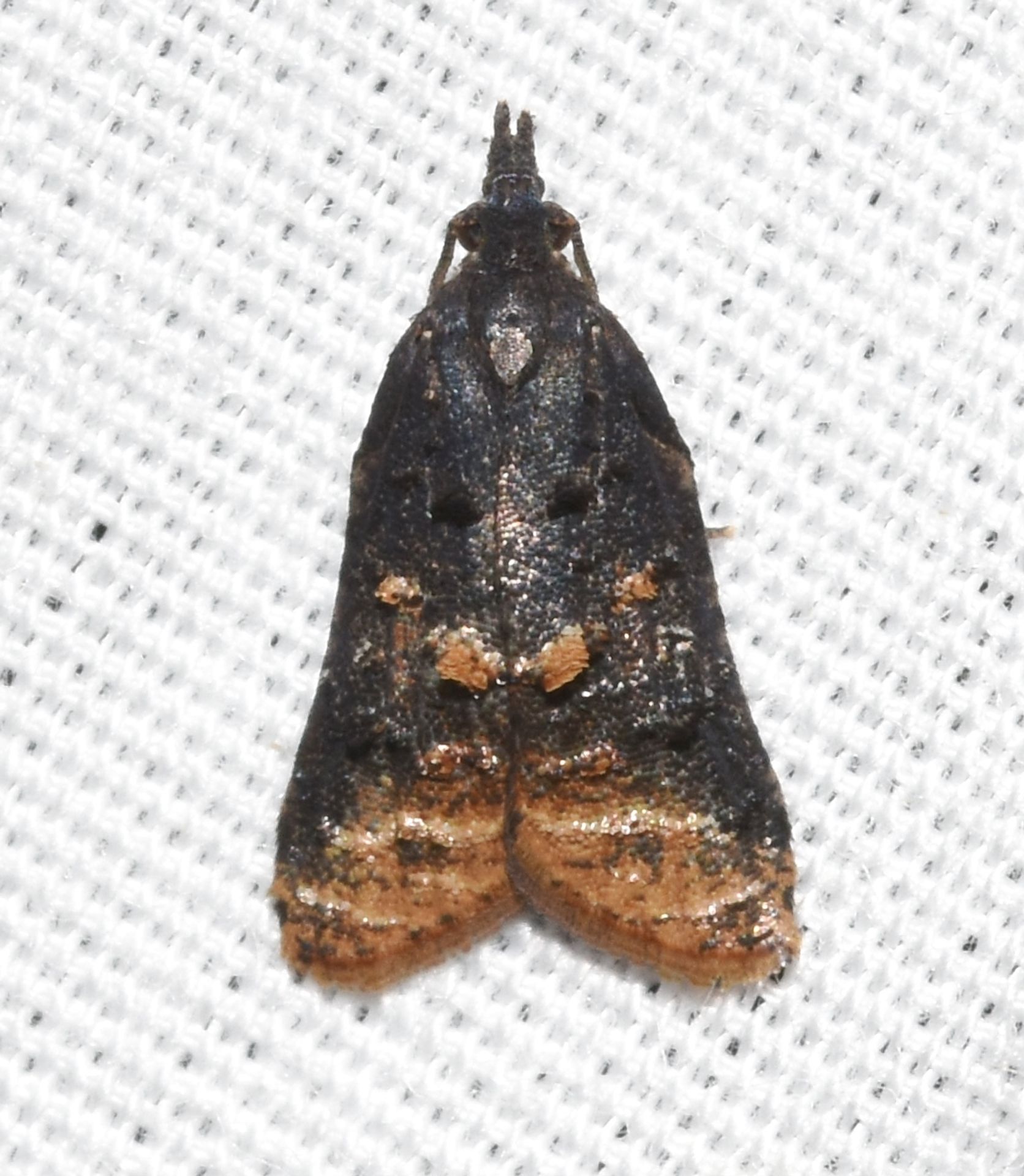
Platynota semiustana is a small tortricid with a wingspan of 13–17 mm, characterized by sooty black forewings with a paler terminal line. It is known from the southeastern and south-central United States, with records extending north to Maine. The has been documented as prey for the mason wasp Monobia quadridens, which hunts its caterpillars to provision nest .
Pronunciation
How to pronounce Platynota semiustana: //ˌplætɪˈnoʊtə sɛmjuˈstænə//
These audio files are automatically generated. While they are not always 100% accurate, they are a good starting point.
Identification
The combination of small size (13–17 mm wingspan), sooty black forewings, and paler terminal line separates this from other Platynota. It lacks the more complex banding or mottling patterns seen in related species such as P. stultana ( leafroller). Confirmation typically requires examination of genitalia or reference to regional faunal works.
Images
Appearance
Small with wingspan 13–17 mm. Forewings are sooty black with a paler terminal line. Hindwings and body details are not well documented in available sources.
Distribution
Recorded from Alabama, Arkansas, Delaware, Florida, Georgia, Maine, North Carolina, Oklahoma, South Carolina, Tennessee, Texas, and Vermont. The range spans the southeastern and south-central United States with scattered northern records.
Host Associations
- Monobia quadridens - preyCaterpillars of Platynota semiustana are hunted by this mason wasp to provision nest
Ecological Role
Larval stage serves as prey for solitary ; specific herbivore-plant interactions are not documented in available sources.
Similar Taxa
- Platynota stultanaBoth are small tortricid moths in the same ; P. stultana ( leafroller) has more complex forewing patterning and is a documented agricultural pest, whereas P. semiustana has simpler sooty black coloration
More Details
Predation by mason wasps
Documented as one of several Platynota whose caterpillars are hunted by the mason wasp Monobia quadridens. The stings caterpillars into paralysis and provisions nest with them.