
Anopina
Obraztsov, 1962
Species Guides
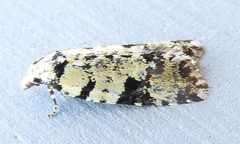
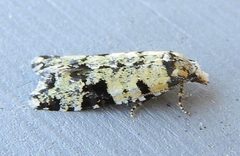
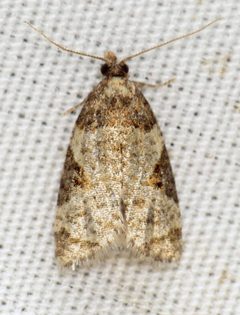
6Anopina is a of tortricid moths in the Tortricinae, tribe Cochylini. The genus was erected by Obraztsov in 1962 and contains approximately 70 described , most of which were described by Brown & Powell in a 2000 revision. Species are distributed primarily in North and Central America, with many to Mexico. The genus is characterized by distinctive genitalic , particularly in the male valvae.
Pronunciation
How to pronounce Anopina: /əˈnɒpɪnə/
These audio files are automatically generated. While they are not always 100% accurate, they are a good starting point.
Identification
Anopina are distinguished from other Cochylini primarily by male genitalic characters: the valva is typically divided or deeply cleft, with various processes and spines that are diagnostic at the species level. Female genitalia feature a well-developed sterigma and distinctive signum . External morphology is generally conservative within the genus; forewings are typically grayish or brownish with variable pattern elements including fasciae, spots, or streaks. Specific identification requires dissection and examination of genitalia.
Images
Distribution
Primarily distributed in North and Central America. The majority of are Mexican endemics, with additional records from the southwestern United States (Arizona, New Mexico, Texas), Guatemala, El Salvador, and Vermont (USA).
Similar Taxa
- CochylisSimilar size and general appearance, but Anopina is distinguished by divided male valvae and different signum structure in females; Cochylis typically have more uniform forewing coloration and different genitalic architecture.
- PhalonidiaOverlaps in distribution and ; Phalonidia lacks the deeply cleft male valvae characteristic of Anopina and typically shows different forewing pattern elements.
More Details
Taxonomic history
The was established by Obraztsov in 1962 with Anopina ainslieana as the type . A major revision by Brown & Powell in 2000 transferred numerous species from related genera and described many new species, effectively redefining the genus boundaries based on genitalic .
Species diversity
The exhibits high concentrated in Mexico, with many having restricted geographic ranges. This pattern suggests significant localized speciation, possibly associated with the complex topography of the Mexican highlands.