
Cochylis
Treitschke, 1829
Species Guides
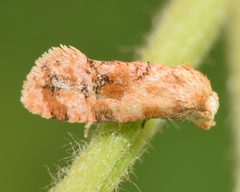
3Cochylis is a of leafroller moths in the Tortricidae, Tortricinae. are distributed across the Holarctic, Oriental, and Neotropical regions. In the Palaearctic, members exhibit one or two annually with larval . Larvae are oligophagous, feeding primarily on Asteraceae. The genus has undergone taxonomic revision; in 2019, eight species were moved to the redefined genus Cochylichroa based on phylogenetic analysis.
Pronunciation
How to pronounce Cochylis: //kəʊˈkaɪlɪs//
These audio files are automatically generated. While they are not always 100% accurate, they are a good starting point.
Identification
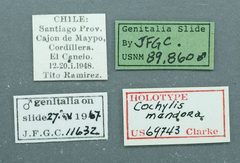
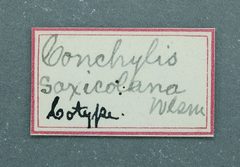
Cochylis are small tortricid moths. The can be distinguished from the related genus Cochylichroa, which was redefined in 2019 to accommodate species formerly placed in Cochylis (including C. hospes, C. temerana, and others). Accurate identification to species level typically requires examination of genitalia and wing pattern details. Cochylis discerta has been reclassified to Falseuncaria based on mitogenomic and morphological evidence showing distinct genitalia architecture including broad transtilla and ring-shaped sterigma.
Images
Distribution
Holarctic, Oriental, and Neotropical regions. Specific distribution records include Denmark, Norway, Sweden, Vermont (USA), and other parts of the United States.
Seasonality
In the Palaearctic Region, one or two occur annually.
Diet
Larvae are oligophagous, feeding mainly on plants belonging to Asteraceae. Specific associations include sunflower (Helianthus annuus) for at least some , and Campuloclinium macrocephalum (pompom weed) for Cochylis campuloclinium.
Host Associations
- Asteraceae (family) - larval plantsprimary plant for larvae
- Helianthus annuus (sunflower) - plantdocumented for Cochylis hospes; females use chemical cues for selection
- Campuloclinium macrocephalum (pompom weed) - planttarget for agent Cochylis campuloclinium in South Africa
Life Cycle
In the Palaearctic Region, occurs in the larval stage. One or two are produced annually.
Behavior
females of at least some use chemical cues for -plant selection. Olfactory stimuli elicit upwind , while visual stimuli (particularly yellow color) elicit landing; combined stimuli are necessary for oviposition.
Ecological Role
Herbivore. Cochylis campuloclinium serves as a agent for the plant Campuloclinium macrocephalum in South Africa.
Human Relevance
Some are agricultural pests of sunflower crops. The banded sunflower moth (formerly Cochylis hospes, now Cochylichroa hospes) was considered a significant pest of commercial sunflower production in North America, with larvae feeding on disk flowers and seeds. Cochylis campuloclinium has been employed as a agent for pompom weed in South Africa.
Similar Taxa
- Cochylichroa redefined in 2019 to accommodate eight formerly placed in Cochylis (including C. hospes, C. arthuri, C. atricapitana, C. aurorana, C. avita, C. hoffmanana, C. temerana, C. viscana) based on phylogenetic analysis. These species are no longer considered part of Cochylis.
- FalseuncariaCochylis discerta was reclassified to Falseuncaria based on congruent mitogenomic and morphological evidence showing shared diagnostic genitalia features (broad transtilla, absence of process in male genitalia, ring-shaped sterigma and heavily sclerotized antrum in female genitalia) rather than Cochylis characteristics.
More Details
Taxonomic instability
The has experienced significant taxonomic revision. A 2019 phylogenetic study redefined Cochylichroa and transferred eight from Cochylis. Additionally, mitogenomic and morphological evidence supports the transfer of Cochylis discerta to Falseuncaria.
Research gaps
Much of the detailed biological information available pertains to specific (particularly C. hospes and C. campuloclinium) rather than the as a whole. Comprehensive data for the majority of Cochylis species remains limited.
Sources and further reading
- BugGuide
- Wikipedia
- GBIF taxonomy match
- iNaturalist taxon
- NCBI Taxonomy
- Catalogue of Life
- Managing Insect Pests of Texas Sunflowers - AgriLife Extension Entomology
- Bug Eric: National Moth Week Recap for Colorado Springs
- Bug Eric: More Insects From Sunflowers
- The role of chemical cues in host-plant selection by adult female Homoeosoma electellum (Hulst) (Lepidoptera: Pyralidae) and Cochylis hospes Walsingham (Lepidoptera: Tortricidae)
- Host range and impact of the flower-feeding moth,Cochylis campuloclinium– a biological control agent forCampuloclinium macrocephalum, in South Africa
- A New Taxonomic Placement of Cochylis discerta (Lepidoptera: Tortricidae) to Falseuncaria Supported by Congruent Mitogenomic and Morphological Evidence.