
Aethes
Billberg, 1820
Conch moths
Species Guides
27- Aethes angulatana(Angular Aethes Moth)
- Aethes angustana
- Aethes argentilimitana(Silver-bordered Aethes)
- Aethes atomosana(Two-spotted Aethes)
- Aethes baloghi
- Aethes biscana(Reddish Aethes)
- Aethes bomonana
- Aethes deutschiana
- Aethes floccosana
Aethes is a of small tortricid moths ( Tortricidae, Tortricinae, tribe Cochylini) comprising approximately 70-75 described distributed across the Palaearctic region. Species are characterized by small size (wingspans typically 8-23 mm), narrow forewings, and often subtle coloration in yellow, brown, or grey tones with variable fasciation patterns. Larvae are generally associated with Asteraceae, feeding in stems, roots, and seed of plants. The genus includes several well-known species such as Aethes cnicana (Thistle Conch) and Aethes hartmanniana that have been subject to intensive ecological study.
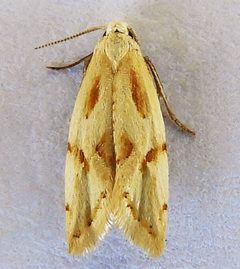
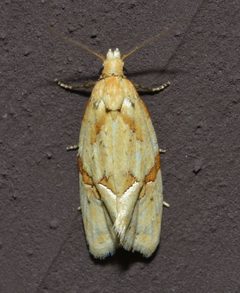
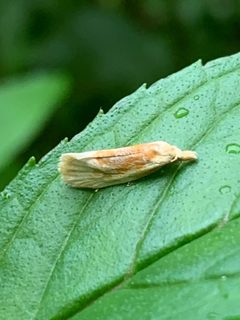
Pronunciation
How to pronounce Aethes: /ˈiːθiːz/
These audio files are automatically generated. While they are not always 100% accurate, they are a good starting point.
Images
Habitat
occupy diverse including moist rich fens, eu- and mesotrophic meadows, colline and montane hay meadows, acid grasslands and heaths, marshy areas, halophytic and dry open grasslands, sand steppes, oak and beech forests, mixed forests with Scots pine, karst shrub-forests, rock swards, alluvial forests, swamps, vineyards, and orchards. Altitudinal range spans 90-1015 m. Habitat specificity varies by species, with some showing strong associations with particular vegetation types while others are more .
Distribution
Palaearctic distribution with greatest diversity in Europe (45 ) and western Asia. Occurs from the British Isles and Scandinavia through central and eastern Europe, extending into Central Asia with species in that region. North American records exist but require verification; some species have been described from the Neotropics. Within Europe, species show varying distribution patterns: some widespread across multiple macroregions, others more restricted.
Seasonality
periods vary by and voltinism, generally occurring from April through September. species fly in spring to mid-summer (e.g., Aethes margarotana: April to end of July). species show two distinct flight periods (e.g., Aethes hartmanniana: mid-May to mid-June and early July to mid-August). Multivoltine species may have more extended or multiple flight periods. is influenced by altitude and local climate conditions.
Diet
Larvae feed primarily on Asteraceae (Compositae), with documented including Scabiosa ochroleuca, S. columbaria, Succisa pratensis, Knautia arvensis, Eryngium campestre, and various Cirsium (thistle) . Larval feeding occurs in stems, roots, and seed ; some species initially feed in seeds before boring into stem pith. feeding habits are not well documented.
Host Associations
- Scabiosa ochroleuca - larval foodplantlarvae in stems and roots
- Scabiosa columbaria - larval foodplantlarvae in stems and roots
- Succisa pratensis - larval foodplantlarvae in stems and roots
- Knautia arvensis - larval foodplantlarvae in stems and roots
- Eryngium campestre - larval foodplantlarvae in stems and roots
- Cirsium vulgare - larval foodplantlarvae feed in seeds then bore into stem pith
- various Cirsium species - larval foodplantgeneral association with thistles
Life Cycle
Larvae live in stems and roots of plants, with most hibernating in the larval stage from autumn through winter. occurs in spring or early summer, often within the host plant: some species form pupal chambers in upper roots by end of March and pupate by early May, others pupate in dead stems. are laid on flowers or flower buds. Voltinism varies: , , and multivoltine species occur within the .
Ecological Role
Herbivores that feed on Asteraceae roots, stems, and seed ; contribute to herbivore diversity in grassland, meadow, and forest edge . abundance is affected by loss, particularly reduction of marginal and open areas with plants.
Similar Taxa
- AethesoidesRelated in tribe Cochylini; distinguished by genitalic and wing pattern characters
- CochylisRelated cochyline ; Aethes typically has narrower forewings and more subdued coloration
- PhalonidiaSimilar small tortricids; genitalic examination often required for definitive separation
More Details
Taxonomic history
The was established by Billberg in 1820. Taxonomic revisions by Razowski (1960s-2000s) greatly expanded the genus and clarified boundaries. The taxonomic status of some species pairs remains disputed; for example, Aethes piercei has been considered not specifically distinct from A. hartmanniana based on genitalic analysis.
Polymorphism
Several exhibit pronounced with distinct ecological forms, particularly A. hartmanniana, A. rutilana, and A. kindermanniana. Very dark morphs occur in some species inhabiting water-fringing herbaceous .
Genomic resources
The of Aethes cnicana has been sequenced as part of the Darwin Tree of Life Project, producing a 412.26 Mb -level assembly with 30 chromosomal pseudomolecules.