
Epiphyas
Turner, 1927
Species Guides
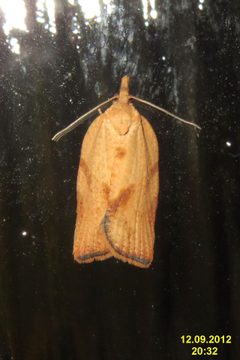
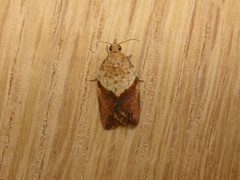
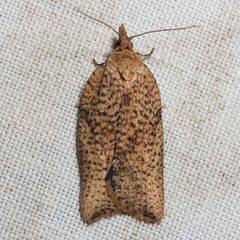
1- Epiphyas postvittana(light brown apple moth)
Epiphyas is a of tortricid moths in the tribe Archipini, established by Turner in 1927. The genus comprises approximately 39 described and is primarily distributed across Australia and Tasmania, with additional species on Lord Howe Island. The most widely known member is Epiphyas postvittana (light brown apple moth), a major agricultural pest native to Australia that has been introduced to multiple countries including New Zealand, Hawaii, New Caledonia, the United Kingdom, and California. The genus includes both pest species and with restricted associations.
Pronunciation
How to pronounce Epiphyas: /ˌɛpɪˈfaɪəs/
These audio files are automatically generated. While they are not always 100% accurate, they are a good starting point.
Images
Distribution
Native to Australia, including Tasmania and Lord Howe Island. Epiphyas postvittana has been introduced to New Zealand, Hawaii, New Caledonia, the United Kingdom, Ireland, and California (USA), where it was first detected in Berkeley in 2006.
Human Relevance
Epiphyas postvittana (light brown apple moth) is a significant agricultural pest with a range spanning over 250 plant , including major crops such as apples, grapes, citrus, berries, stone fruits, and vegetables. Its introduction to California triggered extensive and efforts due to threats to the state's agricultural industry. The has been the subject of substantial research on invasion , , and . Other species in the have minimal documented economic impact.
Similar Taxa
- ArchipsBoth belong to tribe Archipini and share similar tortricid ; Archips are also leafrolling caterpillars with broad ranges, requiring genitalia examination or molecular analysis for definitive separation.
- ChoristoneuraAnother Archipini with leafrolling larvae and overlapping geographic range in Australia; -level identification relies on subtle wing pattern differences and genitalia .
More Details
Taxonomic Note
Epiphyas intrepida was described in 2020 as a new to Lord Howe Island, previously misidentified as E. aulacana. The shows complex biogeographic patterns with both widespread pest species and narrow endemic .
Research Significance
E. postvittana has become a model organism for studies on invasion , with research demonstrating high rates by resident in California—unusual for an . The has also been used in studies of binding proteins and apoptosis inhibitors.
Sources and further reading
- BugGuide
- Wikipedia
- GBIF taxonomy match
- iNaturalist taxon
- NCBI Taxonomy
- Catalogue of Life
- Of Medflies and Light Brown Apple Moths | Bug Squad
- Bohart Museum to Dedicate Open House to Jerry Powell | Bug Squad
- LBAM--Not Your Typical Invader | Bug Squad
- Not Again! | Bug Squad
- Ain't No Moths on Me | Bug Squad
- Bug Squad
- Epiphyas postvittana . [Distribution map].
- The inhibitors of apoptosis of Epiphyas postvittana nucleopolyhedrovirus
- Epiphyas postvittana (light brown apple moth).
- Crystal structure of Epiphyas postvittana pheromone binding protein 3
- Light brown apple moth, Epiphyas postvittana (Walker) (Insecta: Lepidoptera: Tortricidae)
- Factors Determining Variation in Fecundity of the Light Brown Apple Moth, Epiphyas Postvittana (Walker) (Tortricidae).
- Population Ecology of the Light Brown Apple Moth, Epiphyas postvittana (Lepidoptera: Tortricidae)
- Influence of Larval Rearing Conditions on the Body Size and Flight Capacity of Epiphyas-Postvittana Moths
- The Bionomics, Distribution and Host Range of the Light Brown Apple Moth, Epiphyas Postvittana (Walk.) (Tortricidae).
- Influence of Environmental-Conditions on Flight Duration of Epiphyas-Postvittana (Walker) (Lepidoptera, Tortricidae)
- Point Source Distribution Affects Pheromone Spike Frequency and Communication Disruption of Epiphyas postvittana (Lepidoptera: Tortricidae)
- Epiphyas intrepidasp. nov. (Lepidoptera: Tortricidae): an endemic, not a stowaway, on Lord Howe Island