
Epiphyas postvittana
(Walker, 1863)
light brown apple moth, LBAM, apple leaf roller
Epiphyas postvittana, the light brown apple moth, is a highly tortricid native to Australia. It has become an agricultural pest in multiple countries including New Zealand, Hawaii, the United Kingdom, and California, where it was first detected in 2006. The feeds on over 250 plant species across numerous , with larvae causing damage as leafrolling caterpillars. Its broad range and high reproductive potential make it a significant threat to horticultural industries worldwide.


Pronunciation
How to pronounce Epiphyas postvittana: /ˌɛpɪˈfaɪəs pɔstvɪˈtɑːnə/
These audio files are automatically generated. While they are not always 100% accurate, they are a good starting point.
Identification
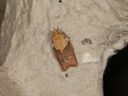
distinguished from similar tortricids by combination of size, wing pattern, and male genitalia (costal fold present). In California, most likely confused with other leafroller such as Pandemis pyrusana or Archips spp., but E. postvittana shows more uniform brown coloration and lacks the distinct markings of many native species. Larvae identified by leafrolling on broad range; molecular confirmation often required for definitive identification. lures specific to this species are used for monitoring.
Images
Habitat
Agricultural areas, orchards, vineyards, nurseries, and urban landscapes. In native Australia, occurs in diverse from coastal regions to inland areas. In invaded regions, established in temperate climates with suitable plants. In Hawaii, restricted to elevations above 1100 m. Thrives in areas with abundant broadleaf vegetation.
Distribution
Native to Australia (widespread across all states including Australian Capital Territory, New South Wales, Queensland, South Australia, Tasmania, Victoria, Western Australia). Introduced to: New Zealand (widespread throughout lowlands), Hawaii (restricted to high elevations), New Caledonia, United Kingdom (southern England and Ireland, spreading), and United States (California, detected 2006, now established in multiple counties).
Seasonality
In Victoria, Australia, completes 3-3.5 per year. active year-round in suitable climates with peak activity varying by region. In temperate invaded areas, multiple overlapping generations occur during warmer months. occurs at temperatures between 10-30°C, with optimal activity around 20°C.
Diet
Highly herbivore. Larvae feed on leaves, flowers, and fruits of plants. Documented hosts include: pome fruits (apple, pear), stone fruits (peach, apricot, plum), citrus, grapevine, berries (strawberry, raspberry, blackberry, blueberry), kiwifruit, persimmon, vegetables (tomato, cabbage, beans, pumpkin, corn), and numerous ornamental plants (rose, camellia, chrysanthemum, jasmine, eucalyptus). Also feeds on native and landscape trees including oak, willow, walnut, poplar, cottonwood, alder, and pine.
Host Associations
- Malus domestica - pome fruit, major economic
- Pyrus malus - apple, affects and capacity of
- Vitis vinifera - grapevine, significant pest in wine regions
- Fragaria spp. - strawberry
- Rubus spp. - caneberries including blackberry, raspberry, boysenberry
- Prunus persica - peach
- Prunus armeniaca - apricot
- Actinidia deliciosa - kiwifruit
- Citrus spp. - citrus
- Diospyros kaki - persimmon
- Solanum lycopersicum - tomato
- Brassica oleracea - cabbage and cole crops
- Zea mays - corn
- Rosa spp. - rose
- Camellia spp. - camellia
- Chrysanthemum spp. - chrysanthemum
- Jasminum spp. - jasmine
- Eucalyptus spp. - eucalyptus
- Rumex crispus - curled dock, affects and capacity
- Plantago lanceolata - plantain, affects and capacity
- Trifolium repens - white clover
- Quercus spp. - oak
- Salix spp. - willow
- Juglans spp. - walnut
- Populus spp. - poplar, cottonwood
- Alnus spp. - alder
- Pinus spp. - pine
Life Cycle
Holometabolous with , larva, pupa, and stages. Eggs laid in masses on leaves; 5.7 days at 28°C, longer at cooler temperatures. Larvae pass through 5-6 instars, feeding within silken leaf shelters. Larval development threshold 7.5°C; optimal temperature approximately 20°C. occurs in leaf shelter or in debris on ground. Adult after pupal development; total time approximately 620.5 . Multiple overlapping generations per year in favorable climates. highly variable, 0-1492 eggs per female depending on larval food plant, temperature, and adult size.
Behavior
; attracted to UV light. Larvae exhibit leafrolling , constructing silken shelters by rolling or tying leaves together, within which they feed and pupate. Adults capable of sustained ; flight duration influenced by temperature, humidity, and nutritional status. Females release to attract males; specific binding proteins identified. Mating increases flight duration in females, presumably due to reduced body weight from oviposition. Adults feed on honeydew and nectar when available.
Ecological Role
Herbivore and agricultural pest. In invaded California, has accumulated diverse resident comparable to native Australian parasitoid fauna, with levels unusually high for an . Serves as host for including Epiphyas postvittana (EppoMNPV), which has been studied for potential applications.
Human Relevance
Major agricultural pest threatening fruit industries, viticulture, and ornamental plant production. In California, detection in 2006 triggered extensive programs and efforts costing millions of dollars. Potential economic impact estimated in billions of dollars annually if establishment becomes widespread. Export restrictions imposed by trading partners including Canada and Mexico. Subject to monitoring programs using traps. Research focus for , , and pheromone-based . First detection in California by entomologist Jerry Powell in 2006 brought significant scientific attention to invasion of this .
Similar Taxa
- Pandemis pyrusanaSimilar leafroller in western North America; distinguished by wing pattern with more distinct markings and different male genitalia
- Archips spp.Other tortricid leafrollers; generally larger with more contrasting wing patterns and different larval shelter construction
- Choristoneura spp.Tortricid pests with similar leafrolling larvae; distinguished by and preferences
More Details
Invasion Biology Significance
E. postvittana represents an unusual case: despite typical expectations of low for , California have accumulated diversity and parasitism rates comparable to native Australian populations. This makes it 'not your typical invader' according to researcher Nick Mills.
Scientific Legacy
The 2006 detection of E. postvittana in California by UC Berkeley entomologist Jerry Powell (1933-2023) was a notable scientific event. Powell, an international authority on microlepidoptera, discovered the in his own backyard in Berkeley using a UV light trap, demonstrating the value of consistent monitoring even by experienced researchers.
Pheromone Research
The binding protein EposPBP3 was the first olfactory-related protein structure determined from the tortricid , providing foundation for development of novel, olfactory-targeted .
Temperature Limits
Development occurs between 7.5°C and 31-32°C; no hatch above 31.3°C. This thermal profile restricts the largely to temperate regions, explaining its absence from tropical lowlands in Hawaii.
Sources and further reading
- BugGuide
- GBIF taxonomy match
- NCBI Taxonomy
- Catalogue of Life
- Of Medflies and Light Brown Apple Moths | Bug Squad
- Bohart Museum to Dedicate Open House to Jerry Powell | Bug Squad
- LBAM--Not Your Typical Invader | Bug Squad
- Not Again! | Bug Squad
- Ain't No Moths on Me | Bug Squad
- Bug Squad
- Epiphyas postvittana . [Distribution map].
- The inhibitors of apoptosis of Epiphyas postvittana nucleopolyhedrovirus
- Epiphyas postvittana (light brown apple moth).
- Light brown apple moth, Epiphyas postvittana (Walker) (Insecta: Lepidoptera: Tortricidae)
- Crystal structure of Epiphyas postvittana pheromone binding protein 3
- Population Ecology of the Light Brown Apple Moth, Epiphyas postvittana (Lepidoptera: Tortricidae)
- Influence of Larval Rearing Conditions on the Body Size and Flight Capacity of Epiphyas-Postvittana Moths
- Factors Determining Variation in Fecundity of the Light Brown Apple Moth, Epiphyas Postvittana (Walker) (Tortricidae).
- The Bionomics, Distribution and Host Range of the Light Brown Apple Moth, Epiphyas Postvittana (Walk.) (Tortricidae).
- Influence of Environmental-Conditions on Flight Duration of Epiphyas-Postvittana (Walker) (Lepidoptera, Tortricidae)
- Point Source Distribution Affects Pheromone Spike Frequency and Communication Disruption of Epiphyas postvittana (Lepidoptera: Tortricidae)