
Clepsis virescana
(Clemens, 1865)
Greenish Apple Moth, Light Brown Apple Moth
Clepsis virescana is a small tortricid native to North America. It inhabits shrubby open areas and aspen parkland across southern Canada and much of the United States. fly from spring through late summer, with larvae feeding on leaves of Prunus and Rosa .

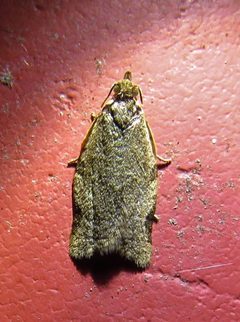
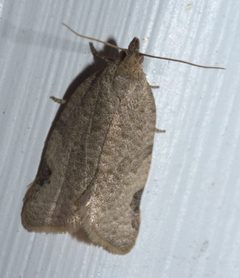
Pronunciation
How to pronounce Clepsis virescana: //ˈklɛpsɪs ˌvɪrəˈskɑːnə//
These audio files are automatically generated. While they are not always 100% accurate, they are a good starting point.
Identification
Distinguished from similar Clepsis by combination of geographic distribution, period, and larval associations. Forewing length of 6.4–9.1 mm provides a measurable character. Exact diagnostic features separating it from are not detailed in available sources.
Images
Appearance
Small with forewings measuring 6.4–9.1 mm in length. Forewings are greenish to light brown in coloration. Wing pattern and exact coloration details are not well documented in available sources.
Habitat
Shrubby open areas and aspen parkland. Occupies with woody shrubs, particularly those supporting plants in the Prunus and Rosa.
Distribution
Widespread in North America. Recorded from southern Canada (Alberta, Manitoba, Saskatchewan) and most of the United States. Vermont distribution confirmed.
Seasonality
have been recorded on wing from April to September.
Diet
Larvae feed on both fresh and decaying leaves of Prunus and Rosa .
Host Associations
- Prunus - larval food plantBoth fresh and decaying leaves consumed
- Rosa - larval food plantBoth fresh and decaying leaves consumed
Life Cycle
Complete with , larval, pupal, and stages. Larval stage associated with leaf feeding on plants. details not documented.
Behavior
; attracted to light. Larvae roll or tie leaves for shelter, consistent with leafroller characteristics.
Ecological Role
Herbivore in shrubland and parkland . Larvae process leaf material of woody shrubs, contributing to nutrient cycling through consumption of both fresh and decaying foliage.
Human Relevance
Potential minor pest of cultivated Prunus and Rosa , though economic significance is not documented. Attracted to artificial light sources.
Similar Taxa
- Clepsis peritanaCongeneric leafroller with similar size and preferences; distinguished by different associations and geographic patterns
- Other Clepsis speciesMany share similar ; precise identification often requires examination of genitalia or molecular data not covered in general sources
More Details
Common name confusion
The "light brown apple moth" is shared with Epiphyas postvittana, an Australian that is a major agricultural pest. Clepsis virescana is not the same species and lacks documented economic impact.
Sources and further reading
- BugGuide
- Wikipedia
- GBIF taxonomy match
- iNaturalist taxon
- NCBI Taxonomy
- Catalogue of Life
- Blacklighting at the Bohart: They Saw the Light | Bug Squad
- What Will You See at Bohart Museum Open House | Bug Squad
- Oh, What a (Moth) Night! | Bug Squad
- Mark Your Calendar for 'Moth Night' at Bohart Museum: July 30 | Bug Squad
- A Night at the Bohart Museum: Moth Night on Saturday, July 22 | Bug Squad
- Bug Eric: National Moth Week Recap for Colorado Springs