
Argyrotaenia quercifoliana
(Fitch, 1858)
Yellow-winged Oak Leafroller Moth
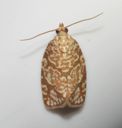
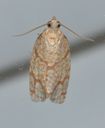
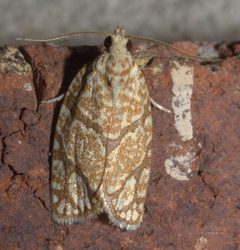
Argyrotaenia quercifoliana, the yellow-winged oak leafroller , is a small tortricid moth found in eastern North America. fly from May to July and are attracted to light. The is associated with oak and witch-hazel, with larvae feeding on leaves of these plants. It is one of numerous leafroller moths in the Argyrotaenia, many of which are economically significant orchard pests.
Pronunciation
How to pronounce Argyrotaenia quercifoliana: /ˌɑːr.dʒɪ.roʊˈtiː.niə ˌkwɜːr.sɪ.foʊ.liˈɑː.nə/
These audio files are automatically generated. While they are not always 100% accurate, they are a good starting point.
Identification
Distinguished from other Argyrotaenia by the yellowish ground color of the forewings combined with oak-associated . Most similar to A. velutinana (red-banded leafroller), which typically shows more prominent reddish-brown transverse banding and has broader plant range including apple and other rosaceous crops. Genitalia examination may be required for definitive identification. The refers to the yellow wing coloration and oak leaf association.
Images
Appearance
Small with wingspan of 16–24 mm. Forewings display yellowish coloration with variable brownish or reddish-brown markings. Pattern includes transverse bands and often a distinct costal patch. Hindwings are pale grayish. Resting posture typical of Tortricidae, with wings held roof-like over the body.
Habitat
Deciduous forests and woodlands, particularly those containing oak (Quercus) and witch-hazel (Hamamelis). Occurs in both mature forest and edge . Larval habitat is the foliage of trees.
Distribution
Eastern North America. Documented from Manitoba and Saskatchewan in Canada southward through the eastern United States. Range extends from the Atlantic coast west to the eastern Great Plains.
Seasonality
are active from May to July. Single per year with adults attracted to light at night.
Diet
Larvae feed on leaves of Hamamelis (witch-hazel) and Quercus (oak). Rhamnus (buckthorn) has been reported as a possible additional , though this requires confirmation.
Host Associations
- Hamamelis - larval food plantwitch-hazel
- Quercus - larval food plantoak
- Rhamnus - possible larval food plantbuckthorn; reported but not firmly established
Life Cycle
Complete with , larva, pupa, and stages. Larvae are leafrollers, constructing shelters by rolling or folding leaves of plants. occurs in the larval shelter or in leaf litter. Adults emerge in late spring to mid-summer.
Behavior
are and attracted to artificial light. Larvae are solitary leafrollers that feed within constructed leaf shelters.
Ecological Role
Larval herbivore on deciduous trees. Serves as prey for and other natural enemies. Not known to be a significant engineer or .
Human Relevance
Not a major economic pest. Distinguished from the closely related red-banded leafroller (Argyrotaenia velutinana), which is an occasional pest in apple orchards. May be encountered by enthusiasts at blacklight setups.
Similar Taxa
- Argyrotaenia velutinanaRed-banded leafroller ; similar size and general appearance but typically with more prominent reddish-brown banding and much broader range including apple and other fruit crops
- Other Argyrotaenia speciesNumerous in eastern North America; many require genitalia dissection or molecular analysis for reliable identification
More Details
Taxonomic history
Originally described as Argyrolepia quercifoliana by Fitch in 1858, later transferred to Argyrotaenia. The specific epithet quercifoliana refers to the oak (Quercus) leaf association.
Research needs
plant records beyond oak and witch-hazel require verification. The Rhamnus association in particular needs confirmation through rearing studies.