
Argyrotaenia
Stephens, 1852
leafroller moths
Species Guides
31- Argyrotaenia alisellana(White-spotted Leafroller Moth)
- Argyrotaenia amatana(pondapple leafroller moth)
- Argyrotaenia bialbistriata
- Argyrotaenia burroughsi
- Argyrotaenia coconinana
- Argyrotaenia coloradana
- Argyrotaenia cupressae
- Argyrotaenia dorsalana
- Argyrotaenia floridana(Florida Leafroller)
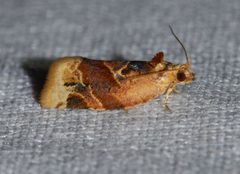
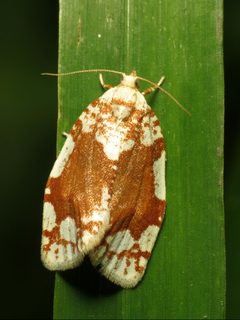
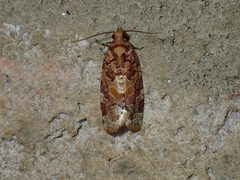
Argyrotaenia is a of tortricid moths in the tribe Archipini, established by Stephens in 1852. The genus includes commonly known as leafroller moths due to the larval habit of rolling or folding leaves for shelter. Several species are economically significant agricultural pests, particularly in orchards. The genus has a primarily New World distribution, with species ranging from North America through Central and South America, and has been recorded as far south as Argentina and Chile. Some species exhibit in wing pattern and size.
Pronunciation
How to pronounce Argyrotaenia: /ˌɑːrɡɪroʊˈtiːniə/
These audio files are automatically generated. While they are not always 100% accurate, they are a good starting point.
Identification
in this are small to medium-sized tortricids with characteristic wing patterns that often include bands or mottled coloration. -level identification typically requires examination of genitalia. may show in wing shape and pattern, as documented in A. socoromaensis where males and females differ in wing size and markings. The genus is distinguished from related tortricid genera by genitalic characters, particularly in the male valva and female sterigma.
Images
Habitat
vary by and include temperate and tropical forests, agricultural areas, and arid Andean environments. A. socoromaensis was described from the arid Andes of northern Chile at elevations in the Andean zone. A. amatana is precinctive to Florida. Many species occupy deciduous forest habitats where their plants occur.
Distribution
New World distribution: North America (eastern Great Plains to Atlantic coast, north to Canada), Central America, and South America. Argentina records include Neuquén, Buenos Aires, and Tucumán provinces. A. socoromaensis represents the first Chilean record for the . A. sphaleropa is widespread in the New World tropics. GBIF records indicate presence in Denmark, Norway, Sweden, Vermont (USA), and other US locations, though these may represent introduced or data artifacts.
Seasonality
periods vary by and latitude. A. velutinana is active over much of the year. A. amatana flight period is documented for Florida. Spring-emerging species occur in temperate regions, with some species showing single- cycles and others multivoltine.
Host Associations
- Stevia philippiana - larval Asteraceae; for A. socoromaensis
- Lupinus oreophilus - larval Fabaceae; for A. socoromaensis
- deciduous trees and shrubs - larval general range for many Argyrotaenia including apple, oak, elm
- herbaceous plants - larval broad range including leaves and fruits
- citrus - larval referenced in literature for related , though A. citrana report from South America was erroneous
Life Cycle
Complete with , larva, pupa, and stages. Larvae are leafrollers, constructing shelters by folding or rolling leaves. occurs in a folded leaf on the ground in A. velutinana. Some have one per year; others are multivoltine.
Behavior
Larvae exhibit leaf-rolling , creating shelters by folding or rolling leaves and feeding within. Male A. velutinana show reduced ability to locate calling females in the presence of synthetic , demonstrating potential for . are and attracted to light.
Ecological Role
Larvae function as herbivores on diverse plant . Some are occasional to significant agricultural pests in orchards, particularly on apple. The represents a component of tortricid diversity in New World , with A. socoromaensis representing the first documented member of tribe Archipini in Chile.
Human Relevance
Several are agricultural pests of economic concern, particularly in apple orchards. A. velutinana (redbanded leafroller) is an occasional orchard pest east of the Rocky Mountains. -based has been investigated as a management strategy. Taxonomic research on the supports identification and management of pest species.
Similar Taxa
- ProteoterasBoth are tortricid with leaf-rolling larvae; Proteoteras includes twig-boring like P. aesculana on maple, distinguished by larval habit and specificity
- ChoristoneuraBoth in tribe Archipini with similar ; Choristoneura includes significant forest pests like spruce budworm, distinguished by preferences and geographic distribution
- ArchipsLarger archipine tortricids with similar leaf-rolling larvae; Archips typically larger with different wing pattern elements
Sources and further reading
- BugGuide
- Wikipedia
- GBIF taxonomy match
- iNaturalist taxon
- NCBI Taxonomy
- Catalogue of Life
- Bug Eric: First Night of Blacklighting
- Bug Eric: Blacklighting Already?
- Bug Eric: April 2024
- Domestication of Rasbora argyrotaenia from the Musi river waters
- Argentine Argyrotaenia (Lepidoptera: Tortricidae): Synopsis and descriptions of two new species
- Behavior of Male Redbanded Leafroller Moths, Argyrotaenia velutinana (Lepidoptera: Tortricidae), in Small Disruption Plots
- Host Plants, Flight Period, and Distribution of a Precinctive Florida Moth Argyrotaenia amatana (Lepidoptera: Tortricidae)
- Argyrotaenia socoromaensis sp. nov. (Lepidoptera, Tortricidae), a sexually dimorphic micromoth with polyphagous larvae from the arid Andes of northern Chile
- Hematological alterations and bacterial abundance of Edwardsiella tarda in catfish (Clarias Sp.) cohabiting with carrier silver rasbora (Rasbora argyrotaenia).