
Argyrotaenia amatana
(Dyar, 1901)
pondapple leafroller moth
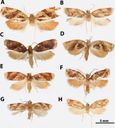
Argyrotaenia amatana is a small tortricid precinctive to Florida and The Bahamas. have a wingspan of 13–16 mm and have been recorded active nearly year-round, with peak activity from October through April. The is associated with native Florida vegetation in scrub and wetland .
Pronunciation
How to pronounce Argyrotaenia amatana: //ˌɑːr.dʒɪ.roʊˈtiː.ni.ə ˌæm.əˈtæ.nə//
These audio files are automatically generated. While they are not always 100% accurate, they are a good starting point.
Identification
Distinguished from similar Argyrotaenia by its restricted Florida distribution and association with native scrub and wetland vegetation. The related Red-banded Leafroller (Argyrotaenia velutinana) is more widespread across eastern North America and is an occasional orchard pest. A. amatana is precinctive to Florida and The Bahamas, whereas A. velutinana ranges from Louisiana to Saskatchewan.
Images
Appearance
Small with wingspan 13–16 mm. Forewings and hindwings typical of Tortricidae, held roof-like over body at rest. Specific coloration and pattern details not well documented in available sources.
Habitat
Native Florida scrub and wetland vegetation. Associated with coastal plain scrub, pine flatwoods, and wetland edges where plants occur.
Distribution
Precinctive to Florida, USA and The Bahamas. Not recorded elsewhere.
Seasonality
active nearly year-round, with peak activity from October through April. Most abundant December–February.
Host Associations
- Ilex glabra - larval Inkberry
- Ilex cassine - larval Dahoon
- Ilex coriacea - larval Large gallberry
- Ilex myrtifolia - larval Myrtle dahoon
- Lyonia ferruginea - larval Staggerbush
- Lyonia lucida - larval Fetterbush
- Lyonia fruticosa - larval Coastal plain staggerbush
- Myrica cerifera - larval Wax-myrtle
- Serenoa repens - larval Saw-palmetto
- Sabal palmetto - larval Cabbage-palmetto
- Quercus virginiana - larval Live oak
- Quercus geminata - larval Sand live oak
- Quercus chapmanii - larval Chapman oak
- Quercus myrtifolia - larval Myrtle oak
- Quercus inopina - larval Scrub oak
- Annona glabra - larval Pond-apple (source of )
- Persea borbonica - larval Red bay
- Persea americana - larval Avocado
- Eugenia species - larval
- Nectandra coriacea - larval
- Acer rubrum - larval Red maple
- Eupatorium incarnatum - larval Pink thoroughwort
- Laguncularia racemosa - larval White mangrove
- Lysimola bahamensis - larval
- Sagittaria falcata - larval Sickle arrowhead
- Salix caroliniana - larval Coastal plain willow
- Taxodium distichum - larval Bald cypress
Behavior
and attracted to artificial light. Larvae are leafrollers, feeding within folded or rolled leaves of plants.
Ecological Role
Herbivore; larvae contribute to leaf damage on native Florida vegetation. Specific role otherwise not documented.
Human Relevance
Minor potential pest of avocado (Persea americana). Not considered a significant agricultural pest.
Similar Taxa
- Argyrotaenia velutinanaRed-banded Leafroller is widespread across eastern North America (Louisiana to Saskatchewan), whereas A. amatana is precinctive to Florida and The Bahamas. A. velutinana is an occasional pest in apple orchards with broader range including many cultivated plants.
More Details
Conservation status
Precinctive distribution limited to Florida makes this potentially vulnerable to loss from coastal development and changes in fire management of scrub habitats.
Taxonomic note
The specific epithet 'amatana' and 'pondapple leafroller ' both reference Annona glabra (pond-apple), a characteristic Florida wetland tree and documented larval .