Archips xylosteana
(Linnaeus, 1758)
variegated golden tortrix, brown oak tortrix
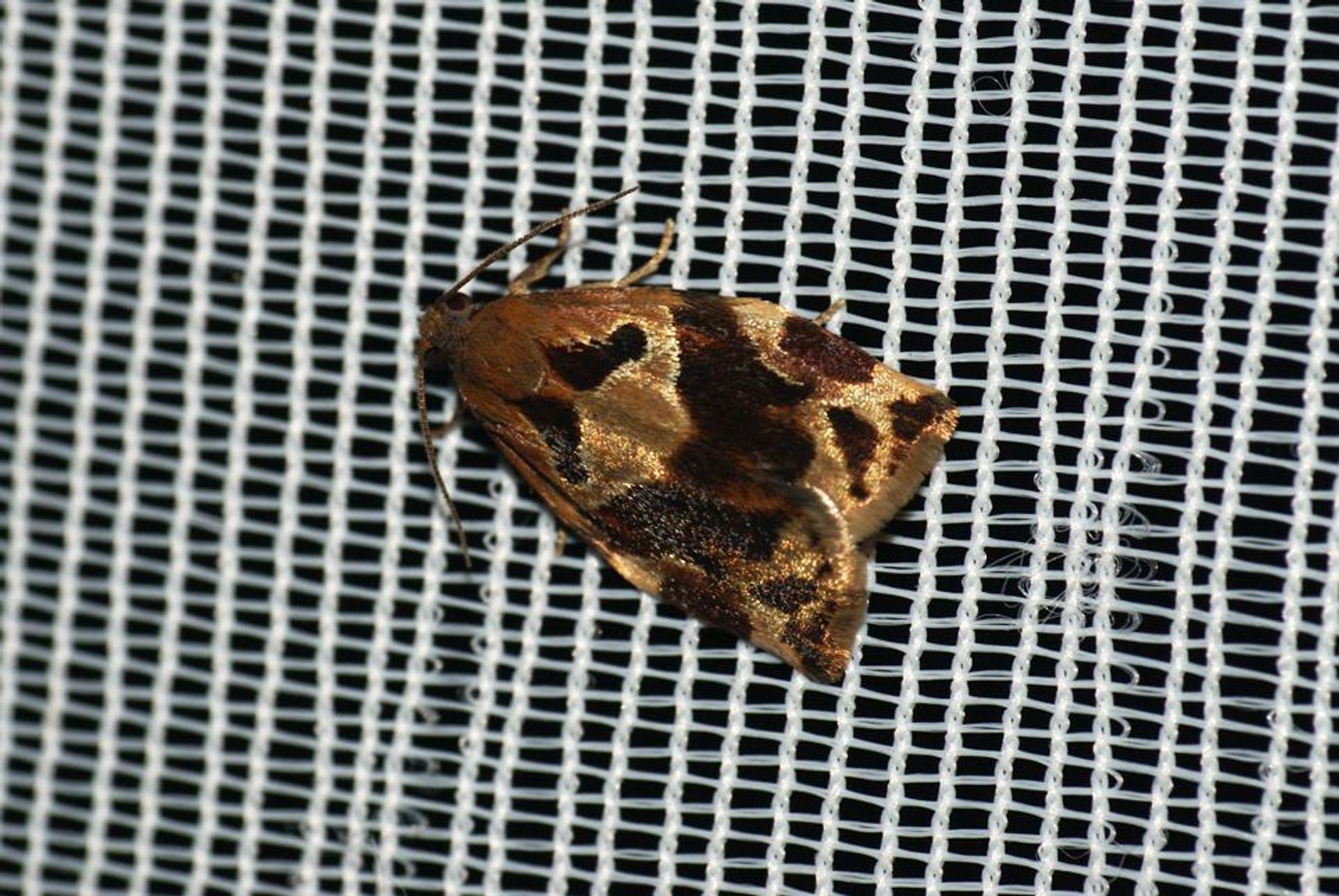
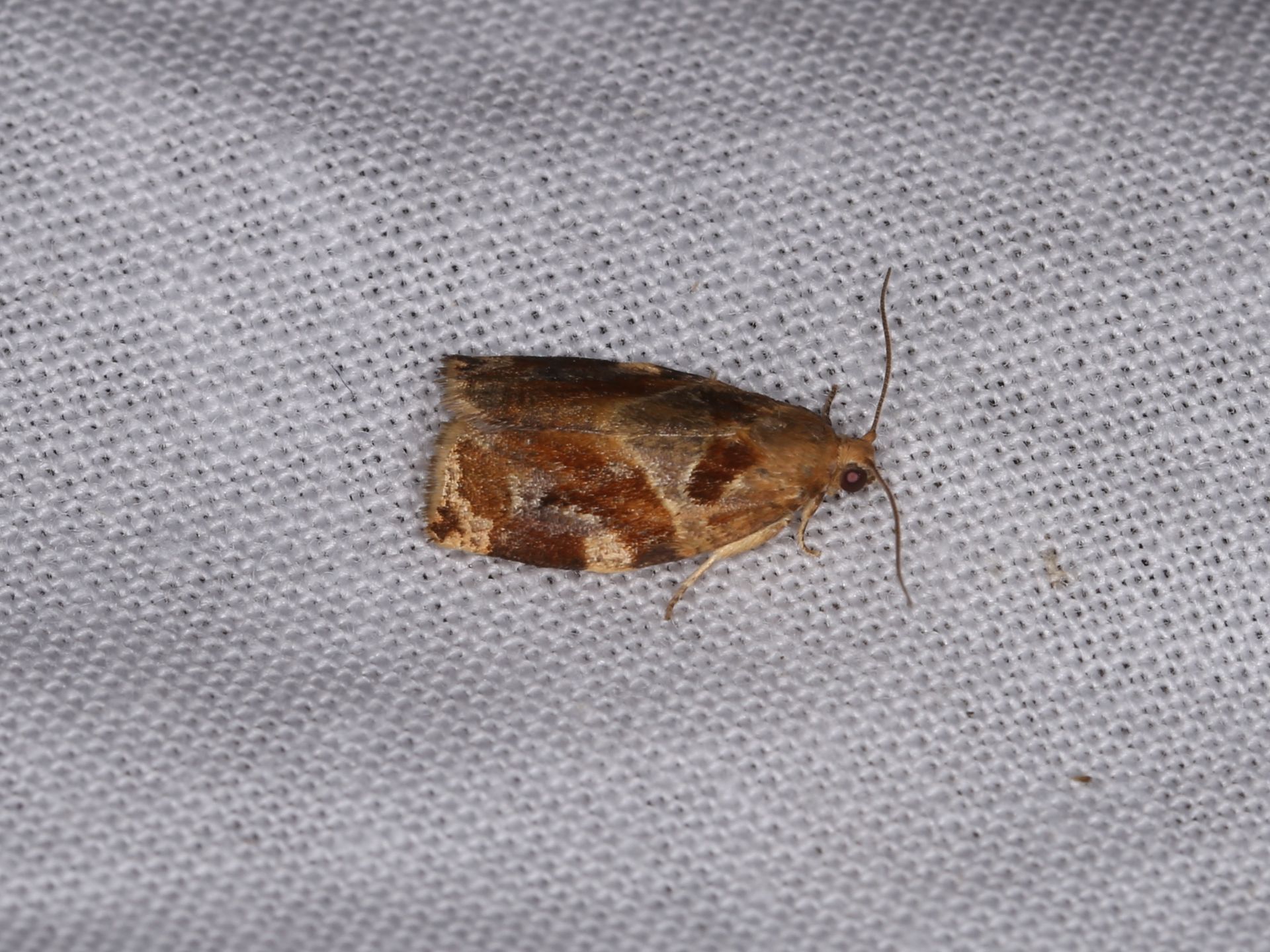
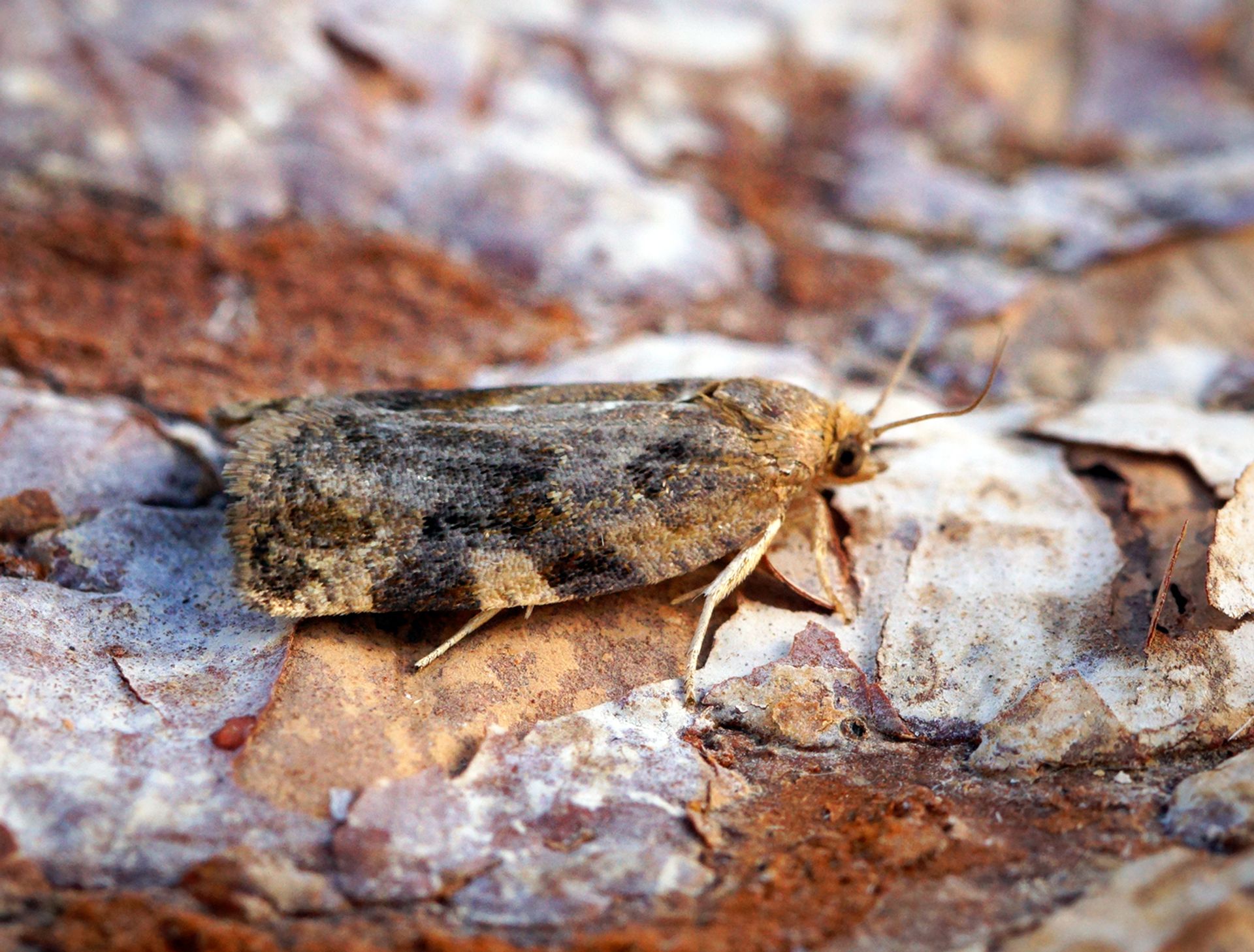
Archips xylosteana is a medium-sized tortricid native to the Palearctic region, with a wingspan of 14–23 mm. The exhibits distinct in size, with females typically larger than males. Forewings are broad and roughly rectangular, displaying variable coloration from yellow-brown to pinkish brown with dark reddish-brown markings. This species is a leafroller, with larvae feeding on numerous deciduous trees and shrubs.
Pronunciation
How to pronounce Archips xylosteana: /ˈɑːr.kɪps ˌzaɪ.ləˈstiː.ə.nə/
These audio files are automatically generated. While they are not always 100% accurate, they are a good starting point.
Identification
Distinguished from similar Archips by combination of broad, roughly rectangular forewings with sinuate termen and vertical resting posture; specific marking pattern with costal patch broadly connected to central fascia; and yellow-brown to pinkish brown ground color with dark ferruginous-brown markings. The wing pattern asymmetry at rest (one wing covering the other) is characteristic. Larval identification supported by black , black thoracic plate on segment 2 with white edge, and leaf-rolling perpendicular to leaf midrib.
Images
Appearance
Medium-sized to large tortricid with wingspan 14–23 mm. Females slightly larger than males. Forewings broad, roughly rectangular, variable in ground color from yellow-brown, ocher, to pinkish brown, mottled with dark reddish-brown markings including transverse spot near base, central fascia with sinuate edge, costal patch broadly connected to fascia, tornal blotch, and spot. Hindwings light grayish brown, apex sometimes yellowish-tinged. At rest, wings appear lightly asymmetric as one forewing covers part of the other. Caterpillar varies from whitish gray to bluish with greenish reflections; black; thoracic plate of segment 2 black with white anterior edge.
Habitat
Woodland and scrub in hilly and mountainous areas.
Distribution
Native across the Palearctic: widespread in most of Europe, Asia (China, Iran, Japan, Kazakhstan, Korea, Siberia, Turkey), and northern Africa (Algeria). Inadvertently introduced to North America from Eurasia.
Seasonality
active June to August in one . overwinter on tree trunks and thick boughs. Larval development April to June.
Diet
Larvae are , feeding on various shrubs and deciduous trees including oak (Quercus), elm (Ulmus), linden (Tilia), hazel (Corylus), maples (Acer), ash (Fraxinus), firs (Abies), brambles (Rubus), honeysuckle (Lonicera), and St John's worts (Hypericum). Also recorded on fruit trees (apple, pear) and some herbaceous plants.
Host Associations
- Quercus - larval food plantoak
- Ulmus - larval food plantelm
- Tilia - larval food plantlinden
- Corylus - larval food planthazel
- Acer - larval food plantmaples
- Fraxinus - larval food plantash
- Abies - larval food plantfirs
- Rubus - larval food plantbrambles
- Lonicera - larval food planthoneysuckle
- Hypericum - larval food plantSt John's worts
- Malus - larval food plantapple
- Pyrus - larval food plantpear
Life Cycle
. laid in masses on tree branches or trunks, on tree trunks and thick boughs. Larvae emerge April–June, feeding protected in rolled leaves oriented perpendicularly to the midrib. Early instars feed on leaves and buds; later instars produce characteristic leaf rolls. occurs within leaf rolls. emerge June–August, resting in foliage during day and becoming active at dusk.
Behavior
rest in foliage of trees and shrubs during daylight hours. Activity begins at dusk. Larvae construct leaf rolls perpendicular to leaf midrib for protection while feeding. When threatened, larvae may eject from leaf rolls using silken lines to climb back after danger passes.
Ecological Role
Herbivorous leafroller; larval feeding can cause defoliation of plants. Serves as prey for and other natural enemies.
Human Relevance
Minor pest of fruit trees including apple and pear. feeding habits can cause economic damage in orchards. Subject of sequencing research (650.6 Mb genome assembly).
Similar Taxa
- Archips purpuranaSimilar leafrolling and plant use on goldenrod; distinguished by wing pattern and geographic distribution
- Archips crataeganaSimilar and general ; distinguished by specific wing markings and distribution (not confirmed from Murmansk region despite misidentification claims)
- Archips podanaSimilar and ; distinguished by wing pattern details and distribution (not confirmed from Murmansk region despite misidentification claims)
Misconceptions
Historical misidentifications in faunistic literature have occurred; records from Murmansk oblast, Russia were dismissed as erroneous, with A. xylosteana being confused with other Archips .
More Details
Genome
assembly available: 650.6 megabases in span, scaffolded into 31 chromosomal pseudomolecules including W and Z . Mitochondrial genome 16.39 kb. 19,861 protein-coding genes annotated on Ensembl.