
Archips semiferanus
(Walker, 1863)
Oak Leafroller Moth, Oak Leaf Roller, Oak Leafroller
Archips semiferanus is a tortricid whose larvae are major defoliators of oak trees in eastern North America. The produces one annually, with laid in July, , and hatching the following spring. Larvae roll oak leaves with silk to form shelters, feeding inside until in June. can cause extensive tree mortality, with over one million acres defoliated in Pennsylvania during the late 1960s and early 1970s. The female has been studied extensively and contains (Z)-11-tetradecenyl acetate as a primary component.
Pronunciation
How to pronounce Archips semiferanus: /ˈɑːrkɪps ˌsɛmɪfəˈreɪnəs/
These audio files are automatically generated. While they are not always 100% accurate, they are a good starting point.
Identification
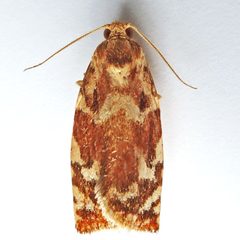
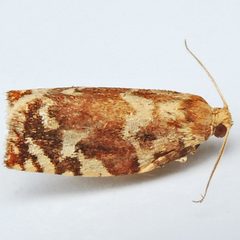
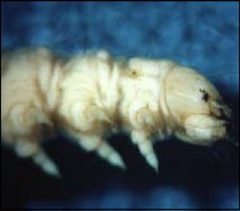
distinguished from similar Archips by forewing pattern with characteristic oblique dark band; larvae identified by green body with dark markings and leaf-rolling on oak. Distinguished from Choristoneura fractivittana and other oak leafrollers by association with severe defoliation events and geographic distribution. In Texas, larvae exhibit distinctive behavior of dangling from silk threads when disturbed, a trait not reported in other .
Images
Habitat
Deciduous forests dominated by oak ; urban areas with red oak as predominant shade trees; forest lands with oak or pine as preferred cover type. Particularly associated with northern red oak, scarlet oak, chestnut oak, and white oak on mountain and ridge tops.
Distribution
Eastern United States and southeastern Canada; confirmed in Connecticut, Massachusetts, New York, Pennsylvania, Virginia, West Virginia, and Texas. Possibly introduced to United Kingdom. In Texas, show earlier and behavioral differences from northeastern populations.
Seasonality
(one annually). active late June to July. laid July, overwinter, and hatch following April. Larvae present April through mid-June. occurs June, with adults emerging after 1–2 weeks.
Diet
Larvae feed on oak leaves, particularly Quercus including northern red oak, scarlet oak, chestnut oak, and white oak. Occasionally feeds on witchhazel and apple trees.
Host Associations
- Quercus rubra - larval food plantnorthern red oak; preferred
- Quercus coccinea - larval food plantscarlet oak; preferred
- Quercus prinus - larval food plantchestnut oak; mountain and ridge top
- Quercus alba - larval food plantwhite oak; mountain and ridge top
- Hamamelis virginiana - occasional larval food plantwitchhazel
- Malus - occasional larval food plantapple trees
Life Cycle
laid in masses of 40–50 on branches and rough bark in July, covered with female body hairs; overwinter until spring hatch. Young larvae emerge April, initially feeding on buds and young leaves. Larvae roll leaves with silk, creating shelters where they feed and nest. Mature larvae pupate in silken cocoons inside rolled leaves or in bark crevices (in Texas, also on branch tips and nearby weeds). emerge after 1–2 weeks, mate, and lay eggs. Single per year.
Behavior
Larvae construct silk-bound leaf rolls for shelter and feeding. When threatened in Texas , larvae eject from leaf rolls and dangle on silk threads, later climbing back using the silk line. Females produce containing (Z)-11-tetradecenyl acetate to attract males; 21 isomers of tetradecenyl acetate identified from female extracts, though only subset elicits behavioral attraction.
Ecological Role
Major defoliator of oak forests; can cause extensive tree mortality, particularly when defoliation occurs two or more consecutive years. Dead wood in affected trees subsequently colonized by fungi (including shoestring root fungus) and wood-boring insects (including twolined chestnut borer). Serves as prey for and birds including mockingbirds.
Human Relevance
Significant forestry pest; historical caused over $100 million in timber losses in Pennsylvania. Formerly controlled with until 1972 ban; subsequent testing of replacement (bioethanomethrin, mexacarbate, phoxim, pyrethrins) showed efficacy. studied for potential use in monitoring and management. Creates fire hazard through tree mortality in affected areas.
Similar Taxa
- Archips argyrospilusFormerly confused with A. semiferanus in early assessments; distinguished by less severe damage potential and different forewing pattern
- Choristoneura fractivittanaAnother oak leafroller commonly found on oak trees but does not cause comparable defoliation damage
- Croesia semipurpuranaOak leaftier that co-occurs on same trees; distinguished by leaf-tying rather than leaf-rolling
More Details
Pheromone research
Extensive chemical studies have identified the female as (Z)-11-tetradecenyl acetate, with field trials demonstrating male attraction to synthetic compounds. Research indicates weak correlation between electroantennogram activity and actual trap capture, suggesting complex behavioral responses to blends.
Population variation
Texas exhibit distinct ( laid May, hatch mid-March) and behavioral traits (larval dangling response) not observed in northeastern populations, indicating geographic variation in .
Taxonomic history
originally described by Francis Walker in 1863 as Capua semiferana; subsequently transferred to Archips. Frequently misspelled as A. semiferana in literature.
Sources and further reading
- BugGuide
- Wikipedia
- GBIF taxonomy match
- iNaturalist taxon
- Catalogue of Life
- Bug Eric: How to Catch a Leafroller Caterpillar (Video)
- Pensoft Editorial Team | Blog - Part 69
- SEX PHEROMONES IN THE OAK LEAF ROLLER (ARCHIPS SEMIFERANUS): ISOLATION AND FIELD STUDIES*
- Life History and Outbreaks of an Oak Leafroller, Archips Semiferanus (Lepidoptera: Tortricidae), in Michigan
- The oak leaf roller (Archips semiferanus Walker) sex pheromone complex: Field and laboratory evaluation of requisite behavioral stimuli