
Psara
Snellen, 1875
Species Guides
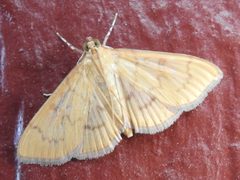
2- Psara dryalis
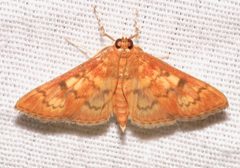
- Psara obscuralis(obscure psara moth)
Psara is a of in the Crambidae, Spilomelinae. The genus was established by Snellen in 1875 and contains multiple distributed across tropical and subtropical regions. These moths are generally small to medium-sized with characteristic wing patterns typical of the subfamily.

Pronunciation
How to pronounce Psara: /ˈpsa.ra/
These audio files are automatically generated. While they are not always 100% accurate, they are a good starting point.
Identification
Members of Psara can be distinguished from related by genitalic characters, particularly in the male valvae and female ostium, though specific diagnostic features require microscopic examination. Wing patterns typically include various shades of brown, gray, or ochre with distinct transverse lines and often a discal spot on the forewing. The genus is most reliably separated from superficially similar spilomeline genera through examination of the forewing venation and abdominal tympanal organs.
Images
Habitat
in this are primarily associated with tropical and subtropical , including forests, agricultural areas, and disturbed vegetation. Many occur in lowland regions, though some extend into montane zones. Larval habitats vary by species but often include herbaceous vegetation.
Distribution
The has a broad distribution across the Old World tropics and subtropics, including Africa, Asia, and Oceania. Records extend from West Africa through South and Southeast Asia to Australia and Pacific islands. The center of diversity appears to be in the Oriental and Afrotropical regions.
Ecological Role
As herbivores in their larval stages, Psara contribute to nutrient cycling in their . are likely of various flowering plants, though specific mutualisms have not been documented. Some species may be minor agricultural pests where their plants coincide with crops.
Human Relevance
A few Psara have been recorded as pests of agricultural crops, particularly rice and other grasses, though economic impact is generally minor. The is primarily of scientific interest to lepidopterists and taxonomists studying Crambidae .
Similar Taxa
- HerpetogrammaSimilar wing pattern and size; distinguished by differences in male genitalia structure and forewing venation, particularly the arrangement of in the .
- SpoladeaOverlapping distribution and superficially similar appearance; Psara typically have more pronounced forewing transverse lines and different abdominal tympanal organ structure.
- CnaphalocrocisClosely related with similar preferences; separated by genitalic and details of the wing scaling and pattern elements.
More Details
Taxonomic History
The Psara has undergone significant taxonomic revision, with many formerly placed here transferred to other genera as Spilomelinae classification has been refined through molecular and morphological studies. The current circumscription is based on synapomorphies in genitalic and wing venation characters.
Species Diversity
The contains approximately 50-60 described , though this number remains fluid due to ongoing taxonomic work. Many species show considerable geographic variation in wing pattern, leading to past oversplitting or lumping.