
Hahncappsia fordi
Capps, 1967
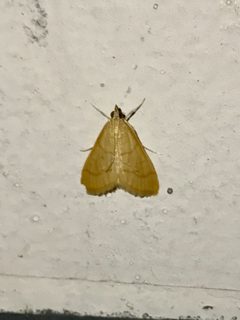
Hahncappsia fordi is a small in the Crambidae, described by Hahn William Capps in 1967. The is restricted to the southwestern United States and adjacent northwestern Mexico, with records from California, Arizona, and Sonora. are active from spring through early autumn, with a wingspan of 17–20 mm. in size is minimal, with males averaging slightly larger than females.
Pronunciation
How to pronounce Hahncappsia fordi: /hɑːnˈkæpsiə ˈfɔːrdiː/
These audio files are automatically generated. While they are not always 100% accurate, they are a good starting point.
Identification
The combination of small size (17–20 mm wingspan), uniformly pale unmarked wings, and occurrence in the southwestern United States and Sonora, Mexico distinguishes Hahncappsia fordi from other Hahncappsia . H. mancalis, a more widespread species, has a larger wingspan (21–27 mm) and shows more distinct wing patterning. H. neobliteralis has darker, more contrasting forewing markings. Examination of genitalia is required for definitive identification of similar pale crambid species.
Images
Habitat
Arid and semi-arid regions of the southwestern United States and adjacent Mexico. Specific microhabitat preferences are poorly documented, but the has been collected in association with desert scrub and dry woodland vegetation.
Distribution
Southwestern United States (California, Arizona) and northwestern Mexico (Sonora). The appears to be restricted to the Sonoran Desert and adjacent transitional zones.
Seasonality
have been recorded on wing from April through October, suggesting a multi-brooded or continuously brooded with peak activity in late spring and summer.
Life Cycle
Complete with , larval, pupal, and stages. Larval plants and sites are unknown. The extended adult period (April–October) suggests either multiple per year or overlapping .
Behavior
are and attracted to light. Specific behavioral observations beyond light attraction have not been documented.
Similar Taxa
- Hahncappsia mancalisLarger size (21–27 mm wingspan) and more distinct wing patterning; more widespread distribution across North America.
- Hahncappsia neobliteralisDarker forewings with more contrasting markings; different geographic distribution.
More Details
Taxonomic History
Originally described as Loxostege fordi by Capps in 1967, later transferred to the Hahncappsia. The genus Hahncappsia was established by Capps to accommodate previously placed in Loxostege that showed distinct genitalic differences.
Etymology
The specific epithet 'fordi' honors an individual, though the original description does not specify the namesake.