
Hahncappsia neobliteralis
Capps, 1967
Hahncappsia neobliteralis is a crambid described by Hahn William Capps in 1967. It occurs in eastern and central North America, with records from the United States and Quebec, Canada. The species exhibits in wingspan, with males measuring 18–24 mm and females 22–23 mm. are active from May through September, and the larvae feed on Ipomoea (morning glory) species.
Pronunciation
How to pronounce Hahncappsia neobliteralis: /hɑːnˈkæp.si.ə niː.əbˌlɪt.əˈreɪ.lɪs/
These audio files are automatically generated. While they are not always 100% accurate, they are a good starting point.
Identification
Can be distinguished from related Hahncappsia by genitalia and geographic range. The specific epithet 'neobliteralis' refers to its similarity to and distinction from Hahncappsia bliteralis. Accurate identification requires examination of male genitalia or molecular confirmation.
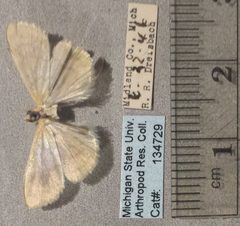
Images
Appearance
Small with wingspan of 18–24 mm in males and 22–23 mm in females. Forewings and hindwings appear relatively plain, consistent with the Hahncappsia. Sexual size dimorphism is present, with females slightly larger on average.
Habitat
Associated with supporting Ipomoea plants, which typically include open disturbed areas, fields, roadsides, and woodland edges. Specific microhabitat preferences are not well documented.
Distribution
Eastern and central North America: recorded from Indiana, Iowa, Maryland, Mississippi, New Jersey, North Carolina, Ohio, Pennsylvania, Quebec (Canada), Tennessee, Washington, D.C., and West Virginia.
Seasonality
active from May to September. Larval not documented, but presumably overlaps with plant growing season.
Diet
Larvae feed on Ipomoea (Convolvulaceae). feeding habits unknown.
Host Associations
- Ipomoea - larval food plant-level association; specific Ipomoea not identified in available sources
Life Cycle
Complete with , larva, pupa, and stages. Detailed timing and stage unknown.
Behavior
are and attracted to light. Larvae are foliage feeders on plants.
Ecological Role
Larval herbivore on Ipomoea . Specific ecological impacts or interactions not documented.
Human Relevance
No documented economic importance. Occasionally encountered by enthusiasts and in biodiversity surveys.
Similar Taxa
- Hahncappsia bliteralisClosely related congeneric ; H. neobliteralis was described in reference to this species and requires careful morphological or genitalia examination to distinguish
- Other Hahncappsia species contains multiple similar-appearing ; identification to species level typically requires dissection and reference to original description
More Details
Taxonomic History
Originally described as Loxostege neobliteralis by Capps in 1967, later transferred to Hahncappsia. The Hahncappsia was established by Capps and is named in part after himself (Hahn + Capps).
Nomenclature
The specific epithet 'neobliteralis' combines the Greek prefix 'neo-' (new) with 'bliteralis', indicating its relationship to the previously described Hahncappsia bliteralis.