
Hahncappsia
Munroe, 1976
Species Guides
14Hahncappsia is a of crambid in the Pyraustinae, established by Munroe in 1976. The genus contains approximately 40 described distributed across North, Central, and South America. Many species were originally described in other genera, particularly in the broad genus Pyrausta, and were later transferred to Hahncappsia based on genitalic and wing pattern characteristics. The genus is named in honor of the lepidopterist Harrison G. Dyar (Hahn being an anagrammatic reference).
Pronunciation
How to pronounce Hahncappsia: /hɑnˈkæpsiə/
These audio files are automatically generated. While they are not always 100% accurate, they are a good starting point.
Identification
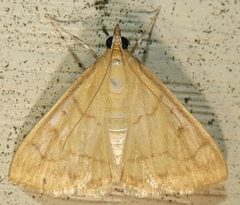
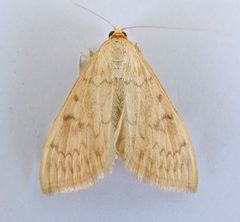
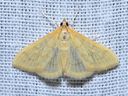
Hahncappsia are distinguished from related pyraustine primarily by male genitalia structure, particularly the shape of the valvae and . Wing patterns vary among species but generally feature pale to medium brown ground color with darker discal spots and transverse lines. The forewings typically show some degree of triangular or elongated shape with slightly pointed apices. Accurate identification to species level requires examination of genitalia or reference to original species descriptions.
Images
Distribution
distributed from the United States (including Vermont, Colorado, and southwestern states) south through Mexico and Central America to South America (Ecuador and other northern Andean regions). show varying geographic ranges, with some restricted to specific mountain ranges or regions.
Similar Taxa
More Details
Etymology
The name Hahncappsia is an anagram honoring Harrison G. Dyar (1876-1929), a prominent American lepidopterist; 'Hahn' rearranges letters from 'Dyar' combined with 'Capps' referencing K. H. Capps who revised many .
Taxonomic History
The was erected by Munroe in 1976 to accommodate previously placed in Pyrausta and related genera that shared distinctive genitalic features. Capps (1967) had previously revised many of these species without establishing the new genus.