
Hahncappsia mellinialis
Druce, 1899
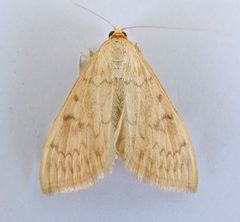
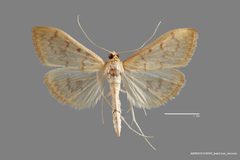
Hahncappsia mellinialis is a crambid described by Herbert Druce in 1899. It occurs in the southwestern United States and Central America, with active during late summer. The exhibits moderate in wingspan, with males slightly larger than females.
Pronunciation
How to pronounce Hahncappsia mellinialis: //hɑːnˈkæpsiə mɛlɪˈnaɪəlɪs//
These audio files are automatically generated. While they are not always 100% accurate, they are a good starting point.
Identification
Distinguished from by combination of straw yellow forewing ground color with buff irroration, relatively small size, and geographic range. Similar in Hahncappsia require genitalia examination or molecular analysis for definitive separation; wing pattern alone often insufficient.
Images
Distribution
Colorado, Arizona, and New Mexico in the United States; extends south through Mexico to Guatemala.
Seasonality
active July through September; or partially pattern suggested by season duration.
Similar Taxa
- Hahncappsia speciesCongeneric share similar size range and general wing pattern; reliable identification requires examination of genitalia or geographic provenance combined with subtle wing color differences.
More Details
Original Description
First described as Epichronistis mellinialis by Herbert Druce in 1899, later transferred to Hahncappsia.
Taxonomic Note
Basionym Epichronistis mellinialis reflects historical placement in Pyralidae; modern classification places the in Crambidae Pyraustinae.