
Hahncappsia mancalis
Lederer, 1863
Common Hahncappsia Moth
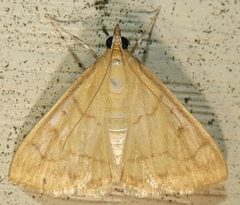
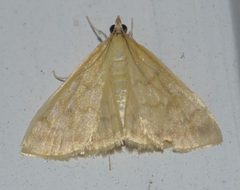
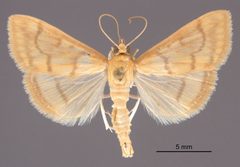
Hahncappsia mancalis is a small crambid described by Julius Lederer in 1863. It has a wingspan of approximately 18 mm and is distributed across eastern and southern North America, extending into Central America. The larvae feed on a diverse range of plants including pigweed, mint, morning glory, tobacco, and dock.
Pronunciation
How to pronounce Hahncappsia mancalis: //hɑːnˈkæpsiə ˈmæŋkəlɪs//
These audio files are automatically generated. While they are not always 100% accurate, they are a good starting point.
Identification
Small size (18 mm wingspan) distinguishes it from larger crambid . Specific identification requires examination of genitalia or comparison with similar Hahncappsia .
Images
Distribution
Maryland to Illinois, south to Florida, Texas, and Arizona; extends south to Mexico and Rica.
Diet
Larvae feed on Amaranthus retroflexus (pigweed), Mentha (mint), Ipomoea (morning glory), Nicotiana (tobacco), and Rumex (dock). diet unknown.
Host Associations
- Amaranthus retroflexus - larval food plant
- Mentha - larval food plant
- Ipomoea - larval food plant
- Nicotiana - larval food plant
- Rumex - larval food plant
Similar Taxa
- Other Hahncappsia speciesSimilar small size and general ; require detailed examination for separation.
More Details
Nomenclatural history
Originally described as Botys mancalis by Lederer in 1863; later transferred to Hahncappsia.