
Coenonympha tullia ochracea
W.H. Edwards, 1861
Large Heath, Ochraceous Ringlet
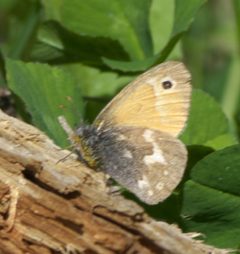
Coenonympha tullia ochracea is a of the Large Heath butterfly, a satyrine nymphalid found in peatland and bog across northern Europe and North America. This subspecies exhibits the characteristic orange-ochre coloration that distinguishes it from other C. tullia forms. The is notable for its association with intact blanket bog , where it serves as an indicator of healthy peatland conditions. Like other Coenonympha species, it threats from habitat degradation, drainage, and wildfire.
Pronunciation
How to pronounce Coenonympha tullia ochracea: /ˌsiːnoʊˈnɪmfə ˈtʌliə oʊˈkreɪʃə/
These audio files are automatically generated. While they are not always 100% accurate, they are a good starting point.
Identification
Distinguished from other Coenonympha by its larger size and association with bog . The ochre-orange upperwing color separates C. t. ochracea from the paler nominate C. t. tullia and the darker C. t. davus. In Europe, it may be confused with Coenonympha pamphilus (Small Heath), which is smaller, paler, and found in drier grasslands rather than bogs. The eyespot number is variable; some show reduced eyespot expression. Examination of genitalia may be required for definitive identification where ranges overlap with other subspecies.
Images
Habitat
of intact blanket bog and raised bog . Requires moist, acidic conditions with abundant tussock-forming sedges and grasses, particularly Eriophorum vaginatum (cottongrass) and Molinia caerulea (purple moor-grass). Found in lowland and montane peatlands where Sphagnum moss dominates the ground layer. Sensitive to drainage, peat extraction, and afforestation.
Distribution
Trans-Palearctic distribution. In Europe, recorded from Austria, Bosnia and Herzegovina, and more broadly across northern and central European peatland regions. North American occur in and subarctic peatlands. The subspecific boundaries require further clarification; some authorities treat European and North American populations as distinct.
Seasonality
with period typically from late June to August, varying with latitude and elevation. is temperature-dependent, with adults appearing after accumulation of sufficient following snowmelt. In northern , flight period may be compressed into 3-4 weeks.
Diet
Larvae feed on various grass (Poaceae) characteristic of bog , including Eriophorum vaginatum, Molinia caerulea, and Carex species. feed on nectar from bog flowers including Erica tetralix (cross-leaved heath) and potential nectar sources among sedges.
Host Associations
- Eriophorum vaginatum - larval cottongrass, primary in many
- Molinia caerulea - larval purple moor-grass
- Carex species - larval sedges
Life Cycle
are laid singly on larval plants. Larvae feed internally within grass stems and tussocks, in early instars. Development resumes in spring; occurs in grass tussocks or among moss. emerge in summer, mate, and oviposit before . Complete cycle spans approximately one year.
Behavior
fly low over bog vegetation with a weak, fluttering . Males establish territories on prominent tussocks and patrol for females. Both sexes bask with wings open in sunny conditions. Roosts in tall vegetation during adverse weather. Not known to migrate; are sedentary with limited between patches.
Ecological Role
Serves as an for intact, undisturbed peatland . Larval herbivory on bog grasses contributes to nutrient cycling in oligotrophic systems. function as of bog flora. Provides food source for insectivorous birds and other .
Human Relevance
Used as a biodiversity indicator in peatland conservation assessment and monitoring. Presence indicates high-quality bog worthy of protection. Subject to conservation concern due to extensive peatland degradation across its range. Featured in peatland restoration projects as a target for habitat recovery.
Similar Taxa
- Coenonympha tullia tulliaNominate ; paler gray-brown upperwings, less ochre coloration; often sympatric or parapatric
- Coenonympha tullia davusDarker with more prominent eyespots; alpine and northern distribution
- Coenonympha pamphilusSmaller size, paler coloration, dry grassland ; superficially similar but ecologically distinct
- Coenonympha nipisiquitRelated restricted to salt marshes in eastern Canada; similar size and wing shape but and distribution differ
More Details
Taxonomic status
The subspecific classification of C. tullia across Europe and North America remains under study. Some authorities recognize additional or treat certain populations as distinct . Molecular and morphological studies are needed to clarify boundaries.
Conservation status
have declined substantially across Europe due to peatland drainage, afforestation, and agricultural intensification. Protected under various national and regional conservation frameworks where peatland are safeguarded.
Climate sensitivity
timing is closely tied to temperature accumulation, making this potentially vulnerable to phenological mismatches with plant and nectar source availability under climate change scenarios.
Sources and further reading
- BugGuide
- GBIF taxonomy match
- Burning bogs. - Buglife Blog - Buglife
- Coenonympha nipisiquit Archives - Entomology Today
- Unraveling the mysteries of the Red Sea: A new reef coral species from Saudi Arabia | Blog
- Uncategorized | Blog - Part 21
- Pensoft blog - Part 126
- Endangered Maritime Ringlet Shows Continued Decline in Eastern Canada