
Coenonympha tullia kodiak
W.H. Edwards, 1869
Kodiak Ringlet
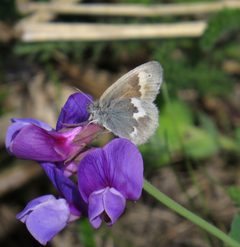
Coenonympha tullia kodiak is a of the Large Heath butterfly, commonly known as the Kodiak Ringlet. It belongs to the Satyrinae within the Nymphalidae. This subspecies is part of a widespread Holarctic that exhibits considerable geographic variation across its range. The Kodiak Ringlet is associated with peatland and bog , reflecting the broader ecological affinity of the C. tullia complex for wetland environments.
Pronunciation
How to pronounce Coenonympha tullia kodiak: //sɛ.nəˈnɪm.fə ˈtʌl.li.ə ˈkoʊ.di.æk//
These audio files are automatically generated. While they are not always 100% accurate, they are a good starting point.
Identification
Distinguishing C. t. kodiak from other C. tullia requires examination of genitalia and detailed wing pattern analysis; field identification to subspecies level is challenging. The C. tullia is distinguished from other Coenonympha by its association with wet bog , generally larger size than C. pamphilus and allies, and reduced or absent orange markings on the underside. The number and arrangement of eyespots on the hindwing underside varies geographically and can assist in distinguishing regional .
Images
Habitat
Associated with blanket bog and peatland , as documented for the broader C. tullia . These environments provide the moist, open conditions with sedges and grasses that serve as larval plants.
Distribution
The subspecific epithet 'kodiak' suggests an association with the Kodiak region, likely referring to Kodiak Island or the broader Kodiak Archipelago in Alaska, USA. The Coenonympha tullia has a Holarctic distribution spanning Europe, Asia, and North America, with numerous described across this range. GBIF records indicate presence in North America and Europe, though specific subspecies-level distribution data are limited.
Seasonality
fly during the summer months; specific period for this is not documented. Related in northern regions typically have a single per year with adult timed to local climatic conditions.
Life Cycle
Complete with , larva, pupa, and stages. Larvae feed on grasses and sedges typical of bog , though specific plant records for this are not available. The is adapted to the short growing season of northern peatland environments.
Behavior
are relatively sedentary and remain close to breeding . They typically fly low among vegetation and are not strong dispersers. Males may establish territories in suitable habitat patches.
Ecological Role
As a herbivore in early life stages and potential as an , though specific ecological interactions are not documented for this . The contributes to diversity in peatland , which are recognized as significant carbon sinks and biodiversity hotspots.
Human Relevance
The broader C. tullia , including the related C. nipisiquit (maritime ringlet), has been subject to conservation concern due to loss from peatland degradation. While specific conservation status for C. t. kodiak is not established, peatland-dependent butterflies threats from drainage, burning, and climate change affecting bog hydrology.
Similar Taxa
- Coenonympha tullia other subspeciesNumerous described across Holarctic range; distinguished by subtle wing pattern differences, genitalia , and geographic origin
- Coenonympha nipisiquit (maritime ringlet)Formerly considered with C. tullia; now recognized as distinct restricted to salt marsh in eastern Canada; differs in habitat specificity and has been elevated to species rank based on ecological and genetic divergence
- Coenonympha pamphilus (Small Heath)Smaller size, more extensive orange markings on underside, and preference for drier grassland rather than bogs
More Details
Taxonomic history
The was described by W.H. Edwards in 1869. The C. tullia complex has undergone extensive taxonomic revision, with variously treated as subspecies or full depending on author and geographic region.
Conservation context
Peatland , including those of the C. tullia complex, are increasingly recognized as indicators of bog health. Degradation of blanket bogs through burning, drainage, and afforestation threatens availability across the range.
Sources and further reading
- BugGuide
- GBIF taxonomy match
- iNaturalist taxon
- NCBI Taxonomy
- Burning bogs. - Buglife Blog - Buglife
- Coenonympha nipisiquit Archives - Entomology Today
- Unraveling the mysteries of the Red Sea: A new reef coral species from Saudi Arabia | Blog
- Uncategorized | Blog - Part 21
- Pensoft blog - Part 126
- Endangered Maritime Ringlet Shows Continued Decline in Eastern Canada