
Lochmaeus
Doubleday, 1841
Species Guides
2- Lochmaeus bilineata(Double-lined Prominent)
- Lochmaeus manteo(Variable Oakleaf Caterpillar Moth)
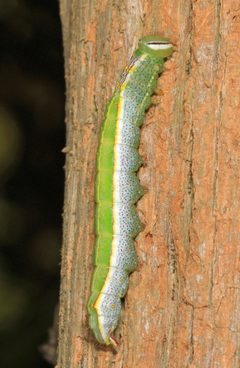
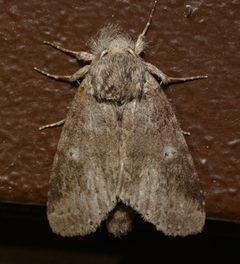
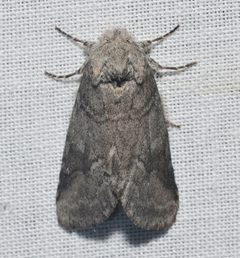
Lochmaeus is a of in the Notodontidae, first described by Edward Doubleday in 1841. The genus contains at least two , including L. manteo and L. bilineata. Larvae are late-season defoliators of hardwood trees, with occasionally producing conspicuous damage and abundant . Despite visible defoliation, impacts to tree health are generally minor.
Pronunciation
How to pronounce Lochmaeus: /ˈlɒk.mɪəs/
These audio files are automatically generated. While they are not always 100% accurate, they are a good starting point.
Images
Habitat
Hardwood forests and urban areas with mature deciduous trees. Larvae feed on tree foliage in and lower crown areas.
Distribution
Eastern North America. Documented from Vermont and North Carolina, with broader distribution inferred from forest entomology literature focused on southern United States hardwoods.
Seasonality
Late summer and early fall. Larval activity peaks during end-of-summer period, consistent with other late-season defoliator .
Diet
Larval stage feeds on leaves of hardwood trees. Specific plant associations are not documented in available sources.
Host Associations
- hardwood trees - larval food plantGeneral association; specific not documented in available sources
Behavior
Larvae produce conspicuous quantities of during conditions. During a 2017 outbreak of L. manteo in North Carolina, falling frass was audible, resembling raindrops on clear days.
Ecological Role
Late-season defoliator of hardwood forests. Natural enemies regulate ; single defoliation events have minimal long-term impact on tree health.
Human Relevance
Occasional pest of aesthetic concern in urban and suburban settings. generate public attention due to visible defoliation and accumulation of on surfaces below infested trees. Management rarely needed for tree health; mechanical removal or targeted applications may be used for high-value ornamental trees.
Similar Taxa
- AnisotaBoth are of late-season Notodontidae defoliators with gregarious larvae and similar seasonal timing; Anisota such as A. senatoria (orangestriped oakworm) are more frequently encountered and explicitly noted as gregarious, whereas Lochmaeus gregarious is implied by accumulation observations but not directly documented
- DryocampaBoth are late-season hardwood defoliator reviewed in same management guide; Dryocampa are mechanically removable from leaf undersides, distinguishing their early-stage management
- DatanaBoth are late-season hardwood defoliator reviewed in same management guide; specific distinguishing traits not documented in available sources
More Details
Outbreak documentation
A 2017 of Lochmaeus manteo in North Carolina was documented in forest entomology literature, providing one of the few specific event records for this .