
Lochmaeus bilineata
(Packard, 1864)
Double-lined Prominent, double-lined prominent moth
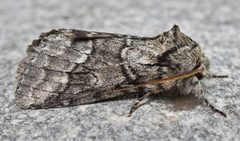
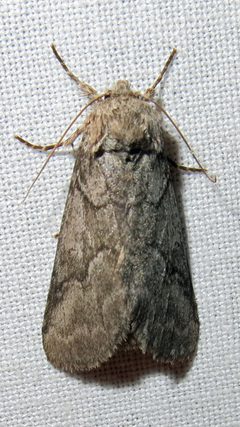
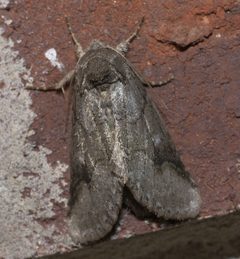
Lochmaeus bilineata, commonly known as the double-lined prominent , is a notodontid moth found across eastern North America. are active from spring through fall depending on latitude, with a wingspan of 32–40 mm. The larvae feed on the foliage of several hardwood tree including Fagus, Quercus, Tilia, Betula, and Ulmus. As a late-season defoliator, it typically causes minor, localized damage that does not threaten overall tree health.
Pronunciation
How to pronounce Lochmaeus bilineata: /ˈlɒk.miː.əs ˌbaɪ.laɪˈniː.ə.tə/
These audio files are automatically generated. While they are not always 100% accurate, they are a good starting point.
Identification
Distinguished from similar notodontid by the paired dark longitudinal lines on the forewings. The specific epithet 'bilineata' refers directly to this two-lined pattern. may be confused with other grey-brown prominent moths, but the distinct parallel lines are diagnostic. Larvae are gregarious and found in clusters on foliage, which can aid in field identification.
Images
Habitat
Deciduous forests and woodlands containing tree . Associated with hardwood trees in both natural and urban settings where Fagus, Quercus, Tilia, Betula, or Ulmus occur.
Distribution
Eastern two-thirds of the United States and southern Canada. Western limit extends to New Mexico in the south and Saskatchewan in the north. Present in Manitoba, Saskatchewan, and Vermont among other provinces and states.
Seasonality
on wing from April to October in southern portions of range; June to August in northern portions. or multivoltine in warmer climates, or with shorter period in cooler regions.
Diet
Larvae feed on foliage of Fagus (beech), Quercus (oak), Tilia (basswood/linden), Betula (birch), and Ulmus (elm) . do not feed; they have reduced or non-functional mouthparts typical of many notodontid .
Host Associations
- Fagus - larval plantbeech
- Quercus - larval plantoak
- Tilia - larval plantbasswood, linden
- Betula - larval plantbirch
- Ulmus - larval plantelm
Life Cycle
Complete with , larval, pupal, and stages. Larvae are gregarious, feeding in clusters on foliage. occurs in soil or leaf litter. Adults emerge to mate and oviposit on host trees. Specific details of egg and pupal stages not documented in available sources.
Behavior
Larvae feed gregariously in groups, producing localized areas of heavy defoliation within an otherwise intact . This clustering makes them visually conspicuous. High larval result in accumulation of beneath trees.
Ecological Role
As a late-season defoliator, contributes to nutrient cycling through leaf consumption and production. Serves as prey for various and that regulate its . Part of the natural of hardwood forest Lepidoptera.
Human Relevance
Occasional pest of shade trees and ornamental hardwoods due to larval defoliation. Damage is primarily aesthetic; single defoliation events do not cause significant tree mortality. Management rarely necessary unless consecutive years of heavy defoliation occur or high-value trees are affected. Mechanical removal of larval clusters or targeted applications are options if intervention required.
Similar Taxa
- Lochmaeus manteoCongeneric , also a late-season defoliator of hardwoods with similar and appearance; distinguished by specific wing pattern and larval characteristics
- Anisota senatoriaAnother late-season notodontid defoliator with gregarious larvae; distinguished by orange stripes on caterpillars and different wing pattern
- Dryocampa rubicundaLate-season notodontid with similar ; distinguished by pink and yellow coloration and different larval preferences
More Details
Defoliation Impact
As a late-season defoliator, damage occurs after trees have completed most of their growth and storage. Consequently, even heavy defoliation typically has minimal impact on tree health compared to early-season defoliators. Trees usually refoliate the following spring without long-term consequences.
Research Context
The was included in a 2023 review of late-season hardwood defoliators in the Journal of , which emphasized that natural enemies typically regulate and management is seldom necessary.
Sources and further reading
- BugGuide
- Wikipedia
- GBIF taxonomy match
- iNaturalist taxon
- NCBI Taxonomy
- Catalogue of Life
- Meloidae Holdings | Entomology Research Museum
- Much Ado About Nothing? End-of-Summer Defoliation Heats Up
- Midget male meloid mates with mega mama | Beetles In The Bush
- Bug Eric: October 2014
- Bug Eric: New Mexico Dragonfly Blitz - Day 1
- Bug Eric: City Nature Challenge 2023 Recap