
Anicla exuberans
Smith, 1898
Exuberant Dart
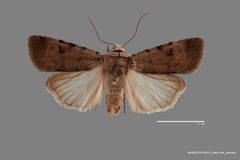
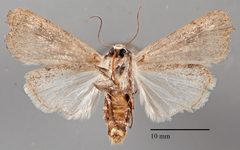
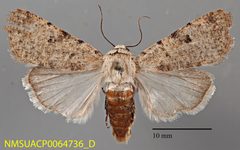
Anicla exuberans is a noctuid known as the Exuberant Dart, first described by John Bernhardt Smith in 1898. It is characterized by a moderate wingspan of 37–41 mm and a with active during summer months. The occupies dry interior across western North America, ranging from central Mexico to the Canadian prairies.
Pronunciation
How to pronounce Anicla exuberans: //əˈnɪklə ˌɛksjuˈbɛrənz//
These audio files are automatically generated. While they are not always 100% accurate, they are a good starting point.
Identification
Wingspan of 37–41 mm provides a measurable diagnostic feature. As a member of the Anicla, it shares characteristics with other dart moths but is distinguished by its specific geographic distribution in dry interior regions of western North America. are active during summer months (June–August), which may aid in temporal separation from some .
Images
Habitat
Dry interior regions including grasslands, prairies, and open with sparse vegetation. Associated with arid to semi-arid environments in western North America.
Distribution
North America from central Mexico northward through the western United States to southern British Columbia, southern Alberta, and south-western Saskatchewan in Canada. Records also include Manitoba.
Seasonality
on wing from June to August; exact timing varies by location. One per year ().
Life Cycle
with one per year. emerge in summer (June–August). stages and strategy not documented in available sources.
Behavior
; attracted to blacklight. Activity period corresponds to warm summer evenings.
Similar Taxa
- Anicla infectaShared with similar (Green Cutworm Moth), but A. exuberans distinguished by dry interior distribution and summer period
- Other Anicla speciesGeographic range and specific preference in dry interior regions may separate A. exuberans from occupying different ecological zones