
Bellura brehmei
Barnes & McDunnough, 1916
Narrow-leaved Cattail Diver Moth
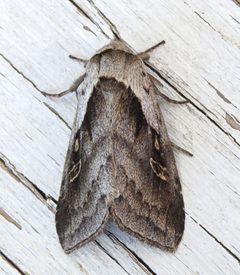
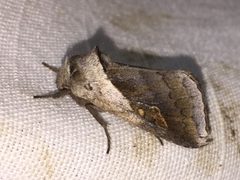
Bellura brehmei is a North American in the Noctuidae, commonly known as the Narrow-leaved Cattail Diver Moth. It is one of approximately 800 of Lepidoptera with aquatic or semi-aquatic larvae. Like other members of its , the caterpillar likely inhabits wetland environments and feeds on aquatic vegetation, though specific details for this species remain poorly documented.
Pronunciation
How to pronounce Bellura brehmei: /bɛˈlʊrɑ ˈbʁeːmaɪ/
These audio files are automatically generated. While they are not always 100% accurate, they are a good starting point.
Identification
The Bellura includes several of aquatic with similar habits, making species-level identification challenging without examination of genitalia or detailed larval associations. B. brehmei can be distinguished from the related B. melanopyga (which feeds on yellow waterlily, Nymphaea americana) and B. gortynoides (white-tailed diver moth) by geographic distribution and presumed host plant specificity on narrow-leaved cattail (Typha angustifolia). Adults are .
Images
Habitat
Wetland , specifically associated with narrow-leaved cattail (Typha angustifolia) stands in aquatic or semi-aquatic environments. Larvae likely inhabit the interface between water and emergent vegetation.
Distribution
North America. Distribution records indicate presence in the United States and Canada, though precise range boundaries are not well documented.
Diet
Larval plant is presumed to be narrow-leaved cattail (Typha angustifolia), based on the and -level patterns. Specific feeding habits have not been directly observed for this .
Host Associations
- Typha angustifolia - larval Presumed based on ; not confirmed by direct observation in available sources
Life Cycle
Complete with , larva, pupa, and stages. Following the pattern of other aquatic Noctuidae, larvae likely pupate in or near water, and adults are .
Behavior
are strictly . Larval is presumed to include aquatic or semi-aquatic habits similar to , possibly involving periodic surfacing for air through specialized .
Ecological Role
As a herbivore of wetland vegetation, larvae likely contribute to nutrient cycling in freshwater . They may serve as prey for aquatic including specialized .
Human Relevance
Of potential interest to anglers and fly-fishers as part of the aquatic supporting sport fish. Not known to be of economic importance.
Similar Taxa
- Bellura melanopygaAlso aquatic, but feeds on yellow waterlily (Nymphaea americana) rather than cattail; distinguishable by plant association
- Bellura gortynoidesWhite-tailed diver ; similar aquatic habits but different plant preferences and distribution
More Details
Research status
Aquatic in the Noctuidae, including Bellura , are among the most poorly studied ecological groups within Lepidoptera. As noted by entomologist Krzysztof Pabis in 2018, 'The potential for various studies on their and evolution is great and untapped.' David L. Wagner has similarly observed that 'there is very little biological data on these aquatic moths.'
Taxonomic note
Some sources historically placed aquatic larvae in the Crambidae (as 'snout moths'), but Bellura is currently classified in Noctuidae. The -level aquatic habits appear to have evolved independently in multiple lepidopteran lineages.