
Bellura
Walker, 1865
Species Guides
6- Bellura anoa(Arrowhead Diver Moth)
- Bellura brehmei(Narrow-leaved Cattail Diver Moth)
- Bellura densa(Pickerelweed Borer Moth)
- Bellura gortynoides(White-tailed Diver Moth)
- Bellura obliqua(Cattail Borer Moth)
- Bellura vulnifica(Black-tailed Diver Moth)
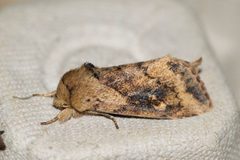
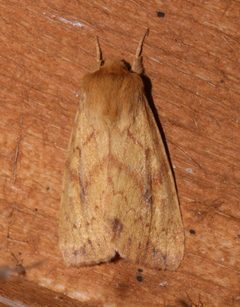
Bellura is a of in the Noctuidae, established by Walker in 1865. The genus contains approximately eight described distributed in North America. Caterpillars of at least some species are aquatic or semi-aquatic, feeding on aquatic plants such as water lilies. The genus is notable among Noctuidae for this aquatic larval , which is relatively uncommon in the family.
Pronunciation
How to pronounce Bellura: //bɛˈluː.ra//
These audio files are automatically generated. While they are not always 100% accurate, they are a good starting point.
Identification
Bellura are distinguished from other Noctuidae by their aquatic or semi-aquatic larval . are with typical noctuine . Specific diagnostic features for the genus require examination of genitalia and wing venation patterns. The genus is classified within the Noctuinae based on morphological characteristics.
Images
Habitat
Larval includes freshwater aquatic environments, particularly ponds and slow-moving water bodies with aquatic vegetation. are terrestrial and . Specific microhabitat preferences vary by , with some associated with water lilies (Nymphaea) and other aquatic macrophytes.
Distribution
North America. Distribution records include the United States, with specific observations from Vermont and other regions.
Diet
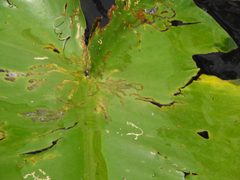
Larvae feed on aquatic plants. Bellura melanopyga has been observed feeding on yellow waterlily (Nymphaea americana). Other likely feed on related aquatic macrophytes, though specific plant associations are not comprehensively documented for all species.
Host Associations
- Nymphaea americana - larval food plantyellow waterlily; documented for B. melanopyga
Life Cycle
Aquatic larvae undergo development underwater or at the water surface, obtaining oxygen through periodic surfacing to access atmospheric air via . occurs in or near the aquatic environment. emerge and reproduce nocturnally. are laid on or near aquatic vegetation.
Behavior
Larvae are aquatic or semi-aquatic, capable of remaining submerged for extended periods. They surface periodically to obtain oxygen, which is stored in the tracheal system. Larvae may construct shelters from plant material. are strictly .
Ecological Role
Larvae function as herbivores in freshwater aquatic , consuming aquatic macrophytes. They serve as prey for aquatic including specialized . The contributes to nutrient cycling in pond and wetland environments through herbivory and as a food source for higher .
Human Relevance
Larvae may damage ornamental water lilies in garden ponds. Some have been investigated for potential of aquatic plants such as hydrilla. The is of interest to entomologists studying aquatic Lepidoptera, a poorly understood ecological group.
Similar Taxa
- NymphulaBoth contain aquatic or semi-aquatic larvae feeding on aquatic macrophytes. Nymphula is classified in Crambidae rather than Noctuidae, and exhibit different morphological characteristics including wing shape and resting posture.
- ParaclesShares aquatic larval habit; Paracles larvae are noted for active swimming with undulatory movement. Paracles is distributed in the American tropics and belongs to a different (Erebidae: Arctiinae).
More Details
Taxonomic Note
The Bellura melanopyga was originally described as Arzama melanopyga Grote, 1881, and later synonymized under Bellura vulnifica before current classification. The has undergone taxonomic revision regarding species boundaries and synonymy.
Research Status
Aquatic and semi-aquatic including Bellura are among the most poorly studied ecological groups within Lepidoptera, with limited biological data available despite significant potential for ecological and evolutionary research.