
Bellura gortynoides
Walker, 1865
White-tailed Diver Moth, white-tailed diver
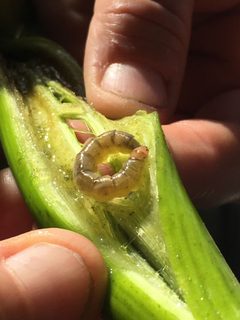
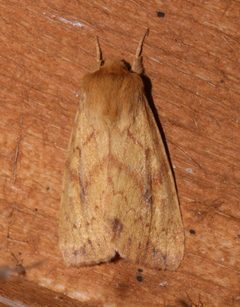
Bellura gortynoides, commonly known as the white-tailed diver , is a North American noctuid moth whose aquatic caterpillars live submerged in freshwater . The larvae feed on aquatic plants, including water lilies, and breathe by periodically surfacing to capture air through specialized . are strictly . The belongs to the poorly studied group of aquatic moths, which have received limited scientific attention despite their unusual .
Pronunciation
How to pronounce Bellura gortynoides: /bɛˈlʊə rə gɔrˈtɪnɔɪdiːz/
These audio files are automatically generated. While they are not always 100% accurate, they are a good starting point.
Images
Habitat
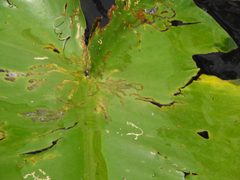
Freshwater aquatic environments. Larvae live submerged underwater, typically associated with aquatic vegetation such as water lilies (Nymphaea ). Based on congeneric species Bellura melanopyga, larvae likely remain on or near their food plants rather than swimming freely.
Distribution
North America. Documented presence in Canada (Alberta, Saskatchewan) and the United States (Vermont).
Diet
Larvae feed on aquatic plants. Specific plants have not been documented for this , though congeneric Bellura melanopyga feeds on yellow waterlily (Nymphaea americana).
Life Cycle
Aquatic caterpillars hatch from laid below the water surface, typically on submerged vegetation, stems, or rocks. Larvae undergo development underwater, obtaining oxygen by surfacing periodically to capture air stored in tracheal systems. occurs in the water. are and emerge to reproduce. Specific timing of developmental stages has not been documented for this .
Behavior
Larvae are aquatic and remain largely sedentary on or near food plants. They do not swim actively and likely move poorly through water compared to some other aquatic caterpillars. are strictly in activity.
Ecological Role
Larval herbivore in freshwater aquatic . Serves as prey for specialized aquatic such as the Microgaster godzilla, which hunts caterpillars underwater.
Similar Taxa
- Bellura melanopygaCongeneric with similar aquatic larval ; also feeds on water lilies but distinguished by specific plant (yellow waterlily) and presumably subtle morphological differences in and larval stages.
- Nymphula nitidulata (Beautiful China-mark)Another aquatic with superficially similar , but belongs to Crambidae rather than Noctuidae; larvae are semi-aquatic rather than fully submerged, living on wetland plants above the water line and boring into stems.