
Papaipema speciosissima
Grote & Robinson, 1868
osmunda borer, regal fern borer
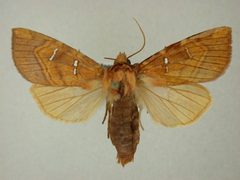
Papaipema speciosissima is a noctuid commonly known as the osmunda borer or regal fern borer. The was described in 1868 and is native to North America. As a member of the Papaipema, it is a fern-boring moth whose larvae develop inside fern stems or rhizomes. The specific epithet 'speciosissima' (most beautiful) suggests distinctive appearance among .

Pronunciation
How to pronounce Papaipema speciosissima: //pəˌpaɪˈpiːmə ˌspeɪsioʊˈsɪsɪmə//
These audio files are automatically generated. While they are not always 100% accurate, they are a good starting point.
Identification
The specific epithet 'speciosissima' (most beautiful) suggests this may be more striking in appearance than related Papaipema species. can be identified by the MONA/Hodges number 9482. As with other Papaipema species, adults are generally medium-sized noctuid with relatively plain forewings and more patterned hindwings. Larval identification requires examination of plant association with Osmunda species and internal boring in fern rhizomes.
Images
Habitat
Associated with wetlands and moist woodland where ferns of the Osmunda (royal ferns) occur. These habitats include swamps, bogs, wet meadows, and streamside areas with saturated soils.
Distribution
North America. Documented from the United States, including Vermont.
Diet
Larvae bore into and feed within the rhizomes and stems of royal ferns (Osmunda ), particularly Osmunda regalis. This is an obligate relationship with the Osmunda.
Host Associations
- Osmunda regalis - larval regal fern; larvae bore into rhizomes
- Osmunda - larval -level association; royal ferns
Life Cycle
Complete with , larva, pupa, and stages. Larvae are internal borers in fern rhizomes, completing development within the plant. likely occurs in soil or within the host plant remains. Adults are and active during summer months.
Behavior
Larvae are internal feeders, boring into fern rhizomes and stems, making them cryptic and difficult to detect. are and attracted to light.
Ecological Role
As a herbivore on Osmunda ferns, this contributes to nutrient cycling in wetland . The larval boring habit creates tunnels in fern rhizomes that may provide microhabitats for other organisms after .
Human Relevance
Of minor interest to lepidopterists and naturalists. The specific association with royal ferns makes it a potential for wetland quality. No significant economic impact; not considered a pest of cultivated plants.
Similar Taxa
- Papaipema pterisiiAlso a fern borer, but associated with Pteridium (bracken) rather than Osmunda; differs in plant specificity
- Papaipema inquaesitaAnother Osmunda-associated ; may require dissection or molecular analysis for reliable separation
- Papaipema eryngiiBores in Eryngium (rattlesnake master) stems rather than ferns; distinct plant
More Details
Nomenclature
Originally described as Gortyna speciosissima Grote & Robinson, 1868, later transferred to Papaipema. The Papaipema is a North American radiation of fern- and plant-stem boring noctuids.
Conservation Notes
Wetland loss threatens both this and its obligate plants. The specific association with Osmunda makes it vulnerable to hydrological changes and plant competition in fen and bog habitats.