
Papaipema
Smith, 1899
Species Guides
41- Papaipema aerata(slender salsify)
- Papaipema appassionata(pitcher plant borer)
- Papaipema araliae(Aralia shoot borer moth)
- Papaipema arctivorens(Northern Burdock Borer)
- Papaipema astuta(Stoneroot Stem Borer Moth)
- Papaipema aweme(Aweme borer moth)
- Papaipema baptisiae(Dogbane Stem Borer Moth)
- Papaipema beeriana(Blazing Star Borer Moth)
- Papaipema cataphracta(burdock borer)
Papaipema is a of in the Noctuidae, erected by John B. Smith in 1899. The genus comprises approximately 50 described , most of which are commonly known as "borers" due to their larval feeding habits. Species are distributed primarily across North America, with many exhibiting highly specialized plant associations. Larvae tunnel into stems, roots, or rhizomes of specific native plants, making many species of conservation concern due to loss and host plant rarity.
Pronunciation
How to pronounce Papaipema: /pəˌpaɪˈpiːmə/
These audio files are automatically generated. While they are not always 100% accurate, they are a good starting point.
Identification
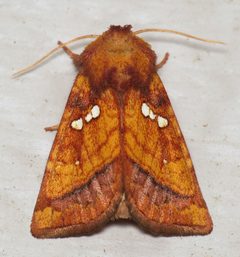
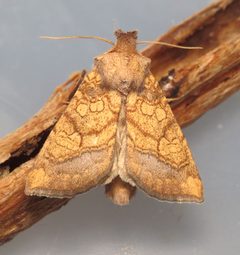
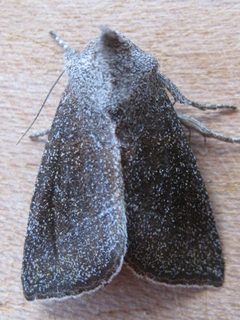
Papaipema are generally medium-sized noctuids with relatively broad wings and subdued coloration, typically in shades of brown, gray, or dull yellow. Many have distinctive forewing patterns with various lines and spots, though these can be subtle. The is distinguished from similar noctuids primarily by larval and male genitalia structure. Species-level identification often requires examination of genitalia or knowledge of plant association and geographic range. Larvae are cylindrical, cream-colored to pale pinkish borers with reduced , adapted for tunneling in plant tissues.
Images
Habitat
vary by and correspond to plant distributions. Many species are associated with wetlands, prairies, woodland edges, or other habitats supporting their specific host plants. Several species are tied to rare or declining plant , including pitcher plant bogs, fens, and native prairie remnants. Habitat specificity is strongly linked to larval host plant availability rather than general environmental conditions.
Distribution
North America, primarily the United States and southern Canada. occur across diverse regions from the Atlantic Coast to the Great Plains and western mountains. Many species have restricted ranges corresponding to their plant distributions.
Seasonality
periods vary by and latitude, generally occurring from late summer through early fall (July-October). Most species are , with a single per year. Larvae typically overwinter in plant tissues and pupate in spring or early summer.
Diet
Larvae are specialized borers in living plant tissues. Each is typically associated with one or a few closely related plant species. Documented hosts include: Angelica (P. angelica), pitcher plants (Sarracenia, P. appassionata), aralia (P. araliae), burdock (P. arctivorens, P. cataphracta), Baptisia (P. baptisiae), blazing star (Liatris, P. beeriana), umbellifers (P. birdi), ironweed (P. cerussata), hops (P. circumlucens), goldenrod (P. duovata), rattlesnake-master (Eryngium, P. eryngii), Joe-Pye weed (P. eupatorii), ash (P. furcata), Heracleum (P. harrisii), aster (P. impecuniosa), sensitive fern (P. inquaesita), ragwort (P. insulidens), columbine (P. leucostigma), loosestrife (Lysimachia, P. lysimachiae), sunflower (P. maritima, P. necopina, P. rigida), coneflower (P. nelita), turtlehead (P. nepheleptena), cup plant (P. polymniae), bracken fern (P. pterisii), mayapple (P. rutila), figwort (P. sauzalitae), Culver's root (P. sciata), Silphium (P. silphii), royal fern (P. speciosissima), chain fern (P. stenocelis), water-willow (P. sulphurata), and meadow-rue (P. unimoda). have been observed feeding on nectar but specific floral associations are poorly documented.
Host Associations
- Angelica - larval P. angelica
- Sarracenia - larval P. appassionata, pitcher plant borer
- Aralia - larval P. araliae
- Arctium - larval P. arctivorens, P. cataphracta
- Baptisia - larval P. baptisiae, indigo stem borer
- Liatris - larval P. beeriana
- Apiaceae - larval P. birdi, umbellifer borer
- Vernonia - larval P. cerussata, P. limpida
- Humulus - larval P. circumlucens
- Solidago - larval P. duovata
- Eryngium - larval P. eryngii
- Eutrochium - larval P. eupatorii
- Fraxinus - larval P. furcata
- Heracleum - larval P. harrisii
- Symphyotrichum - larval P. impecuniosa
- Onoclea - larval P. inquaesita
- Packera - larval P. insulidens
- Aquilegia - larval P. leucostigma
- Lysimachia - larval P. lysimachiae
- Helianthus - larval P. maritima, P. necopina, P. rigida
- Rudbeckia - larval P. nelita
- Chelone - larval P. nepheleptena
- Silphium - larval P. polymniae, P. silphii
- Pteridium - larval P. pterisii
- Podophyllum - larval P. rutila
- Scrophularia - larval P. sauzalitae
- Veronicastrum - larval P. sciata
- Osmunda - larval P. speciosissima
- Woodwardia - larval P. stenocelis
- Justicia - larval P. sulphurata
- Thalictrum - larval P. unimoda
Life Cycle
are laid on or near plants. Larvae bore into stems, roots, or rhizomes and feed internally, typically completing development over one growing season. Larvae overwinter within host plant tissues. occurs in spring or early summer, often in a silken cocoon within the tunnel or in soil. emerge in mid to late summer. Most appear to be , though precise timing varies with latitude and host plant .
Behavior
Larvae are concealed feeders, tunneling in living plant tissues. They are rarely observed unless plants are dissected. are and attracted to light. Many have been documented at sugar baits. activity is primarily nocturnal. Adults are not known to migrate; is likely limited and tied to host plant distribution.
Ecological Role
Larvae act as stem and root borers, potentially affecting plant vigor and . Their specialized host associations suggest long coevolutionary relationships with native plants. Some may serve as indicators of healthy, intact native plant . They likely serve as prey for and other natural enemies, though specific documentation is limited. Their role in nutrient cycling through plant tissue degradation is presumably minor given their specialized and often sparse .
Human Relevance
Most have no direct economic importance. A few species occasionally damage cultivated plants (e.g., hops, ornamental ferns), but significant pest status is rare. Several species are of conservation concern due to loss and rarity of plants, particularly those associated with pitcher plant bogs, prairies, and wetlands. The has received attention from lepidopterists and conservation biologists for its remarkable host specificity and vulnerability to environmental change.
Similar Taxa
- OstriniaBoth contain stem-boring larvae, but Ostrinia (Crambidae) has more generalized use, includes major agricultural pests like European corn borer, and have different wing venation and resting posture.
- DiatraeaSugarcane borers and relatives (Crambidae) share larval boring habit but differ in , associations (primarily grasses), and geographic distribution (more southern).
- BusseolaAfrican maize stalk borers (Noctuidae) are convergent in but geographically separated and differ in .
- SesamiaPink stem borers (Noctuidae) share stem-boring larval habit but have different , associations (primarily grasses), and geographic distribution.
More Details
Taxonomic notes
The Papaipema was established by John B. Smith in 1899. It is classified in the Noctuinae of Noctuidae. boundaries can be difficult to determine due to morphological similarity and the importance of plant association in defining ecological species.
Conservation significance
Many Papaipema are of conservation concern due to extreme specificity and loss. Species such as the pitcher plant borer (P. appassionata) are tied to rare and declining wetland . The exemplifies the vulnerability of specialized herbivores to environmental change.
Research challenges
Biological study of Papaipema is hampered by the concealed larval habit and difficulty of rearing. Many are known from few specimens, and remain incompletely documented for numerous species.
Sources and further reading
- BugGuide
- Wikipedia
- GBIF taxonomy match
- iNaturalist taxon
- NCBI Taxonomy
- Catalogue of Life
- Seedling to tassel stage insect control - AgriLife Extension Entomology
- Bug Eric: Wasp Wednesday: Not Wasp V
- Conventional Soil Management Draws European Corn Borer Toward Bt Corn
- Scientists Offer Recommendations for Delaying Resistance to Bt Corn in Western Corn Rootworm