
Dasychira vagans
(Barnes & McDunnough, 1913)
Variable Tussock Moth
Dasychira vagans is a in the Erebidae, first described by Barnes and McDunnough in 1913. The exhibits notable in forewing length, with males measuring 14–18 mm and females 22–24 mm. are active from June to August with a single per year. The larvae feed on a broad range of woody plants across multiple families, with a documented preference for Quercus (oak) species. Two are recognized: D. v. vagans in eastern North America and D. v. grisea ranging from southern Manitoba to the Pacific Northwest.
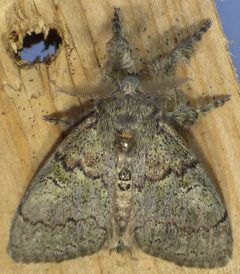
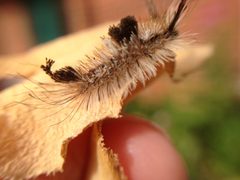
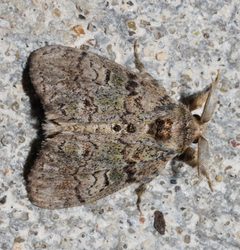
Pronunciation
How to pronounce Dasychira vagans: //ˌdæ.sɪˈkaɪ.rə ˈveɪ.ɡənz//
These audio files are automatically generated. While they are not always 100% accurate, they are a good starting point.
Identification
Males have forewings 14–18 mm long; females 22–24 mm. The can be distinguished from similar Dasychira by the combination of its North American distribution, activity period (June–August), and larval preferences. The two differ geographically: D. v. vagans occurs in eastern Canada and the northeastern United States, while D. v. grisea ranges from southern Manitoba through South Dakota to British Columbia and Oregon.
Images
Habitat
Forests including coastal rainforests, high elevation mixed hardwood-conifer forests, oak woodlands, and mixed hardwood forests.
Distribution
North America, from Newfoundland to southern British Columbia in the north, and south to North Carolina and Utah.
Seasonality
on wing from June to August; one per year.
Diet
Larvae feed on plants in Aceraceae, Betulaceae, Fagaceae, Salicaceae, and Rosaceae; favors Quercus .
Similar Taxa
- Dasychira basiflavaSimilar appearance and overlapping range in North America; distinguished by wing pattern and genitalia.
- Dasychira plagiataOverlapping distribution and shared tussock ; requires examination of genitalia for definitive identification.
Sources and further reading
- BugGuide
- Wikipedia
- GBIF taxonomy match
- iNaturalist taxon
- NCBI Taxonomy
- Catalogue of Life
- Nocturnal hunters: Mexican redrump tarantula, Brachypelma vagans — Bug of the Week
- A friendly encounter with a very large tarantula: Red Rump Tarantula, Tliltocatl vagans — Bug of the Week
- Spider megacolony study breaks publicity records at Pensoft
- Monday Ménage – Brachyleptura rubrica | Beetles In The Bush
- Zookeys | Blog - Part 2
- Pensoft Editorial Team | Blog - Part 7