
Zale undularis
(Drury, 1773)
Black Zale Moth
Zale undularis, commonly known as the black zale , is a medium-sized noctuid moth first described by Dru Drury in 1773. The is characterized by its very dark brown to black coloration with distinctive undulating wing patterns. It occurs in the eastern United States and southern Ontario, where are active during warmer months. The caterpillars serve as prey for certain sphecid , including Ammophila nigricans.


Pronunciation
How to pronounce Zale undularis: /ˈzeɪli ʌnˈdjʊlərɪs/
These audio files are automatically generated. While they are not always 100% accurate, they are a good starting point.
Identification
Distinguished from other Zale by the combination of very dark, nearly black coloration and the prominent undulating transverse lines on the forewings, particularly the strong outer bar. The dentate wing margins and overall dark appearance separate it from similar noctuids. The specific epithet 'undularis' refers to the wavy, undulating wing patterns.
Images
Appearance
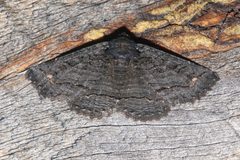
have a wingspan of approximately 5 cm (2 inches). The upperside is very dark brown to black with a slightly appearance. Forewings display a series of black indented lines or bars running from base to apex, with the outermost bar being particularly strong and conspicuous, crossing the wing about 6 mm from the external margin. Wing margins are slightly dentate (toothed). Hindwings mirror the forewing pattern. Underside is lighter in color with fainter versions of the same markings. are brown and thread-like.
Habitat
Deciduous and mixed forests, woodland edges, and suburban areas with tree cover. Associated with plants of its larval stage.
Distribution
Eastern United States from New England south to Florida and west to Texas; southern Ontario in Canada.
Seasonality
active from late spring through summer; likely two per year with peak activity in early summer and again in late summer to early autumn.
Diet
: Not reported; larvae feed on various woody plants including oaks (Quercus), hickories (Carya), and possibly other hardwood trees.
Host Associations
- Quercus - larval food plantoak
- Carya - larval food planthickory
Life Cycle
Complete with , larva, pupa, and stages. Larvae are caterpillars feeding on foliage of trees. occurs in soil or leaf litter. Adults emerge in spring and summer.
Behavior
are and attracted to light. Larvae feed nocturnally on plant foliage to avoid .
Ecological Role
Larval stage serves as prey for and predatory , including the digger wasp Ammophila nigricans. may contribute to pollination through nectar feeding.
Human Relevance
Occasional minor defoliator of ornamental and forest trees; of interest to lepidopterists and naturalists. No significant economic impact reported.
Similar Taxa
- Zale horridaSimilar size and wing shape, but Z. horrida has more mottled gray-brown coloration rather than uniform dark black-brown
- Zale galbanataOverlapping range, but Z. galbanata has greenish or grayish tones and different transverse line pattern
- Catocala underwing mothsSimilar habits and size, but Catocala have brightly colored hindwings with distinct bands, unlike the uniformly dark hindwings of Z. undularis
More Details
Taxonomic history
Originally described as Phalaena undularis by Dru Drury in 1773. The Zale was later established, and the transferred to its current combination. placement has varied between Noctuidae and Erebidae depending on classification system used.
Predator interactions
Documented as a for the sphecid Ammophila nigricans, which provisions its nest with paralyzed Zale caterpillars. This represents a significant documented -prey relationship for this .