
Catocala abbreviatella
Grote, 1872
Abbreviated Underwing
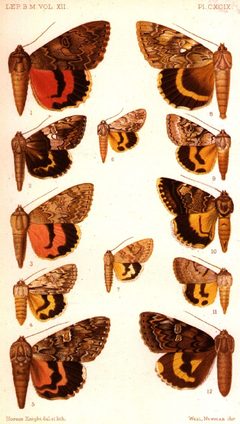
Catocala abbreviatella, the Abbreviated Underwing, is a in the Erebidae. It is a medium-sized underwing moth with a wingspan of 40–50 mm. are active from July to August, with likely one per year. The is distributed across the central United States, from Indiana south and west to Texas and Oklahoma, and north to Nebraska and Wisconsin.
Pronunciation
How to pronounce Catocala abbreviatella: /kəˈtɔkələ əˌbriːviəˈtɛlə/
These audio files are automatically generated. While they are not always 100% accurate, they are a good starting point.
Identification
As an underwing in the Catocala, C. abbreviatella can be distinguished from similar by its specific wing pattern and geographic range. The name 'abbreviatella' refers to a shortened or abbreviated feature, likely of the wing pattern. Precise identification from other Catocala species requires examination of hindwing pattern details and forewing markings. The species occurs in a region of overlap with other Catocala species, making geographic location alone insufficient for identification.
Images
Habitat
Associated with supporting its larval plants, including areas where Amorpha and possibly Robinia grow. These are typically open woodlands, forest edges, and riparian zones in the central United States.
Distribution
Found from Indiana south and west to Texas and Oklahoma, and north to Nebraska and Wisconsin. This represents a primarily Midwestern and South-Central U.S. distribution.
Seasonality
are on wing from July to August, with timing varying by location. There is probably one per year.
Diet
Larvae feed on Amorpha and possibly Robinia species. feeding habits are not documented.
Host Associations
- Amorpha - larval Primary larval plant
- Robinia - possible larval Secondary or occasional larval , not confirmed as primary
Life Cycle
Probably (one per year). emerge in mid-summer. Larval development occurs on plants, with likely in soil or leaf litter. Specific details of , larval, and pupal stages are not documented.
Behavior
are and attracted to light. Like other underwing moths, they typically rest with forewings covering the hindwings, concealing the bright coloration. When disturbed, they may flash the hindwings to startle . The has been observed coming to blacklights, though underwing moths often remain on the periphery of light stations rather than landing directly on sheets.
Ecological Role
Larvae are herbivores that feed on leguminous plants. may serve as prey for including bats, birds, and spiders. The contributes to local biodiversity as a member of the nocturnal insect and participates in dynamics as both consumer and prey.
Human Relevance
Subject of interest to lepidopterists and enthusiasts, particularly during National Moth Week events. The has been documented through citizen science observations on platforms such as iNaturalist. No significant economic or agricultural impacts are documented.
Similar Taxa
- Catocala concumbensOverlaps in range and shares underwing characteristics; distinguished by specific hindwing pattern details
- Catocala aholibahAnother large underwing with similar preferences in overlapping geographic regions
- Catocala verillianaSimilar size and , occurs in comparable in the central United States
More Details
Taxonomic History
Described by Augustus Radcliffe Grote in 1872. The epithet 'abbreviatella' likely refers to a shortened or abbreviated marking on the wings. The species was historically placed in Noctuidae but is now classified in Erebidae following molecular phylogenetic revisions of Lepidoptera.
Conservation Status
Not formally assessed by IUCN. Appears to be locally common within its range based on iNaturalist observations, but comprehensive data are lacking.
Sources and further reading
- BugGuide
- Wikipedia
- GBIF taxonomy match
- iNaturalist taxon
- NCBI Taxonomy
- Catalogue of Life
- A Gathering of Lepidopterists: Who's Who of the Butterfly, Moth Experts | Bug Squad
- Got Moths? Celebrate National Moth Week and Global Citizen Science
- Bug Eric: National Moth Week Recap, 2015
- Bug Eric: National Moth Week Recap for Colorado Springs
- Bug Eric: National Moth Week 2024 Recap from Kansas City
- Bug Eric: New Mexico Night Bugs