
Catocala concumbens
Walker, 1858
Pink Underwing, Sleepy Underwing
Catocala concumbens, commonly known as the pink underwing or sleepy underwing, is a medium-sized in the Erebidae. The was first described by Francis Walker in 1858. It is distinguished by its cryptic forewings and brightly colored hindwings, a characteristic defensive trait of the Catocala. The moth occurs in eastern North America, extending westward across the Prairie Provinces to eastern Alberta. are active in August, with larvae feeding on Populus and Salix species.
Pronunciation
How to pronounce Catocala concumbens: /ˌkætəˈkeɪlə kənˈkʌmbɛnz/
These audio files are automatically generated. While they are not always 100% accurate, they are a good starting point.
Identification
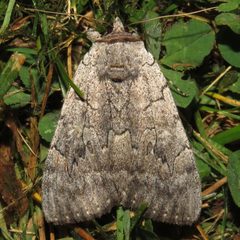
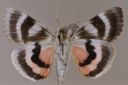
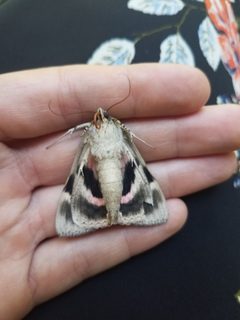
Distinguished from other Catocala by the combination of pink to orange-pink hindwing bands with black borders. The specific pattern of the forewing maculation and the extent of the pink coloration on the hindwing help separate it from similar species such as Catocala ilia and Catocala concumbens. The 'sleepy underwing' refers to its relatively sluggish compared to some . Examination of genitalia is required for definitive identification in some cases.
Images
Appearance
Wingspan 60–75 mm. Forewings are dull gray-brown with intricate mottled patterns that provide camouflage against tree bark when at rest. Hindwings are strikingly colored with pink, orange, or reddish bands bordered by black, typically concealed beneath the forewings. Body is robust with a furry . are in both sexes.
Habitat
Found in deciduous and mixed woodlands, particularly in areas with stands of Populus and Salix. Occurs in riparian corridors, forest edges, and open woodlands. In the western part of its range, it inhabits aspen parkland and transition zones.
Distribution
Eastern North America, from the Atlantic coast westward across the southern half of the Prairie Provinces (Manitoba, Saskatchewan) to eastern Alberta. Records from Vermont and throughout the northeastern and north-central United States. Distribution records confirm presence in Alberta, Manitoba, Saskatchewan (Canada), and Vermont (USA).
Seasonality
are active in August. Single per year (), with timing varying slightly by latitude and local conditions.
Diet
Larvae feed on Populus (poplars, aspens, cottonwoods) and Salix species (willows). feeding habits are not well documented.
Host Associations
- Populus - larval food plantIncludes poplars, aspens, and cottonwoods
- Salix - larval food plantWillow
Life Cycle
Complete with four stages: , larva, pupa, and . Larvae are feeders on foliage. stage is likely the egg or early larval instar, though specific details require confirmation. occurs in a silken cocoon among leaf litter or in soil.
Behavior
are and attracted to light, though often remaining on the periphery of light stations rather than landing directly on sheets. When disturbed, they flash their brightly colored hindwings as a startle defense against , then quickly conceal them again. is described as relatively slow and 'sleepy' compared to other underwing moths.
Ecological Role
Larvae serve as herbivores on woody plants, contributing to nutrient cycling in forest . likely function as . Both life stages provide food for various including birds, bats, and insectivorous arthropods.
Human Relevance
Subject of citizen science monitoring through National Week and similar events. Valued by moth enthusiasts for its striking hindwing coloration. No significant economic impact; larvae do not reach pest status on ornamental or timber trees. Contributes to biodiversity documentation and ecological research.
Similar Taxa
- Catocala iliaSimilar size and general appearance, but hindwing coloration differs; C. ilia typically has more orange-red rather than pink bands
- Catocala amestrisOverlapping western range, but C. amestris has more extensive dark markings on hindwing and different forewing pattern
- Other Catocala species contains over 250 with similar cryptic forewing strategy; precise identification requires attention to hindwing color pattern, forewing maculation, and often genital dissection
More Details
Etymology
The specific epithet 'concumbens' is Latin, possibly referring to the reclining or resting posture of the . The 'pink underwing' directly describes the hindwing coloration, while 'sleepy underwing' alludes to its relatively lethargic .
Taxonomic History
Originally described by Francis Walker in 1858. The has remained in the Catocala, though placement has shifted from Noctuidae to Erebidae following modern molecular phylogenetic studies.
Conservation Status
Not formally assessed by IUCN or NatureServe. Appears to be secure throughout its range, though localized loss could impact . Climate change effects on and distribution are potential concerns requiring monitoring.
Sources and further reading
- BugGuide
- Wikipedia
- GBIF taxonomy match
- iNaturalist taxon
- NCBI Taxonomy
- Catalogue of Life
- A Gathering of Lepidopterists: Who's Who of the Butterfly, Moth Experts | Bug Squad
- Got Moths? Celebrate National Moth Week and Global Citizen Science
- Bug Eric: National Moth Week Recap, 2015
- Bug Eric: National Moth Week Recap for Colorado Springs
- Bug Eric: National Moth Week 2024 Recap from Kansas City
- Bug Eric: New Mexico Night Bugs