
Neurobathra
Ely, 1918
Species Guides
2- Neurobathra bohartiella
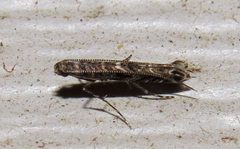
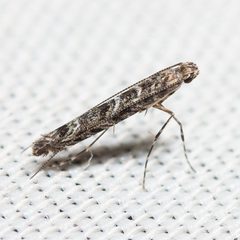
- Neurobathra strigifinitella(Finite-channeled Leafminer Moth)
Neurobathra is a of small in the Gracillariidae, established by Ely in 1918. The genus contains three described distributed in North America. Members of this genus are leaf-mining moths, with larvae that feed internally within plant tissue. The genus is classified in the Ornixolinae.
Pronunciation
How to pronounce Neurobathra: /ˌnʊərəʊˈbæθrə/
These audio files are automatically generated. While they are not always 100% accurate, they are a good starting point.
Identification
Neurobathra are distinguished from other Gracillariidae by genitalic characters and larval associations. The genus can be separated from related orixoline genera by specific wing venation patterns and male genitalia structure, particularly the arrangement of cornuti on the . Definitive identification requires examination of genitalia or rearing larvae to associate with host plants.
Images
Habitat
are determined by larval plant distribution. Neurobathra bohartiella is associated with oaks (Quercus), while N. strigifinitella has been recorded from Carya (hickory) and Juglans (walnut). These habitats include deciduous forests and woodlands where host trees occur.
Distribution
North America. Documented from the United States, with specific records from Vermont and other eastern states. The three described have overlapping ranges in eastern and central North America.
Diet
Larvae are leaf miners, feeding internally on leaf tissue of woody plants. Specific associations include: Neurobathra bohartiella on Quercus (oaks); Neurobathra strigifinitella on Carya (hickory) and Juglans (walnut); Neurobathra curcassi host unknown but presumed to be a woody dicot based on characteristics.
Host Associations
- Quercus - larval Neurobathra bohartiella
- Carya - larval Neurobathra strigifinitella
- Juglans - larval Neurobathra strigifinitella
Life Cycle
Complete with , larval, pupal, and stages. Larvae are internal leaf miners, creating serpentine or blotch mines within leaves of plants. occurs within the mine or in a silken cocoon on the leaf surface. Specific timing of life stages varies by and latitude.
Behavior
are and attracted to light. Larvae are solitary miners, feeding individually within leaves. Mining creates visible trails or blotches on leaves, which may aid in detection.
Ecological Role
Larvae function as primary consumers of leaf tissue in deciduous forest . Their mining activity creates entry points for fungal and contributes to nutrient cycling through premature leaf abscission. They serve as prey for and other natural enemies.
Human Relevance
No direct economic importance. Occasionally noticed by arborists and naturalists due to visible leaf mines. May be collected for scientific study of Gracillariidae and relationships.
Similar Taxa
- PhyllonorycterAlso Gracillariidae leaf miners, but Phyllonorycter typically form tentiform mines on the underside of leaves and belong to Lithocolletinae rather than Ornixolinae. Neurobathra mines are usually upper-surface or full-depth.
- CamerariaSimilar blotch-mining Gracillariidae, but Cameraria form distinctly polygonal blotch mines with visible feeding lines, and belong to Lithocolletinae. Neurobathra mines lack this structured pattern.
More Details
Taxonomic history
The was established by Charles Russell Ely in 1918. The type is Tinea strigifinitella Clemens, 1860, now Neurobathra strigifinitella. The genus has remained small with only three described species, reflecting either genuine rarity or undercollection due to small size and specialized .
Research needs
associations for N. curcassi remain undocumented. Additional likely await description, particularly from western North America where gracillariid diversity is less studied.