
Recurvaria
Haworth, 1828
Species Guides
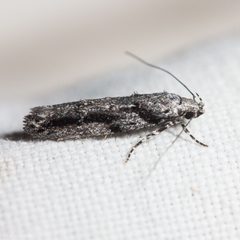
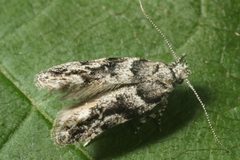
2- Recurvaria consimilis
- Recurvaria nanella(Lesser Bud Moth)
Recurvaria is a of small in the Gelechiidae, established by Haworth in 1828. The genus contains approximately 40 described distributed across the Holarctic region. Several species are economically significant as pests of coniferous trees and pistachio, with larvae that mine needles or feed internally within fruits. The genus exhibits diverse strategies, including and cycles, with some species requiring two years to complete development.
Pronunciation
How to pronounce Recurvaria: /rɛˌkʊrˈvɛr.i.ə/
These audio files are automatically generated. While they are not always 100% accurate, they are a good starting point.
Identification
Recurvaria are small gelechiid moths, typically with wingspans under 15 mm. Species-level identification requires examination of genitalia and detailed wing pattern analysis; external is often insufficient for reliable determination. The is distinguished from related teleiodinine genera by genitalic characters, particularly in the male valvae and female signum structure.
Images
Habitat
varies by : coniferous forests (particularly Pinus and Picea) for needle-mining species such as R. starki and R. milleri; pistachio orchards and natural stands of Pistacia for fruit-feeding species such as R. pistaciicola. Some species occupy mixed or deciduous woodlands.
Distribution
Holarctic distribution. Documented from North America (including Canadian Rocky Mountain parks, California), Europe (Denmark, Norway, Sweden), and western Asia (Iraq, Central Asian republics). GBIF records confirm presence in Scandinavia.
Seasonality
activity periods vary by and latitude. R. pistaciicola adults emerge March–April with second in July; R. starki exhibits spring after two-year larval development. Specific periods for most species are poorly documented.
Diet
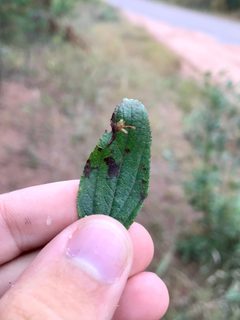
Larval feeding habits are -specific: R. pistaciicola feeds internally on pistachio fruits (Pistacia vera), mining the kernel; R. starki and R. milleri are needle miners of lodgepole pine (Pinus contorta), feeding within needle tissues; R. nanella (lesser bud ) feeds on buds and shoots of Rosaceae and other woody plants. Diet for majority of is unknown or inferred only from collection records.
Host Associations
- Pistacia vera - larval food plantfor R. pistaciicola; larvae feed internally in fruits
- Pinus contorta - larval food plantfor R. starki and R. milleri; needle mining
- Rosa - larval food plantfor R. nanella
- Prunus - larval food plantfor R. nanella
Life Cycle
strategies vary markedly among . R. pistaciicola: , with larval development 35–45 days; as diapausing larvae in silken on branches; in soil or under bark. R. starki: semivoltine, requiring two years to complete development; two successive winter as larvae; five critical mortality periods identified including -to-oviposition interval, oviposition-to-establishment, and both larval hibernations. R. milleri: larvae spend majority of life inside needles. Pupation sites vary: within needles, under bark, in soil, or in silken cocoons on branches.
Behavior
Larvae of several construct silken or cocoons for . Needle-mining species (R. starki, R. milleri) feed entirely within needle tissues, creating internal mines that modify local thermal environments through solar radiation absorption. R. pistaciicola larvae feed cryptically inside pistachio fruits. poorly documented; sex attractants have been identified for R. nanella and R. leucatella, which show mutual inhibition of male attraction.
Ecological Role
Herbivore and consumer of plant tissues. R. pistaciicola is a significant agricultural pest causing 28–34% fruit damage in Iraqi pistachio orchards. R. starki functions as a forest pest capable of causing extensive defoliation of lodgepole pine during ; are strongly regulated by winter temperature extremes. is not a major population control factor for R. starki. The contributes to nutrient cycling in coniferous through needle processing and serves as prey for and .
Human Relevance
Agricultural and forestry pest status for several . R. pistaciicola is a serious pest of pistachio production in Iraq and Central Asia. R. starki and R. milleri have caused significant defoliation and economic damage in lodgepole pine forests of western North America, with linked to climatic warming trends. R. nanella (lesser bud ) is a pest of fruit trees and ornamental shrubs in Europe. No documented beneficial uses.
Similar Taxa
- TeleiodesBoth belong to tribe Litini and share similar wing patterns and small size; distinguished by male genitalia structure, particularly valval shape and .
- AristoteliaSimilar small gelechiid moths with banded or spotted forewings; Recurvaria typically has more pronounced costal strigulae and differs in genitalic characters.
- CaryocolumOverlap in use (Caryocolum also contains conifer-feeding ); distinguished by larval habits (Caryocolum typically in shoots or cones, not needle mines) and genitalia.
More Details
Taxonomic placement
Recurvaria is classified in tribe Litini, Gelechiinae, following revision by Lee & Brown (2008). Some have been transferred to other or synonymized; R. pistaciicola was previously placed in genus Schneidereria.
Thermal ecology
Studies of R. milleri demonstrate that needle mines function as microhabitats with temperatures substantially different from ambient air: solar radiation can elevate mine temperatures by 6.3°C in still air with perpendicular needle orientation, while radiative cooling reduces temperatures below ambient. This thermal buffering affects larval development and survival.
Population dynamics
R. starki exhibits classic eruptive with -crash cycles. The 1940s outbreak in Canadian Rocky Mountain parks declined due to severe winter temperatures rather than or competition. Climate warming in the late 1930s–mid-1940s is hypothesized to have triggered release from .
Chemical ecology
of R. nanella and R. leucatella show mutual antagonism, with each ' attractant inhibiting response in the other species, potentially contributing to reproductive isolation.
Sources and further reading
- BugGuide
- Wikipedia
- GBIF taxonomy match
- iNaturalist taxon
- NCBI Taxonomy
- Catalogue of Life
- ПИСТА МЕВАХЎРИ (SCHNEIDERERIA (RECURVARIA PISTACIICOLA) БИОЭКОЛОГИК ХУСУСИЯЛАРИ ВА УНГА ҚАРШИ КУРАШ
- Bionomics of the Pistachio Fruit‐Moth, Recurvaria pistaciicola Danil., in Iraq
- POPULATION DYNAMICS OF THE LODGEPOLE NEEDLE MINER, RECURVARIA STARKI FREEMAN, IN CANADIAN ROCKY MOUNTAIN PARKS
- Distribution and Life History of the Lodgepole Needle Miner (Recurvariasp.) (Lepidoptera: Gelechiidae) in Canadian Rocky Mountain Parks
- THE EFFECTS OF RADIATION ON THE HABITAT TEMPERATURES OF THE LODGEPOLE NEEDLE MINER, RECURVARIA MILLERI BUSCK (GELECHIIDAE: LEPIDOPTERA)
- Effects of the Weather of the Coldest Month on Winter Mortality of the Lodgepole Needle Miner, Recurvaria sp., in Banff National Park