
Coleotechnites
Chambers, 1880
needle miners
Species Guides
20- Coleotechnites albicostata(white-edged coleotechnites moth)
- Coleotechnites apicitripunctella(Green Hemlock Needleminer)
- Coleotechnites atrupictella(Spruce Micromoth)
- Coleotechnites australis
- Coleotechnites blastovora
- Coleotechnites coniferella(Conifer Needleminer)
- Coleotechnites eryngiella
- Coleotechnites florae(Coleotechnites Flower Moth)
- Coleotechnites gibsonella(common juniper leafminer)
Coleotechnites is a of small in the Gelechiidae containing approximately 60 described . The genus was established by Vactor Tousey Chambers in 1880. Many species are needle miners, with larvae that feed inside conifer needles. The lodgepole needle miner (C. milleri) is the best-known species, recognized as a significant forest pest in North America.
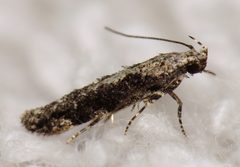
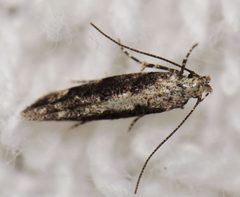
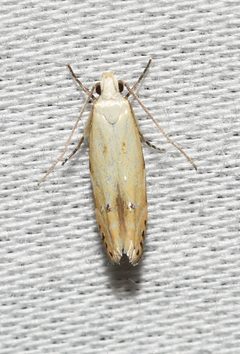
Pronunciation
How to pronounce Coleotechnites: /ˌkɔ.le.oʊˈtɛk.naɪtiːz/
These audio files are automatically generated. While they are not always 100% accurate, they are a good starting point.
Images
Habitat
Primarily associated with coniferous forests. have been documented in montane forest environments, including Jeffrey pine (Pinus jeffreyi) stands in the San Bernardino Mountains of southern California.
Distribution
North America, with records from the United States including California, Vermont, and other regions. Specific distribution varies by .
Diet
Larvae feed on conifer needles. Documented include Jeffrey pine (Pinus jeffreyi). Specific host associations vary by .
Host Associations
- Pinus jeffreyi - larval food plantJeffrey pine needles consumed by Coleotechnites sp. larvae
Behavior
Larvae exhibit needle-mining , feeding inside conifer needles rather than externally. Distribution patterns of larvae and their food resources show both within-tree and between-tree variation.
Ecological Role
Herbivore of conifer needles. Some function as forest pests when reach damaging levels.
Human Relevance
Several are recognized as forest pests. The lodgepole needle miner (C. milleri) is considered a serious pest of forest trees. monitoring and sampling methods have been developed for management purposes.
Similar Taxa
- RecurvariaFormerly included now placed in Coleotechnites; historical taxonomic confusion between these gelechiid
- EucordyleaFormer generic placement for several Coleotechnites before taxonomic revision
More Details
Taxonomic history
Many were originally described in other including Recurvaria, Gelechia, Eucordylea, Evagora, Pulicalvaria, Exoteleia, Hapalosaris, and Eidothoa before being transferred to Coleotechnites. The genus has undergone extensive revision.
Sampling research
Research on Coleotechnites sp. in southern California compared two sampling methods for estimation: variance distribution technique and mean crowding method, with the latter proving advantageous for developing monitoring protocols.
Sources and further reading
- BugGuide
- Wikipedia
- GBIF taxonomy match
- iNaturalist taxon
- NCBI Taxonomy
- Catalogue of Life
- First Account of the Larval Biology of Coleotechnites nigra (Busck) (Lepidoptera: Gelechiidae), with New Host and Distribution Records
- COMPARISON OF TWO SAMPLING METHODS FOR THE JEFFREY PINE NEEDLE MINER, COLEOTECHNITES SP. (LEPIDOPTERA: GELECHIIDAE) IN SOUTHERN CALIFORNIA