
Caryocolum
Gregor & Povolný, 1954
Curved-horn moths
Species Guides
3Caryocolum is a of small in the Gelechiidae, commonly known as Curved-horn moths. The genus contains over 80 distributed across the Palearctic and Nearctic realms, with the highest diversity in mountainous regions of Europe. Species are specialized feeders on plants in the carnation family (Caryophyllaceae), particularly genera such as Cerastium and Stellaria. The genus has been subject to intensive taxonomic revision due to high levels of cryptic diversity, with numerous species described in recent decades using integrative approaches combining and .
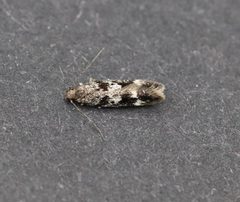
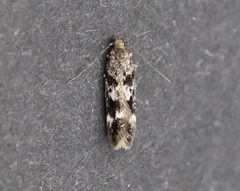
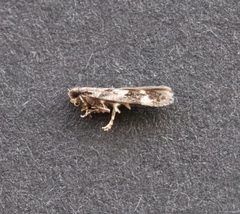
Pronunciation
How to pronounce Caryocolum: //ˌkæriˈɒkələm//
These audio files are automatically generated. While they are not always 100% accurate, they are a good starting point.
Identification
Identification to level requires examination of genitalia and often (COI gene), as many species exhibit cryptic diversity with minimal external morphological differences. are small with forewings typically 4-7 mm in length, showing variable patterns of white, brown, and black markings. The is characterized by curved horn-like structures in the male genitalia, giving the group its . Species groups have been established based on morphological and molecular data, including the fischerella-group, tischeriella-group, alsinella-group, and others.
Images
Habitat
occur primarily in dry, sunny , often in mountainous areas at elevations up to 2,500 meters. Habitats include alpine meadows, rocky slopes, scree fields, and dry grasslands. Many species are restricted to specific mountain ranges or valleys with suitable plant availability.
Distribution
Distributed between 28°N and 68°N throughout the , with additional representation in the . European distribution includes Scandinavia, the Alps, Pyrenees, Carpathians, and Mediterranean regions. Specific show highly restricted ranges: for example, Caryocolum lamai is limited to the western Alps of Italy and France, while C. messneri occurs from northern Italy to Greece, and C. habeleri is restricted to southern France, northern Switzerland, and southeastern Germany.
Diet
Larvae feed exclusively on plants in the Caryophyllaceae (the carnation or pink family). Documented plants include Cerastium, Stellaria, and Gypsophila, with specific host associations varying by . For example, C. tricolorella has been reared on Stellaria holostea, while northern European species feed on Cerastium and Stellaria.
Host Associations
- Cerastium - larval food plantMultiple
- Stellaria - larval food plantMultiple including S. holostea for C. tricolorella
- Gypsophila - larval food plantC. siculum in Sicily
Behavior
are and have been observed exclusively at artificial light sources. Larval is poorly known for many , with plant associations inferred from collection localities rather than direct observation. Species in the tricolorella complex show vicariant distribution patterns, suggesting driven by geographic isolation.
Ecological Role
As herbivores on Caryophyllaceae, larvae likely play a role in regulating plant in alpine and subalpine . The high degree of host specificity suggests coevolutionary relationships with their food plants.
Human Relevance
Three recently described (C. messneri, C. habeleri, C. lamai) were named after famous alpinists (Reinhold Messner, Peter Habeler, and David Lama) in recognition of their mountaineering achievements and conservation commitments. The serves as a model group for studying cryptic diversity and speciation in alpine environments, with over 100 species described by researcher Peter Huemer in 30 years of study. Research on Caryocolum highlights gaps in biodiversity knowledge even in well-studied European regions.
Similar Taxa
- Other Gelechiidae generaCaryocolum is distinguished by its specialized association with Caryophyllaceae plants and curved horn-like male genitalia structures; other gelechiid typically have different host plant associations and genital .
More Details
Cryptic diversity
The exhibits extensive cryptic diversity, with such as the C. tricolorella group containing morphologically similar but genetically distinct with vicariant distributions. has been essential for resolving species boundaries.
Taxonomic history
The was established by Gregor & Povolný in 1954. Many were previously classified in other genera or misidentified due to superficial similarity. Recent integrative revisions combining molecular and morphological data have substantially increased the known .
Sources and further reading
- BugGuide
- Wikipedia
- GBIF taxonomy match
- iNaturalist taxon
- NCBI Taxonomy
- Catalogue of Life
- New species of moths discovered in the Alps named after three famous alpinists | Blog
- Underestimated cryptic diversity in the Caryocolum tricolorella species complex (Lepidoptera, Gelechiidae)
- Northern European species of the genus Caryocolum Gregor & Povolný, 1954, feeding on Cerastium and Stellaria, with the description of a new species (Lepidoptera: Gelechiidae)